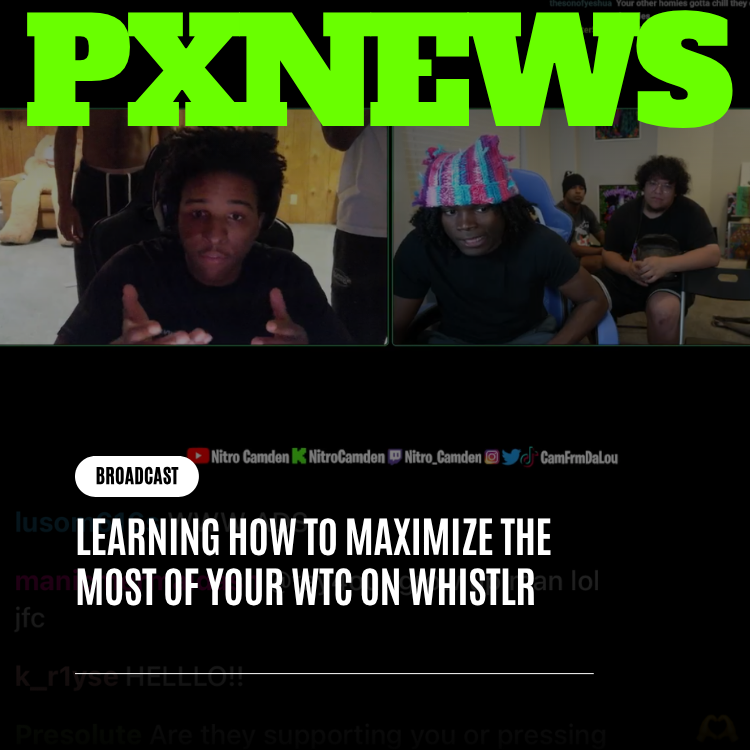
Most guides about Gems on Whistlr are written for the person receiving them. This one isn't. If you're on the other side of that exchange — someone who watches streams, follows a handful of creators you genuinely like, and occasionally taps to send a Gem when a moment lands — this is for you. WTC Gems are a small, direct way of saying "that mattered to me" in real time, and like anything you spend money and attention on, you get more out of it when you're deliberate rather than reflexive. That doesn't mean turning fandom into a spreadsheet. It means understanding what a Gem actually does when you send it, setting a budget you're comfortable with and sticking to it, learning when a Gem lands hardest during a stream, using your support to help creators who are still building their audience instead of only the ones who've already made it, understanding what recognition or perks a creator might offer supporters, and knowing the basic etiquette that keeps gifting feeling generous instead of performative. None of this requires spending more. It's about spending the same amount with more intention, so the Gems you do send actually do what you want them to do — support someone whose stream genuinely adds something to your day.
What a Gem Actually Does When You Send One
It helps to start with what's really happening in the moment you send a Gem, because it's easy to think of it as a passive purchase — a tip that disappears into a total somewhere — when it's actually closer to a live signal. On Whistlr, a Gem shows up in the stream in real time. The creator sees it, viewers around you see it, and depending on how the creator has their stream set up, it might trigger an on-screen animation, a shoutout, or just a visible bump in activity that tells everyone watching that something just happened. That immediacy is the entire point. A Gem sent during a stream isn't the same experience as a donation processed after the fact somewhere else — it's participation in the show while it's still happening. That's also why Gems function differently from a typical tip. A tip is usually a quiet transaction. A Gem is closer to applause — it's visible, it's shared with everyone else watching, and it becomes part of the moment rather than a footnote to it. When you send one during a stream, you're not just compensating a creator for their time; you're adding a beat to the broadcast itself, and a good creator will often build on that beat — reacting, thanking you by name, letting your support shape what happens next on stream.
Understanding that changes how you might think about when and why to send one. A Gem sent into silence, on a stream where nothing in particular is happening, mostly just adds to a number. A Gem sent at the right moment — right after a creator says something that made you laugh, right as they hit a goal they've been chasing, right when a newer creator is nervously wrapping up their first real broadcast — becomes something the creator remembers specifically. Same Gem, same cost, very different impact. Most of the advice in this guide is really just different angles on that one idea: the value of a Gem isn't fixed by its size, it's shaped by the moment you choose to send it.
Set a Gems Budget You Actually Enjoy Sticking To
The healthiest way to support creators with Gems is the same as the healthy way to spend on anything you enjoy: decide in advance what feels comfortable, and let that number do the deciding for you in the moment instead of figuring it out live while you're caught up in a stream. Whistlr offers a range of Gem packs at different sizes specifically so support can scale to what someone can actually afford — there's no single "right" amount, and a smaller, sustainable habit of support does more for a creator over months than a single large send followed by months of nothing.
A few practical ways to build a budget that actually holds up:
- Pick a period, not a per-stream number: deciding "I'm comfortable spending this much on Gems this month" is far easier to stick to than trying to decide fresh every single stream. A monthly framing also naturally spreads your support across more creators and more moments instead of front-loading it all on one big night.
- Separate your "favorites" budget from your "discovery" budget: if you regularly support a couple of creators you already love, consider setting aside a smaller amount specifically for smaller sends to new creators you're just discovering. It keeps exploration from feeling like it's competing with the support you already want to give.
- Buy in the size that matches your actual habit: if you send Gems occasionally and in smaller amounts, a smaller pack usually makes more sense than a large one sitting unused. If you're a frequent, active supporter of a creator's regular schedule, a larger pack can be more convenient so you're not restocking mid-stream.
- Let a lull be a stopping point, not a prompt to spend more: it's easy to send a Gem out of momentum during a quiet stretch just because the app is open in your hand. Treat quiet moments as a natural pause rather than a cue to keep spending.
- Revisit the number occasionally, not constantly: check in with your budget every so often — whether it still feels comfortable, whether it's spread across the creators you actually want to support — rather than adjusting it stream to stream based on how a particular night went.
None of this is about spending less for its own sake. Plenty of viewers are perfectly comfortable being generous supporters, and that's genuinely valuable to the creators they follow. The point is that a number you chose deliberately, ahead of time, tends to produce a habit you feel good about later — while a number that emerges in the moment, stream after stream, is a lot more likely to leave you wondering where it all went.
Timing Is Most of the Impact
If there's one idea worth carrying away from this whole guide, it's that when you send a Gem matters nearly as much as how much you send. Creators are performing live, reading the room in real time, and a Gem that lands at the right second becomes part of the story of the stream. The same Gem sent thirty seconds earlier or later might barely register.
A few moments consistently land harder than others:
Right after something genuinely good happens. A creator lands a joke, finishes a difficult segment, shares something personal, or pulls off something impressive on stream — that immediate follow-up window is when a Gem reads most clearly as "I saw that, and it mattered." Waiting until the moment has passed and the conversation has moved on dilutes it considerably.
Early in a stream, especially a quieter one. Streams with smaller audiences or slower starts can feel uncertain for a creator — they don't yet know if anyone's really watching or engaged. An early Gem, even a modest one, signals that someone's there and paying attention, and it often changes the energy of the whole broadcast for the better. This is one of the highest-impact moments to support a creator precisely because it costs a viewer very little extra thought but means a great deal to someone still finding their footing on a given night.
When a goal is genuinely close. Many creators build visible Gems goals into a stream — tied to unlocking a segment, a challenge, or something the audience has been asking for. A Gem sent when that goal is nearly met tends to feel more meaningful than the same Gem sent when the goal just started, because it's the one that actually tips things over and gets that payoff moment to happen for everyone watching.
During a first stream, or a comeback stream. A creator's very first broadcast, or their return after time away, tends to carry more nerves and more uncertainty than a routine Tuesday stream. Support during those specific streams tends to be remembered far longer than an equivalent Gem on an ordinary night, simply because the stakes, for the creator, felt higher.
"I used to just send Gems whenever I remembered to, usually near the end of a stream when I felt bad I hadn't sent anything yet. Once I started paying attention to timing instead — sending something small right when a creator was clearly nervous starting out, or right after a genuinely good moment — I noticed they reacted completely differently. It's the same amount of money, roughly, but it feels like it actually lands now instead of just adding to a total."
— Marcus Whitfield, Whistlr supporter
Use Your Gems to Help Someone Get Discovered
It's easy to concentrate Gems support entirely on the handful of creators you already follow closely, and there's nothing wrong with that on its own. But some of the most meaningful support on Whistlr happens when a viewer takes a small amount of that same budget and points it at a creator who's still building an audience — someone streaming to a room of a dozen people, not a thousand, where a single Gem is proportionally a much bigger deal.
Discovery cuts both ways here. Whistlr's discovery surfaces are how you find creators you didn't already know you'd like — smaller streams, newer voices, people building something in a niche you happen to care about. Spending even a small, deliberate portion of your Gems budget exploring those streams instead of only your established favorites does two things at once: it genuinely helps a creator who needs that momentum more than an established one does, and it often turns up someone you end up following regularly, which is its own reward as a viewer.
There's also a compounding effect worth understanding. Early, visible support on a smaller stream doesn't just help financially — it changes the room. Other viewers passing through a stream tend to take cues from what's already happening; a stream that shows some Gems activity and an engaged early supporter reads as a place worth sticking around, which can bring in more viewers, which brings in more support, and so on. A single well-timed Gem on a newer creator's stream can have an effect on the room that's out of proportion to its size, in a way that the same Gem on an already-large stream simply can't replicate.
If you enjoy the feeling of genuinely helping someone build something, this is where that feeling shows up most clearly. Following a creator from a small, quiet stream to one that regularly fills a room — and knowing your early support was part of what got them there — is a different kind of satisfaction than being one more supporter among thousands on an already-established stream.
Understand What Recognition and Perks a Creator Offers
Many creators build some form of recognition into how they treat their supporters — shoutouts, a visible badge or marker next to a name in chat, mention in a recurring segment, or other perks tied to how consistently someone shows up and supports their stream. These vary a lot from creator to creator, because each one sets up their own version of what feels right for their community, so it's worth paying attention to how a specific creator you support actually structures theirs rather than assuming every stream works the same way.
A few things worth knowing as a supporter:
- Recognition is usually about consistency, not just size: a creator is often more likely to remember and recognize a smaller supporter who shows up regularly than a one-time larger send from someone they never see again. If building a relationship with a creator matters to you, steady, modest support tends to get noticed more than an occasional big one.
- Ask instead of assuming: if you're curious what a specific creator offers their regular supporters — a badge, a shoutout pattern, access to a particular segment — the most reliable way to find out is simply asking during a stream or checking how they describe it themselves. Perks and recognition structures are set individually by each creator, so they're not standardized across the platform.
- Perks are a bonus, not the reason to support: the creators worth supporting are the ones whose content you'd want to support anyway, badge or no badge. Treating recognition as the whole point tends to feel hollow over time, for supporters and creators alike.
- Public recognition means public generosity: because Gems and any resulting recognition happen visibly during a stream, sending one is inherently a bit public. If you'd rather support quietly, that's a completely reasonable preference — just know that a creator's shoutout habits are their own choice, not something you can fully control from the viewer side.
The healthiest supporter relationships tend to treat recognition as a nice side effect of genuine, ongoing support rather than a transaction you're owed. A creator thanking you by name because you've quietly shown up for months feels earned in a way that chasing a specific perk rarely does.
"Gems work because they're honest — the viewer decides what a moment was worth to them, in real time, and the creator sees exactly what resonated. We built the recognition side of the platform to reward showing up, not just spending big once. A supporter who sends something small every week is usually more valuable to a creator, and more valued by them, than someone who sends a lot once and disappears."
— Renata Osei, VP of Product, ETAPX
Gifting Etiquette That Keeps Support Feeling Good
Because Gems are visible and social — part of a live chat, seen by other viewers, reacted to by the creator in the moment — there's a bit of etiquette worth knowing, mostly the same instincts that make any group setting feel good rather than awkward.
Don't turn your own generosity into a performance that overshadows the stream. A single well-timed Gem says plenty; repeatedly sending Gems back-to-back specifically to dominate the on-screen activity or pull focus away from the creator and onto yourself tends to read as showing off rather than supporting, and most audiences can tell the difference. The stream is the point — your support is there to add to it, not to become the main event.
Respect that other viewers are watching too, including newer or smaller supporters who might be sending their first Gem ever on a given night. A welcoming chat, where a first-time Gem gets acknowledged warmly rather than lost in a flood of larger ones, makes a stream's whole community feel more open. If you notice someone else's first send, a kind word in chat matters as much as anything you send yourself.
Don't treat Gems as a way to demand a creator's behavior or attention. A Gem is support, not a purchase order — a creator choosing not to react to a specific request, or to run their stream the way they'd planned regardless of what's been sent, is completely within their right, and most experienced viewers understand that distinction instinctively. The creators worth supporting are the ones being themselves on stream, not the ones being steered by whoever spent the most in a given moment.
And be mindful of comparison. It's easy, especially in a busy chat, to start measuring your own support against what other viewers are sending. That instinct rarely leads anywhere good — it tends to push people toward spending more than they'd planned, chasing a sense of standing in a chat rather than genuinely supporting a creator they like. Your budget and your reasons for sending Gems are your own; they don't need to match anyone else's.
Build a Rhythm With the Creators You Actually Watch
The viewers who get the most out of Gems tend to settle into a rhythm rather than treating every stream as a fresh decision. That might mean supporting the same two or three creators consistently, in small amounts, because their streams are genuinely part of your week. It might mean setting aside a portion of your budget specifically for whoever you're discovering that month. It might mean saving a larger send for a creator's milestone stream — an anniversary, a big goal, a comeback after time away — rather than spreading it evenly across every broadcast. None of these approaches is more correct than another. What they share is intention: a viewer who's thought about how they want to support the creators they care about, rather than one reacting moment to moment with no real pattern. That intention tends to produce a habit that feels good to look back on — support that clearly went toward people and moments you cared about — rather than one that just adds up to a number with no story behind it.
It's worth remembering, too, that Gems are only one way to support a creator on Whistlr. Showing up consistently, participating in chat, sharing a stream with someone who'd genuinely enjoy it, buying something from a creator's Storefront during a Live Shopping moment — all of these matter, and none of them cost anything beyond time and attention. A viewer who can't spend much on Gems in a given month but shows up every week and genuinely engages is still a real, valuable part of a creator's audience. Gems are a meaningful way to say thank you in the moment; they're not the only way to be a good supporter.
Putting It All Together
None of this requires overhauling how you already watch and support creators on Whistlr — it's mostly about small shifts in when and how deliberately you do what you're probably already doing. Understand that a Gem is a live, visible signal, not a background transaction, and it tends to land hardest right after something good happens, early in a quieter stream, or when a goal is close. Set a budget ahead of time instead of deciding in the moment, and consider carving out a piece of it for creators you're just discovering rather than only your established favorites. Pay attention to how the specific creators you support recognize their community, without making that recognition the whole reason you support them. And keep the basic etiquette in mind — support that adds to a stream rather than competing with it, generosity that doesn't need to be compared against anyone else's.
Gems work because they let a viewer say, in the exact second it happens, that a moment on stream meant something. Spent thoughtfully, a modest, well-timed Gem does more for both you and the creator you're supporting than a much larger one sent without much thought behind it. That's really the whole idea — the value isn't in the size of the send, it's in the intention behind it.
Frequently Asked Questions
How much should I spend on WTC Gems each month?
There's no universal number — it depends entirely on what's comfortable for you. The healthier approach is picking a monthly amount you're genuinely fine spending, buying Gem packs sized to how often you actually support creators, and letting that predetermined number guide your sends rather than deciding fresh in the moment during a stream.
Does the size of a Gem matter more than when I send it?
Timing usually matters more than size for how much a Gem is felt. A modest Gem sent right after a genuinely good moment, early in a quieter stream, or right as a goal is about to be reached tends to land harder than a larger one sent randomly with no particular moment behind it.
Is it worth sending Gems to smaller, newer creators instead of only creators with large audiences?
Yes — support on a smaller stream is proportionally a much bigger deal, both financially and in terms of changing the energy of the room for other viewers passing through. It's also one of the more satisfying ways to use Gems, since you can watch a creator's audience grow over time and know your early support was part of that.
Do all creators offer the same recognition or perks for supporters?
No. Recognition — shoutouts, badges, mentions, or other perks — is set individually by each creator based on how they run their community, so it varies from stream to stream. The most reliable way to understand what a specific creator offers is to watch how they treat supporters during their streams or ask directly, rather than assuming a standard structure applies everywhere.
Is it rude to watch a stream without sending any Gems?
Not at all. Showing up, watching, chatting, and sharing a stream with someone who'd enjoy it are all genuine forms of support that don't require spending anything. Gems are one meaningful way to support a creator in the moment, but they're far from the only way to be a valued part of their audience.
Getting the most out of your WTC Gems isn't about spending more — it's about spending with a little more intention: a budget that fits your life, timing that actually lands, some room set aside for creators you're just discovering, and a basic respect for the community you're spending alongside. Do that consistently, and the support you send will mean more, to the creators you support and to you.