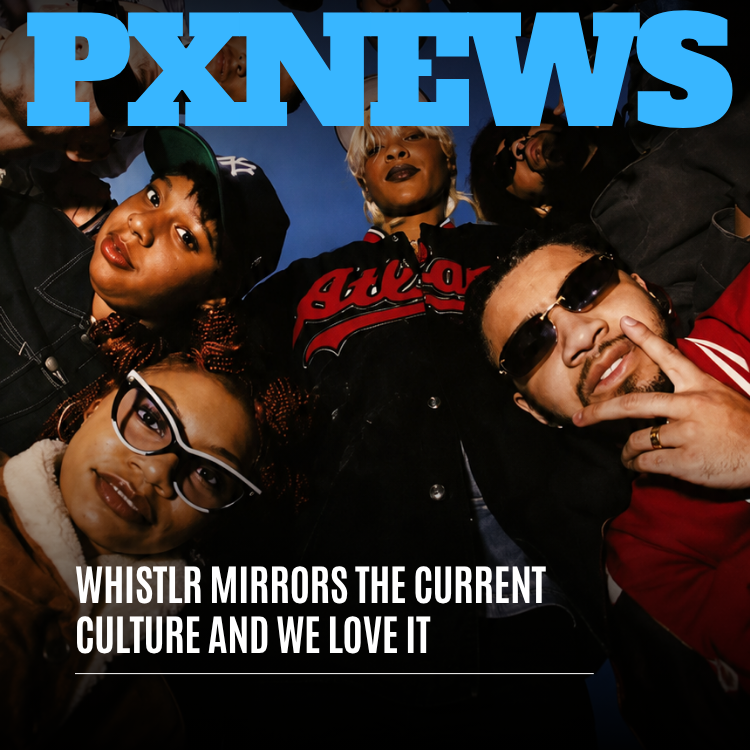
Scroll Whistlr for ten minutes on any given night and you'll see it: the jersey everyone's suddenly wearing, the sound that took over every Mini this week, the phrase that started in one SubCircuit and is now in half your group chats, the local artist who was unknown a month ago and is now the soundtrack to everybody's Stories. Whistlr mirrors the current culture — not the polished, focus-grouped version of it, but the real one, moving at the speed real people move. We didn't engineer that. We built a platform that gets out of culture's way, and the community did the rest. Honestly? We love it.
What It Means That Whistlr Mirrors the Current Culture
"Culture" is one of those words that gets used so often in tech marketing that it's close to meaningless. Every app claims to be where culture happens. So let's be specific about what we mean when we say Whistlr mirrors the current culture.
We mean that if you want to know what people are actually listening to, wearing, laughing at, arguing about, and building right now, Whistlr is increasingly one of the most accurate places to look. Not because a trend team decided what's hot and pushed it into everyone's feed, but because the people shaping those trends are on the platform, talking to each other, in communities they built themselves. When a mirror is working, it doesn't add anything to the picture. It just shows you what's really there. That's the role we want Whistlr to play.
That distinction matters, because there's a very different version of a social platform — one that tries to be the megaphone rather than the mirror. That kind of platform manufactures moments, amplifies whatever keeps people reacting, and treats culture as inventory to be packaged and sold back to the people who created it. We wrote about this directly when we talked about embracing culture at ETAPX: there's a difference between hosting culture and extracting it. A mirror reflects. A megaphone distorts. We'd rather be the mirror.
"The best compliment anyone can give Whistlr is that it feels like right now. Not like a brand's idea of right now, not like last month's trend report — like the actual moment people are living in. We can't manufacture that. The only thing we can do is build a room good enough that the culture wants to hang out in it, and then be humble enough not to rearrange the furniture every five minutes."
— AJ, Founder & CEO, ETAPX
Why Culture Shows Up on Whistlr First
It's worth asking why the platform ended up this way, because it wasn't luck. A handful of structural choices, made early and defended consistently, are what let Whistlr reflect culture instead of flattening it.
Communities Built by the People in Them
Circuits and SubCircuits are the backbone of this. A Circuit is a real community — people who chose to be there together — and a SubCircuit narrows that into a specific shared interest inside it. That structure means culture on Whistlr has somewhere to form before it goes wide. A slang term, an editing style, a regional sound, a fashion micro-trend: all of it gets room to develop inside the community where it originated, with the people who understand it, before the rest of the platform ever sees it. By the time something reaches the broader Whistlr world, it arrives with its context intact.
Friend-First Discovery
Whistlr's friend-first approach to discovery means new things reach you through real connection paths — friends of friends, shared Circuits, mutual interests — rather than being pushed at you because they're statistically likely to provoke a reaction. That's how culture actually travels in real life. You hear a song because your friend won't stop playing it. You start saying a phrase because your group chat won't stop saying it. Whistlr's discovery works the same way, which is exactly why what surfaces feels genuine rather than manufactured.
A Trending Tab That Reflects the World
Whistlr's Trending tab was built to show a fuller, more honest picture of what's happening. It weaves together hashtag momentum, current news from the wider world, and the Circuit threads drawing the most thoughtful participation, instead of crowning whatever got the loudest reaction in the last hour. And with our recent shift toward what people actually watch through and come back to, Trending is increasingly a reflection of what people genuinely care about — which is a much better definition of "the current culture" than what merely interrupted someone's scroll.
- Circuits and SubCircuits: Culture forms inside the communities that create it, with context and vernacular intact.
- Friend-first discovery: Trends travel through real relationships, the way culture always has.
- Trending that blends signals: Hashtags, news, and community threads together, weighted toward what people actually value.
- Room for the rough edges: Unpolished, spontaneous content is allowed to be exactly that, because that's often where culture feels most real.
Music: Where Whistlr's Culture Is Loudest
If you want to see Whistlr mirroring the current culture in real time, start with the music. Long before Waves had a name, people on Whistlr were already sharing songs everywhere — in captions, in Stories, in Circuits organized around a genre or an artist's fanbase. Waves gave that instinct a proper home, and now music runs through nearly every corner of the app.
What makes it a mirror rather than a chart is who gets heard. On a lot of platforms, a sound only matters once it's already big. On Whistlr, a track can start inside a producer's SubCircuit, move into Stories, get picked up as the soundtrack to a wave of Minis, and land on people's profiles as part of their current rotation — each hop driven by a person someone trusts, not a chart position. That's how independent and upcoming artists keep breaking through on Whistlr, and it's why the music you hear on the platform tends to be what's actually moving in the culture right now, including the regional and niche sounds that a global algorithm would have smoothed away.
"I always know what's about to be big because it shows up in my Circuits a few weeks before anywhere else. Half my playlist right now is artists I found because somebody in a SubCircuit dropped a track and everybody lost it. By the time it hits the radio I'm already tired of it."
— Jaylen, Whistlr user and music fan
Fashion, Drops, and What People Are Actually Wearing
Culture is visible. Before anyone puts a name on a trend, it shows up in what people are wearing — the vintage jersey, the specific frames, the sneaker everyone's trying to cop before it sells out. Whistlr's feed has become a surprisingly accurate real-time lookbook for that, because the people posting are the people setting the style, not brands paying to tell you what's in.
Sports culture is a great example of how this plays out. A throwback jersey isn't just a piece of clothing on Whistlr — it's a statement about a city, a team, an era, and the people you grew up with. You'll see the same jersey show up in a fit check Mini, a game-night live stream, a Story from a watch party, and a SubCircuit debating which season it represents best. None of that was coordinated. It's just what happens when fans, stylists, and everyday people share a space where the conversation about what something means is as visible as the thing itself. That overlap between sports, fashion, music, and hometown pride is the current culture, and Whistlr reflects it because it lets all of those threads live side by side instead of splitting them into separate apps.
That's also why commerce on Whistlr is built the way it is. Creator Storefronts and the Campus Store exist because fashion culture runs on things that don't fit a generic shopping template: drops that respect how a community organizes around a release, limited runs where scarcity actually means something, and a visual language that stays the creator's own. When a creator's merch sells out on Whistlr, it's usually because their community recognized it as theirs — the most honest cultural signal there is.
- Real outfits, real people: Style on Whistlr is set by the community, which is why the feed reflects what people are actually wearing.
- Drops that respect culture: Storefront release mechanics are built around how communities organize around a launch.
- Creator identity first: A creator's Storefront is an extension of who they are, not a disconnected shop.
Humor, Memes, and the Vernacular of Real Communities
If music is Whistlr's loudest cultural layer, humor is its fastest. Youth and creative culture run on jokes that are referential, absurd, and gone in a week — the kind of humor that dies instantly the moment a brand tries to explain it. Whistlr's approach is simple: don't caption the joke. Don't turn it into a campaign. Build room for it to exist on its own terms and get out of the way.
That restraint shows up in how communities get to keep their own language. Every scene has its own vernacular, and getting it wrong is the fastest way to signal that a platform is observing from the outside. Circuits and SubCircuits let that vernacular live where it makes sense, with moderation and community tools that can flex to a community's actual norms rather than forcing everyone through one generic lens. The in-joke stays an in-joke until it's ready to break out — and when it does, it breaks out because people chose to spread it.
Thoughts, Whistlr's shorter-form, text-first corner, has become one of the best places to watch this happen. A single well-timed Thought can turn into a phrase an entire Circuit adopts, then a caption format on Minis, then something people say out loud without remembering where it started. That's culture forming in public, and it's one of our favorite things to watch on the platform.
Minis and Live Streams: Culture in Real Time
Short-form video and live streaming are where Whistlr's cultural energy moves fastest. A Mini shot in someone's bedroom with rough production value can carry more cultural weight than something expensively produced, because the roughness is part of what makes it feel real. We've deliberately avoided pushing creators toward a single polished aesthetic. When everyone is forced to look the same, a feed stops being a mirror and starts being a catalog.
Live streams take that further. A live stream is culture with no edit pass: the audience watches the actual process, the mistakes, and the in-jokes forming in the chat as they happen. Whistlr's low-latency live infrastructure exists precisely so that chat and reactions keep pace with the moment, which means a stream can genuinely become an event — a reaction night, a release party, a Circuit hanging out together — rather than a broadcast with a delayed echo.
"We watch a lot of what the community makes, and the thing that surprises people inside the company is how often the most culturally important content is also the least produced. A shaky Mini, a late-night stream, a Thought typed in ten seconds. Our job isn't to make that stuff look more professional. It's to make sure the product never punishes it for being real."
— Renata Osei, VP of Product, ETAPX
Moods, Blips, and Profiles as a Living Snapshot
Mirroring culture isn't only about what's trending across the platform. It's also about how individual people show up. Whistlr's profile redesign moved away from a static bio nobody revisits and toward a living snapshot of who someone is right now. Moods let people signal how they're doing in a lightweight, low-pressure way. Blips are quick, casual shares without the performance pressure of a polished post. Music sits right alongside both as one more honest layer of identity, and profile skins gave people a playful way to make their space feel like theirs.
Put all of that together and a Whistlr profile becomes a small mirror of its own — reflecting not just who someone is, but what moment they're in. Zoom out across a whole Circuit, or the whole platform, and those individual snapshots add up to a remarkably accurate picture of the current culture: what people are feeling, listening to, and caring about, updated constantly by the people living it.
A Mirror, Not a Megaphone: What We Deliberately Don't Do
Being a good mirror is as much about restraint as it is about features. There are things a lot of platforms do to chase cultural relevance that we have chosen not to do, and we think that choice is a big part of why Whistlr feels current rather than performatively trendy.
- We don't manufacture trends. Trending reflects what's genuinely happening across hashtags, news, and communities. It isn't a place where we decide what's cool and push it.
- We don't reward outrage. Whistlr's ranking weighs negative signals — quick skips, "not interested," hides, mutes, reports — alongside positive ones, so content people are trying to get away from doesn't get rewarded just for being loud.
- We don't sand down every scene. Communities keep their own language, humor, and aesthetics, within the platform's safety standards.
- We don't borrow culture for a season. Features built for a specific community aren't quietly removed the moment they stop looking good on a dashboard.
- We don't pretend to be the culture. The community creates it. Whistlr's job is to build the room and keep it welcoming.
That last point is the one we take most seriously. The moment a platform starts believing it's the source of the culture on it, it starts making decisions that serve its own image instead of its community. Staying clear about our role keeps us honest.
Keeping It Real Without Losing What Makes It Safe
There's a tension in all of this that's worth naming. Culture is raw, fast, and sometimes messy, and a platform that reflects it has to decide how to keep things safe without scrubbing away what makes the culture itself. We've written before about making sure content on Whistlr stays safe and enjoyable, and about creating a private and safe space for our users. Those commitments don't get relaxed because something is trending.
The approach is to separate what's genuinely harmful from what's just unfamiliar. A slang term a moderator doesn't recognize isn't a problem. A community with a sharper sense of humor than average isn't a problem. Harassment, exploitation, and content designed to hurt people are problems, and they're handled as such, wherever they show up. Getting that distinction right is what lets Whistlr be a place where culture feels unfiltered in the good sense — expressive, specific, alive — without becoming a place where people get hurt.
Creators Are Culture's First Responders
If the community is the culture, creators are often its first responders — the people who notice a shift early, put a name or a sound or a look to it, and help it spread. Whistlr's creator tools are built to support that role rather than bend it toward whatever an opaque system prefers.
Creator Studio at whistlr.studio gives creators a transparent view of their own audience so they can build for the people who actually show up, instead of guessing at an algorithm. WTC Gems let audiences support creators directly and immediately, especially during live streams. Storefronts let creators sell to the people already supporting them. Taken together, those tools mean creators can follow the culture they're genuinely part of, rather than chasing whatever a platform decided to reward that week.
"I've been on apps where you could feel the algorithm wanting you to make a certain kind of video. On Whistlr I just make what my people are into. Some weeks that's a fit check, some weeks it's a dumb skit, some weeks I go live and just talk. The audience keeps up because it's the same culture we're all living in."
— Imani, Whistlr creator
How to Find Your Corner of the Culture on Whistlr
If you're new to Whistlr, or you've mostly been scrolling without diving in, here's how to plug into the culture that fits you instead of watching it from the outside.
- Join a few Circuits that match what you're actually into. Music scenes, style, sports, gaming, local communities — Circuits are where culture forms first, so start there.
- Explore SubCircuits for the specific stuff. The broad Circuit gets you in the door; SubCircuits are where the in-jokes and early trends live.
- Check Trending, then follow the thread. Use Trending to see what's moving across hashtags, news, and communities, then tap into the Circuit or conversation behind it for context.
- Let music lead you. Follow a track from a Story to a Mini to a profile to a SubCircuit. Waves is one of the fastest ways to find people who share your taste.
- Post in your own voice. Thoughts, Blips, and Moods are low-pressure ways to join in without needing a polished post.
- Tune your feed honestly. Use "not interested," hide, and mute on things that don't fit. Whistlr treats those signals seriously, so your feed reflects your culture more over time.
Frequently Asked Questions
What does it mean that Whistlr mirrors the current culture?
It means Whistlr reflects what people are genuinely listening to, wearing, laughing at, and talking about right now, because the people shaping those trends are active on the platform in communities they built themselves. Whistlr aims to reflect culture rather than manufacture it.
How does Whistlr decide what's trending?
Whistlr's Trending tab blends hashtag momentum, current news from the wider world, and the Circuit threads drawing the most thoughtful participation. Ranking weighs deliberate actions like comments, shares, and saves more heavily than quick taps, and it accounts for negative signals such as quick skips and "not interested," so outrage alone isn't rewarded.
Why do new artists and trends show up on Whistlr early?
Because culture forms inside Circuits and SubCircuits before it goes wide, and Whistlr's friend-first discovery lets it spread through real relationships. A song or style can travel from a small community to Stories, Minis, and profiles without needing a label, a marketing budget, or an existing audience.
Does Whistlr push trends or sponsored culture into my feed?
Whistlr's approach is to reflect what's genuinely happening rather than decide what's cool and push it. Discovery is friend-first, and Trending is built from real activity across hashtags, news, and communities rather than a curated list of what the platform wants to promote.
How does Whistlr keep content safe while letting culture stay authentic?
Whistlr separates what's genuinely harmful from what's simply unfamiliar. Community slang, humor, and aesthetics get room to exist, while harassment, exploitation, and content designed to hurt people are handled under the platform's safety standards wherever they appear.
How can I find communities on Whistlr that match my interests?
Start by joining a few Circuits around what you're into, then explore SubCircuits for more specific interests. Use Trending to spot what's moving and follow it back to the community behind it, and use music through Waves to find people who share your taste.
Whistlr looks like right now because the people on it are right now. We just built the mirror — and every day, the community gives it something worth reflecting.