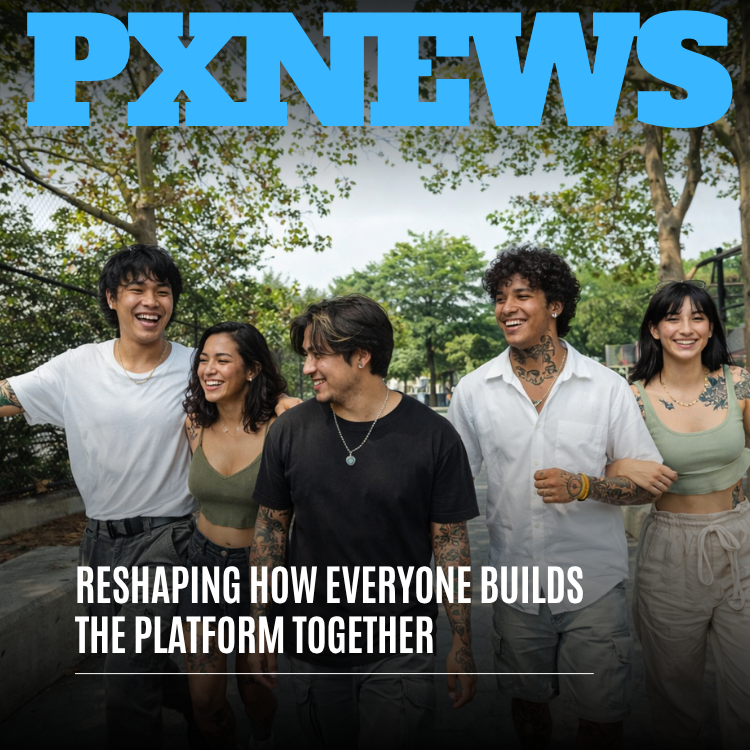
Whistlr has never been built by ETAPX alone. The creators posting Minis, the people running SubCircuits, the business users opening Storefronts, the friends swapping Echos and Reactions at midnight — all of them have shaped the platform as much as any roadmap has. What's changing now is how intentionally we build with them. ETAPX is reshaping how everyone builds the platform together: clearer feedback loops, more direct access to the team, more ways to test what's coming before it ships, and a more honest account of what happens to every idea the community shares. This is a look at what community-driven product development means at ETAPX, how it works in practice, and how you can take part.
Building the Platform Together: What Community-Driven Development Means
Every company says it listens to its users. It's a line that shows up in almost every mission statement, and it often means very little. At ETAPX, building the platform together has a more concrete meaning: the people who use Whistlr and the rest of the ETAPX lineup are real contributors to what gets built, how it gets built, and what gets left out.
That doesn't mean every request becomes a feature. It means community input is a genuine, structured input into the roadmap rather than a suggestion box nobody opens. It means the team explains its decisions in public, including the ones people disagree with. And it means the distance between "someone has an idea" and "someone on the team hears it" keeps getting shorter.
This isn't a brand-new philosophy for us. Campus, our official Discord server, was opened specifically to close that distance. PX News exists so the reasoning behind decisions lives in a public record. Many of Whistlr's most-loved features trace directly back to what people asked for. What's new is the scale and intentionality of it. As the community grows and the platform deepens, building together can't stay informal. It needs real infrastructure, and that's what we're investing in now.
"The best platforms don't get built for people. They get built with them. Whistlr exists because a lot of people decided to show up and make it their place — their Circuits, their Waves, their Storefronts. The least we can do is make sure those same people have a real hand in where it goes next, not just a feedback form and a thank-you email."
— AJ, Founder & CEO, ETAPX
Why ETAPX Is Reshaping How the Platform Gets Built
A few realities have made this shift feel necessary rather than optional.
- The community is bigger and more varied: Whistlr's growing userbase and international expansion mean the platform now serves people with very different needs, languages, and habits. No internal team, however talented, can anticipate all of them alone.
- The platform is deeper: Circuits and SubCircuits, Waves, Minis, WTC Gems, Creator Studio, Flow, Storefronts, Live Shopping, Halo, Profile Skins, and relationship status each serve different people in different ways. The more a platform can do, the more its users know about using it that the builders don't.
- Creators' livelihoods are on the line: Decisions about monetization tools, streaming, and commerce directly affect how creators and business users earn a living. Those aren't decisions to make in a vacuum.
- Trust compounds through visible follow-through: A community that sees its feedback lead to real changes trusts the platform more, and a platform people trust is one they're willing to invest their time and creativity in.
Put simply, the old model — build internally, ship, measure reaction, adjust — isn't fast or accurate enough anymore. We'd rather know we're wrong about something on day one, from creators telling us in real time, than discover it months later in a slow drift away from a feature.
Features That Were Built Together
The most convincing argument for building together isn't a philosophy. It's the list of things Whistlr already has because people asked for them. Here are some of the clearest examples.
- The profile redesign: Longtime users told us profiles felt like static business cards. The redesign gave people much more room to express who they are beyond a bio and a grid.
- Halo: Repeated requests for a lighter, more human way to signal presence — without the all-or-nothing pressure of an "online now" dot — became Halo, the ambient presence feature around your avatar.
- Relationship status: One of the most requested features for years, built the way the community insisted it had to be: mutual, consent-based, and audience-controlled.
- Echos and Reactions: People wanted faster, more expressive ways to respond without writing a full comment every time, and these came directly out of that feedback loop.
- Creator Studio's standalone home: Creators told us they needed a dedicated workspace built for the work of creating and running a business. That's a big part of why Creator Studio grew into its own home at whistlr.studio.
- The floating bottom nav: A smaller change, but a direct response to people saying the older navigation felt cluttered and slowed them down.
Each of these started as a request, a complaint, or a pattern the team noticed in how people were using the app. None of them shipped exactly as first suggested. They shipped in the form that best met the underlying need — which is exactly how building together is supposed to work.
How Community Feedback Becomes a Feature
It's worth explaining what actually happens to feedback once it reaches ETAPX, because the process is more thoughtful than "most upvotes wins."
1. Collecting signal from everywhere
Feedback reaches the team through many channels: Campus on Discord, comments on ETAPX posts, direct messages to team accounts, support conversations, App Store and Play Store reviews, and conversations inside Circuits and SubCircuits. None of it arrives neatly organized, and all of it matters.
2. Finding the need behind the request
Renata Osei, our VP of Product, describes this as the difference between hearing and listening. Hearing is collecting requests in a spreadsheet. Listening is understanding why people are asking. Someone asking for a very specific notification toggle may really be telling us notifications feel noisy overall. The team builds for the underlying need, not just the literal ask.
3. Testing ideas early
Promising directions get shared early through Campus's beta and early access channels, where community members can poke at unfinished versions and give the fast, blunt feedback that only comes from real use.
4. Shipping, then listening again
When a feature ships, the loop doesn't close. Real usage reveals things testing never does, and the team keeps refining based on what people actually experience.
5. Explaining the outcome
This is the step we're investing in most right now. Whether an idea ships, gets reshaped, or gets set aside, people deserve to know what happened and why. PX News, the YouTube channel, and Campus are how we close that loop publicly.
"The most useful piece of feedback is rarely the solution someone proposes. It's the problem hiding underneath it. When we get that part right, we can often build something better than what was originally asked for — and the people who asked can usually tell we actually understood them, which matters just as much as the feature itself."
— Renata Osei, VP of Product, ETAPX
What's Changing: New Ways to Build Whistlr Together
Reshaping how everyone builds the platform together means going further than the informal loops we've relied on so far. Here's what the community can expect as this rolls out.
- More visible decision-making: The PX team is preparing to build in public through daily streams, coming soon. That means people will be able to watch design reviews, product discussions, and build sessions as they happen — and weigh in before decisions are final.
- Clearer "you said, we did" updates: We want to be much more explicit about connecting shipped changes to the feedback that inspired them, so people can see their input traced through to the result.
- Honest "not right now" answers: Not every idea fits, and silence is the worst possible answer. We're committing to explaining more often when something isn't being built, and why.
- Broader early access: The beta and early access channels in Campus will keep growing as a place to test upcoming features with real users before they reach everyone.
- More voices, not just the loudest: Feedback from quieter members of the community — newer creators, smaller Circuits, people in regions Whistlr has recently expanded to — gets weighed deliberately, not drowned out by whoever posts most often.
- Creator and business input on tools that affect earnings: Changes to Creator Studio, Flow, Storefronts, Live Shopping, and other monetization tools will increasingly be shaped with the creators and business users who depend on them.
A Walkthrough: How an Idea Moves From Campus to the App
To make this concrete, here's how a single idea might travel through the new, more collaborative process from start to finish.
It starts with a creator in Campus mentioning that planning a Storefront drop around a Flow stream takes too many steps. A few others chime in: they've felt the same thing. Nobody has proposed a finished solution yet, and that's fine. What the team hears is a pattern — people who sell while they stream are juggling too much at once.
From there, someone on the product side follows up directly, asking how those creators actually prepare for a live sale today. The answers reveal the real problem isn't one missing button. It's that preparation and the live moment feel disconnected. That insight becomes the brief.
Next, designers sketch a few directions and, once daily streams are running, may walk through them live, inviting the creators who raised the issue to react. The strongest direction moves into a build, and an early version is shared in Campus's beta and early access channel. Testers find the rough edges: a step that's still confusing, a setting that's buried, a flow that breaks on a smaller phone.
When the improvement finally ships to everyone, the story gets told publicly — in PX News, possibly in a YouTube walkthrough, and in Campus — with credit to the feedback that started it. Then the team keeps listening, because real usage at full scale always reveals something new.
That whole arc — pattern, conversation, insight, design, test, ship, explain, refine — is what building the platform together looks like when it's done deliberately instead of by accident. Not every idea will follow every step, and some will be set aside partway through with an honest explanation. But the path is visible, and anyone in the community can see where they fit into it.
Who Gets to Build the Platform? Everyone.
Building together isn't just for power users or big creators. Every kind of person on Whistlr brings a different perspective that the platform needs.
Everyday users
People who use Whistlr to keep up with friends, join Circuits, and listen on Waves notice the small frictions that shape whether an app feels good to use every day. That perspective is invaluable, and it often drives the polish work that makes the biggest difference.
Creators
Creators live inside the tools — Minis, Creator Studio, Flow, WTC Gems — and understand their strengths and gaps better than anyone. Collaboration has become central to how creators grow on Whistlr, and creators' input on collaborative features like co-streams and duets directly shapes what comes next.
Community leaders
People who run SubCircuits carry real responsibility for the spaces they build. Their experience with rules, membership, moderation, and discussion quality shapes how communities on Whistlr evolve — including the long-term vision of handing more ownership to the people who already showed up.
Business users
Local businesses and brands using Storefronts and Live Shopping bring a practical, results-focused view. Helping local businesses thrive on Whistlr has long been a goal, and their feedback keeps the commerce tools grounded in how selling actually works.
The broader ETAPX community
People using GLSRM, Ocsidian, Influxx, and in.between are part of this too. The same spirit of building together applies across the lineup, with each product's community shaping its direction in ways that fit that product.
"I suggested something in Campus half expecting it to disappear, and a few months later a version of it showed up in the app — honestly better than what I'd pitched. Since then I actually take the time to write thoughtful feedback, because I know somebody reads it. It feels less like using an app and more like being part of the crew building it."
— Alana, Whistlr creator and SubCircuit moderator
How to Share Feedback That Actually Shapes Whistlr
If you want your voice to have the most impact, a few habits make a big difference. Here's a practical guide to giving feedback the team can act on.
- Describe the problem, not just the fix: "I can't find my drafts quickly when I'm about to post a Mini" is more useful than "add a drafts button here." The team can often solve the underlying problem in a better way than a single proposed fix.
- Share context: Tell us how you use the feature, what device you're on, and what you were trying to do. Context turns a vague complaint into something the team can reproduce and understand.
- Use the right channel: Real-time discussions and quick questions fit Campus on Discord. Durable guides and recurring topics fit a SubCircuit, where they stay searchable. Account-specific issues belong in support.
- Join early access: If you enjoy testing unfinished things, watch the beta and early access channel in Campus. Early testers have an outsized influence on how features turn out.
- Follow up: If something changes after you gave feedback, tell us whether it actually solved your problem. That second round of input is often the most valuable of all.
- Be candid and kind: Blunt feedback is welcome. The most useful version is honest about what's wrong while assuming everyone involved wants the platform to be great.
What Building Together Doesn't Mean
It's important to be honest about the limits, because overpromising would undermine the whole point.
Building together doesn't mean every decision becomes a vote. Some choices — especially around safety, privacy, and security — have to be made on principle, even when they're unpopular. Keeping Whistlr safe and enjoyable, protecting private spaces, and maintaining security at scale are responsibilities ETAPX can't hand off to a poll.
It also doesn't mean the platform chases every trend or request. A product that ships everything anyone asks for turns into a pile of one-off accommodations instead of a coherent experience. Part of building together well is having the discipline to say no, and the respect to explain why.
And it doesn't mean timelines on demand. The team can't promise when an idea will ship the moment it's suggested. What we can promise is that ideas are genuinely considered, that decisions are explained, and that the history of the platform keeps proving community input matters.
"Community-driven doesn't mean decision-free. It means we make better-informed decisions, out in the open, with the people they affect. Some calls will still be ours to make, especially around safety. But we'd rather explain a hard call to a community that was part of the conversation than surprise people with a change they never saw coming."
— Priya Okonkwo-Hale, Head of Community at ETAPX
The Bigger Picture: A Platform Shaped by the People on It
The long-term vision behind all of this is a Whistlr that feels owned by its community rather than merely hosted for it. That idea already runs through how ETAPX thinks about Circuits — public spaces gradually becoming more personal, and ownership earned by the people who invest in a community. Reshaping how everyone builds the platform together extends that same idea to the product itself.
It also reflects how ETAPX thinks about itself as a company. PX Campus is going through another stage of growth, and a bigger team makes it possible to listen more closely and respond more quickly. The PX team's plan to build in public through daily streams makes the process visible. Campus on Discord keeps the conversation real-time. PX News keeps the record honest. Together, those pieces form a loop that runs from your idea to the team's decision and back to you.
The platforms that last are the ones people feel they have a stake in. That's what we're building toward: not a product handed to a community, but one the community genuinely helps build, one improvement at a time.
Frequently Asked Questions
What does it mean that ETAPX is reshaping how everyone builds the platform together?
It means ETAPX is making community input a more structured, visible part of how Whistlr and its other products are built — through clearer feedback loops, broader early access, daily build-in-public streams coming soon, and more honest explanations of what happens to each idea, whether it ships, changes, or gets set aside.
How can I give feedback on Whistlr?
The most direct way is Campus, ETAPX's official Discord server at discord.gg/etapx, which has dedicated channels for feedback and for beta and early access. You can also share feedback through Circuits and SubCircuits, comments on ETAPX posts, app store reviews, and support conversations.
Which Whistlr features came from community feedback?
Several major features trace back to community requests, including the profile redesign, Halo, relationship status, Echos and Reactions, Creator Studio's standalone home at whistlr.studio, and the floating bottom nav.
Does every piece of feedback become a feature?
No. ETAPX looks for the underlying need behind each request and builds for that need, which often results in a different or better solution than the one proposed. Some ideas won't fit the platform, and the team is committing to explaining those decisions more often.
Can I test new Whistlr features before they launch?
Yes. ETAPX recruits testers and shares early builds through the beta and early access channel inside Campus on Discord. Early testers have an outsized influence on how features turn out.
Are there decisions the community doesn't vote on?
Yes. Decisions involving safety, privacy, and security are made on principle to protect everyone on the platform, even when they're not the most popular choice. ETAPX aims to explain those calls openly rather than make them silently.
Whistlr became what it is because people showed up and made it theirs. Reshaping how everyone builds the platform together is our way of honoring that — giving the community a clearer voice, a closer view, and a real stake in what comes next. Join Campus, bring your ideas, and help build the next version of the platform with us.