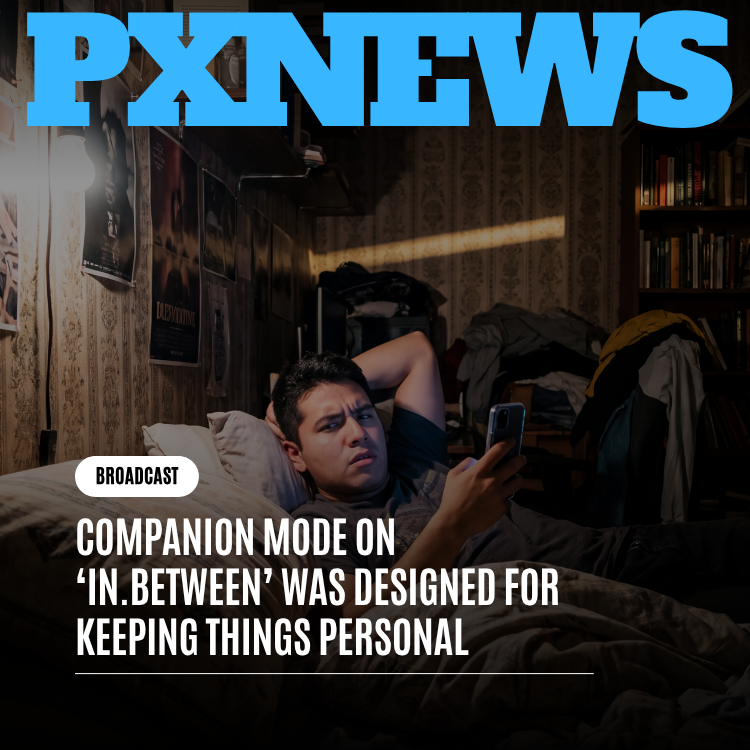
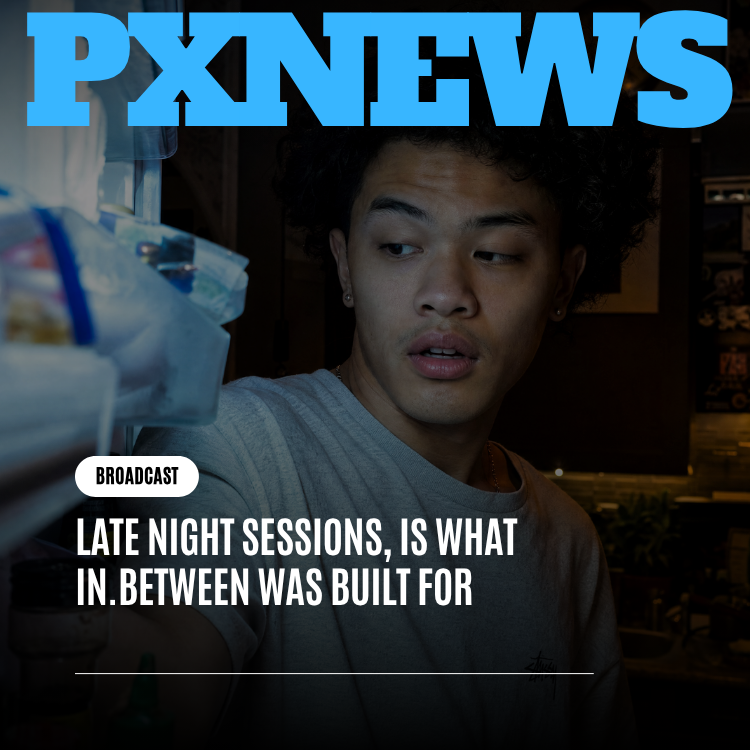
There's a version of every person that only shows up after eleven o'clock. The version that isn't performing competence for a manager, isn't managing a group chat, isn't keeping a face on for anyone. The lights are off or nearly off. The day's obligations have finally run out of runway. And for a lot of people, that's the first moment all day their mind is actually quiet enough to hear itself think — which is either a relief or the exact opposite of one, depending on the day. in.between, ETAPX's AI-powered sleep and reflection journal guided by its AI companion Nalani, wasn't designed to be useful at that moment. It was designed for that moment specifically, and for almost no other one. That distinction — a small one on paper, an enormous one in practice — is the whole story of how the app came to look, move, and sound the way it does.
The Moment Before Sleep Is Not Like Other Moments
Ask most product teams what time of day their app gets used, and the honest answer is usually "whenever people have a spare minute" — on a commute, in a waiting room, during a lull at work. in.between's team asked the same question early on and got a very different kind of answer. The app wasn't getting used in spare minutes scattered across the day. It was getting used in one specific window, night after night, right before people put their phone down for good and tried to sleep. That window has a texture to it that doesn't exist anywhere else in a person's day. The body is tired in a way that lowers its guard. The performances required by work, by social situations, by simply being seen in public, have mostly ended for the day. Many people find that their minds are more honest right before sleep than at almost any other hour — not because anything mystical is happening, but because there's finally nothing left competing for attention. The to-do list has been dealt with or abandoned for the night. The small talk is over. What's left is whatever's actually been sitting underneath the day, waiting for a quiet enough moment to surface. That's a genuinely different psychological state than the one a person is in at noon, scrolling during a lunch break, or at 4 p.m., decompressing between meetings. It's slower. It's more porous. It's also, frankly, more fragile — a mind that's finally let its guard down is not a mind that wants to be jostled, prompted aggressively, or made to feel like it's being productive. It wants something closer to companionship than to a tool. Building a product for that specific state, rather than for "whenever someone opens the app," turned out to require rethinking almost everything about how in.between behaves.
What the Design Team Learned by Actually Watching Late-Night Use
None of this started as a theory. It started with in.between's team paying close attention to when and how people were actually opening the app, and noticing that the pattern was far more concentrated — and far more consistent — than a typical journaling or wellness product's usage tends to be. People weren't dipping in and out throughout the day. They were arriving in a fairly narrow band of the evening, already partway toward sleep, already in the specific headspace that band of time produces. "We could have kept building in.between as a general reflection app that happened to be popular at night," Maya Lindqvist, Head of in.between at ETAPX, says. "Instead we asked what would happen if we stopped treating that as incidental and started treating it as the entire design brief. What does someone actually need at eleven-forty at night that's different from what they need at noon? That question changed almost every decision we made after it." What the team found, watching real usage rather than guessing at it, was a set of consistent patterns that most general-purpose journaling apps simply aren't built to notice, let alone accommodate:
- Sessions arrive already slower: people opening in.between late at night are typing more slowly, pausing longer between thoughts, and rarely arriving with a fully formed idea of what they want to say — very different from the quick, decisive taps of a daytime app session.
- Attention is narrower, not broader: a tired mind can hold one thread of thought at a time far more comfortably than several, which meant a lot of the branching menus, options, and prompts common to daytime apps became friction rather than features.
- Brightness reads as an interruption: a bright screen at the end of the day doesn't just look wrong in a dim room, it functions as an alert — something that says "pay attention now" to a mind that's trying to do the opposite.
- People want to be met where they are, not redirected: late-night entries often start mid-thought, and any prompt that tried to reroute the conversation toward a tidier, more structured topic tended to get abandoned rather than answered.
- The session itself needs a visible end, not just a stopping point: unlike a daytime app that people leave and return to freely, a late-night session that doesn't clearly wind down can leave someone more awake, not less — engagement that keeps going is not automatically success at eleven at night.
That last point turned out to be the most important, and the most uncomfortable for a product team to sit with. In most software, more engagement is treated as a win by default. A session that runs long, that keeps someone tapping and typing, usually reads as a sign the product is working. in.between's team had to unlearn that instinct almost entirely. A late-night session that stretches on, that keeps stimulating rather than settling, isn't a success by the standard that actually matters here. It's a failure dressed up as one.
Designing for One Moment, Not the Whole Day
It would have been easier, in a lot of ways, to build in.between as a general-purpose journaling app — something flexible enough to be reached for at noon during a stressful stretch, at 4 p.m. after a hard conversation, and again before bed. General-purpose is the safer bet, usually, because it widens the number of moments a product can plausibly claim. But it's also a compromise, and the compromise shows up in exactly the way it always does: a product tuned to work reasonably well at every hour tends to work extremely well at none of them. in.between's team made the opposite bet. Rather than building something that would function acceptably whenever someone happened to open it, they built something tuned tightly to one specific moment, and let that tuning be the whole point. That meant deliberately not optimizing for the features that make a midday check-in app feel good — quick capture, snappy interactions, prompts designed to pull someone back in a few hours later for another round. None of that serves someone lying in a dark room at the end of a long day. Some of it actively works against them. "We had to get comfortable with the idea that in.between being 'worse' at noon was fine, as long as it was exactly right at eleven-thirty at night," Lindqvist says. "A lot of products chase being useful in as many moments as possible. We went the other way. We picked the moment that actually mattered to the people using this, and we let everything else be secondary to getting that one moment right."
"There's a version of this app we could have shipped that would look great in a demo at 2 p.m. — bright, snappy, full of prompts and options. It would have been the wrong app. The person we're actually building for isn't in a demo. They're tired, they're honest in a way they probably won't be again until tomorrow night, and the software needs to get out of the way of that, not compete with it."
— Maya Lindqvist, Head of in.between, ETAPX
Pacing Built for a Tired Mind, Not a Fast One
Pacing is one of those design decisions that's nearly invisible when it's right and glaringly obvious when it's wrong. Most apps are paced for alertness — quick transitions, immediate feedback, a rhythm built around someone who's sharp, focused, and ready to move through screens efficiently. That pacing is appropriate for most software most of the time. It's exactly wrong for a mind that's winding down. in.between's session pacing was slowed down deliberately, and repeatedly, across the product's development. Transitions that would feel snappy and satisfying in a daytime context — a quick fade, an immediate response, a screen that resolves the instant you tap it — read as abrupt in a dim room at midnight. The team found that giving a little more room between a thought being shared and a response arriving didn't feel like lag. It felt like consideration. A response that lands too quickly can read, in that specific state of tiredness, less like attentiveness and more like a system that was already waiting with an answer before it heard the question. That slower pacing extends to how a session actually closes. Rather than ending the way most apps end — abruptly, the moment someone taps away, with no acknowledgment that anything happened — in.between's sessions are built to taper. There's a sense of a conversation settling rather than simply stopping, which matters more than it might sound like it should when the goal of the whole interaction is to leave someone calmer than they arrived, not just finished.
Nalani's Rhythm After Dark
Nalani, ETAPX's first purpose-built AI companion model, was designed from the outset to be calm and attentive — but calm and attentive at noon and calm and attentive at midnight aren't quite the same thing, and in.between's team had to work out the difference specifically for the moment the app actually lives in. A lot of that difference comes down to restraint. Nalani's conversational rhythm late at night favors shorter responses, more space between exchanges, and a real reluctance to introduce new topics or directions unprompted. Where a daytime companion might reasonably try to keep a conversation moving — asking a follow-up to keep engagement going, suggesting a new angle when a thread seems to be running dry — Nalani, in the context in.between is actually used in, is built to let things go quiet without treating that quiet as a problem to solve. Silence, in a conversation happening at eleven at night with someone who's exhausted, is frequently the correct next move, not a gap that needs filling. The team also had to think carefully about how Nalani handles the specific kind of honesty that shows up late at night — the offhand, half-formed, sometimes messier thoughts that people are more willing to voice when they're tired and the day's filters have worn off. Nalani isn't built to seize on those moments, to treat a tired, unguarded admission as an opening for a deeper line of questioning. It's built to receive it gently and let the person decide how far they want to take it. That restraint, more than any single clever response Nalani could produce, is what the team found actually earned trust over repeated late-night sessions. "Late at night, people say things they wouldn't say at 9 a.m. — not because anything's wrong, just because they're finally not managing themselves so tightly," Lindqvist says. "Nalani's whole rhythm at that hour is built around not making anyone regret that. It doesn't pounce on an honest sentence. It sits with it."
"I use it almost exclusively lying in bed with the lights off, which sounds like a weird way to describe software, but that's genuinely the only time it makes sense to me. I tried opening it once on my lunch break out of curiosity and it felt completely out of place — like showing up to a pajama conversation in a suit. It's built for one specific moment of my day, and honestly, that's exactly why it works for that moment."
— Derek Osei, in.between user
A Visual Language Built to Recede, Not Perform
Everything visible in in.between was shaped by the same late-night logic that shaped its pacing and Nalani's conversational rhythm. The app is deliberately soft — low contrast, muted tones, nothing that asks to be looked at directly for very long. It's unhurried in how it moves, with none of the snap-into-place transitions that make an app feel responsive and alert in the daytime. And it's dark-friendly by default in a way that goes beyond a simple color scheme toggle: the whole visual approach assumes it's being used in a dim room, by someone whose eyes have already adjusted to low light and who does not want that adjustment undone by their phone. Low stimulation was treated as a design requirement, not an aesthetic preference. A lot of apps compete for attention because attention is the currency they're built to capture — brighter, louder, more eye-catching wins more of a person's day. in.between's team explicitly rejected that goal for this specific product. The visual design isn't trying to be noticed. It's trying to be forgettable in the specific way a comfortable, familiar space is forgettable — present, but never the thing you're focused on. The person using it should be focused on their own thoughts, not on the interface holding them. That restraint shows up in small, easy-to-miss choices: fewer things moving on screen at once, softer edges, longer pauses before anything new appears, an absence of the small celebratory flourishes — the confetti, the badge pop, the streak notification — that other habit-forming apps lean on heavily. Those flourishes work by producing a small jolt of alertness, and a small jolt of alertness is precisely what in.between's team spent so much effort designing out of the experience. A product built for the moment right before sleep cannot also be a product built to spike attention, even in small, well-intentioned doses.
What in.between Is Not
This is worth stating plainly rather than folding into a caveat somewhere in the middle of the piece. in.between is a wellness companion, and Nalani is a wellness companion model. Neither one is a licensed therapist, a medical device, or a substitute for professional mental health care, and the app isn't designed or positioned to function as any of those things. The fact that so much of this piece has been about honesty, unguarded moments, and what people say late at night makes that boundary more important to state clearly, not less. What in.between is built to do is create a calm, low-stimulation space for reflection at the specific moment people tend to want one — the wind-down before sleep — and to pair that space with a companion in Nalani that listens patiently and without judgment. It isn't built to assess, diagnose, or treat anything, and it doesn't position itself as capable of doing so. For anything that looks like a genuine mental health concern, the app is designed to point people toward real professional support rather than stand in for it. Building something this tuned to a vulnerable moment of the day only works, in the team's view, if the boundaries around what it is and isn't are kept just as carefully as the pacing and the tone.
Why Building for One Moment Was the Harder, Better Choice
It would be easy to read all of this and assume narrowing the target moment this tightly was a limitation the team accepted reluctantly. It wasn't. It was the strategy. A product that tries to be right for every hour of someone's day ends up, almost by definition, being merely adequate for most of them. in.between's team bet that being genuinely, specifically right for one recurring, meaningful moment — the one right before sleep, when a person's guard is down and their day has finally stopped asking things of them — would matter more than broad, average usefulness ever could. That bet required real discipline to hold onto. Every feature request, every design instinct borrowed from more typical daytime apps, had to be run through the same filter: does this serve someone at eleven-thirty at night, tired, in a dim room, or does it just serve the abstract idea of a more capable app? Things that failed that filter got cut, even when they would have tested well in isolation. What's left is something narrower than a general reflection app, and — by the team's own account — better for it, precisely because it never tries to be anything other than what it is.
Frequently Asked Questions
Why is in.between designed specifically for nighttime use?
ETAPX's design team found that in.between was overwhelmingly being used in a narrow window right before sleep, when people tend to be tired, unguarded, and more reflective than at other times of day. Rather than building a general-purpose journaling app that happened to see nighttime traffic, the team leaned into that pattern deliberately, shaping pacing, tone, and visual design specifically around that moment.
What does "low-stimulation design" mean in in.between?
It means the app is built to avoid the bright colors, quick transitions, and attention-grabbing flourishes common to most apps, because those elements can feel like an interruption to someone trying to wind down. Softer visuals, slower pacing, and a dark-friendly interface are all meant to help the app recede into the background rather than compete for alertness at the end of the day.
Is in.between meant to be used during the day too?
It can be, but it wasn't designed with that as the priority. in.between's pacing, visual tone, and Nalani's conversational rhythm are all tuned specifically for the late-night, wind-down moment. Using it at other times of day is fine, but the experience is intentionally built around one recurring moment rather than optimized to feel equally suited to every hour.
How does Nalani behave differently at night compared to other AI companions?
Nalani is built to slow down, favor shorter responses, and let silence sit rather than filling every pause, particularly in the late-night sessions the app is designed around. Rather than steering a conversation toward new topics to keep someone engaged, Nalani is designed to receive whatever someone brings to it gently and let them set the pace, which the team found matters more at the end of a tiring day than at other times.
Is in.between a replacement for therapy or medical care?
No. in.between is a wellness companion, and Nalani is a wellness companion model — not a licensed therapist, a medical device, or a substitute for professional mental health care. It doesn't diagnose or treat anything. It's built to offer a calm space for reflection at the end of the day, and to encourage people toward real professional support when that's what a situation actually calls for.
None of this reads as especially dramatic on a feature list — softer colors, slower pacing, a companion that talks a little less. But taken together, it's the entire reason in.between feels different from a general reflection app used out of habit. It was built for one specific, quietly important moment in a person's day, and everything about it was shaped to earn that moment rather than merely occupy it.