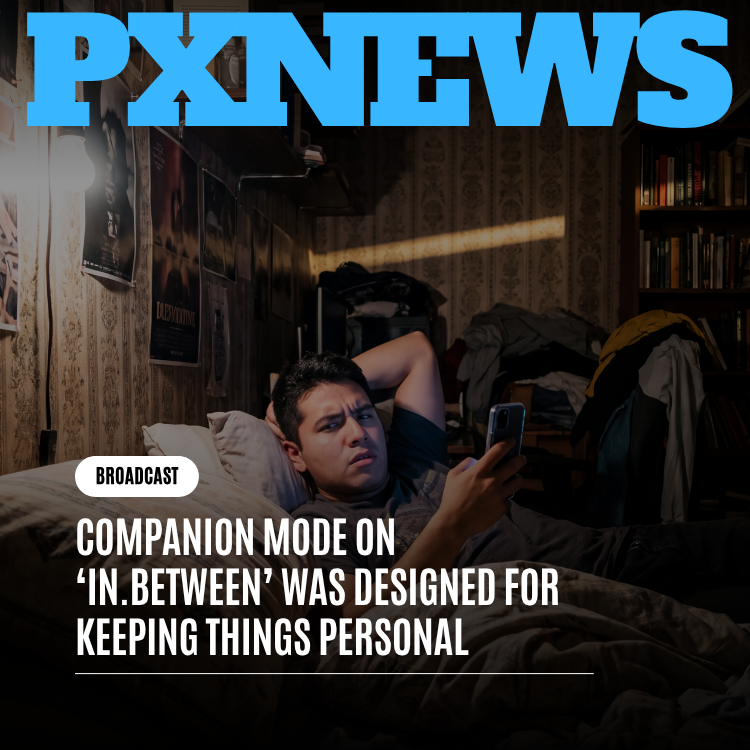

Late last month, ETAPX teased a new AI app without a name, a screenshot, or a launch date — just a quiet acknowledgment that something new was coming. Today, that something has a name: in.between, an AI-powered sleep and reflection journal built around a simple, almost old-fashioned idea. Before you fall asleep, you talk for a few minutes — by voice or by text — to an AI companion named Nalani, who listens, remembers, and gently reflects your own patterns back to you over time. No feed to scroll, no streaks to protect, no clinical checklist to fill out. Just the last few minutes of your day, spent actually thinking about it instead of consuming someone else's. in.between is live today on iOS, Android, and web, and it's the most personal product ETAPX has ever shipped.
The Teaser, Explained
If you caught our post in late August, you saw the shape of something without any of its substance: a new AI app, coming from ETAPX, deliberately unnamed. We got some good guesses in the replies — a productivity assistant, a Whistlr feature, another Influxx expansion — and we sat on our hands through all of them, because the honest answer wasn't ready to be said yet. It is now. That teaser was in.between, and the reason we waited to reveal it wasn't marketing coyness. It's that a product built around something as personal as how you end your day deserved to be introduced properly, not rushed out to fill a news cycle.
in.between is an AI sleep and reflection journal. Each night, you open it and talk — out loud or by typing, whichever feels right in the moment — to Nalani, an AI companion built specifically for this purpose. Nalani asks a little about your day, listens more than it talks, and over weeks and months starts noticing things: the week that was heavier than usual, the recurring worry that keeps circling back, the stretch where your mood visibly lifted. It reflects those patterns back to you gently, without ever diagnosing, labeling, or treating anything. That's the whole product, and it's taken the better part of a year to get right.
Strip away the AI framing for a second and in.between is doing something people have done for centuries: journaling before bed. What's different is the format and the responsiveness. A blank page doesn't ask you follow-up questions. A blank page doesn't remember that you mentioned a stressful meeting three Tuesdays ago and gently ask how it resolved. in.between does, because Nalani is there in the conversation with you, not just recording it.
A typical session is short — most people spend somewhere between three and ten minutes with it, though there's no timer pushing you along. You open the app, and Nalani starts where conversations with someone who actually knows you tend to start: not with a generic "how was your day," but with something shaped by what you told it yesterday, or last week, or a month ago. You can talk through what's on your mind out loud, the way you might talk to a friend on the phone while getting ready for bed, or you can type it out if voice doesn't fit the moment — sitting next to a sleeping partner, on a train, wherever you happen to be winding down. Both are first-class ways to use in.between; neither is treated as the "real" way and the other a fallback.
The output isn't a wellness score or a mood graph pretending to be science. It's a conversation, saved as your own private journal entry, with Nalani occasionally noting — never insisting — a pattern it's noticed. "You've mentioned feeling behind at work three nights this week" isn't a diagnosis. It's the kind of observation a genuinely attentive friend might make, delivered without judgment and without an agenda beyond helping you notice it yourself.
Meet Nalani
Nalani is ETAPX's first purpose-built AI companion model — not a general-purpose chatbot with a bedtime skin stretched over it, but a persona and conversational model designed from the ground up for exactly one job: being present with someone at the end of their day. That distinction matters more than it might sound. A general assistant is built to be maximally useful across a thousand different tasks. Nalani is built to be good at approximately one thing — listening — and everything about how it talks, how often it talks, and what it chooses to bring up was shaped around that single purpose.
In practice, that means Nalani is quieter than you might expect from an AI product. It doesn't fill silences with suggestions. It doesn't try to solve your day for you. It asks a question, gives you room to answer fully, and follows the thread you actually offer rather than steering you toward one it finds more interesting. Over time, it builds a sense of your recurring themes — the projects that keep coming up, the relationships you mention often, the kind of week that tends to leave you unsettled versus the kind that tends to leave you at ease — and it uses that memory to make each night's conversation feel like a continuation rather than a cold open.
The personality is deliberately steady: calm, attentive, non-judgmental, and allergic to anything that feels like a lecture. If you tell Nalani you had a rough day, it doesn't respond with a bulleted list of coping strategies. It asks what made it rough, and lets you get to whatever comes next on your own terms. That restraint was one of the hardest things to build, according to the team — it's a lot easier to make an AI that talks a lot than one that knows when not to.
"Every wellness product we looked at before building this one had the same failure mode: it wanted to be useful so badly that it stopped being present. It offered advice before you'd finished the thought. It gamified reflection into a streak counter. We built Nalani to do the opposite — to be genuinely good at listening, first, and to earn anything beyond that. If in.between only ever does one thing well, we want it to be that people feel heard at the end of a hard day."
— Maya Lindqvist, Head of in.between, ETAPX
A Night With in.between
The easiest way to understand in.between is to walk through what it actually offers, night to night. Here's what's in the product at launch:
- Nightly journaling sessions: A short, guided-but-unstructured conversation with Nalani before bed, by voice or by text, that becomes your private journal entry for the day.
- Companion Mode: A calmer, more personal one-on-one conversational mode for nights when you want to talk through something specific rather than do a full nightly check-in — a slower, more intimate register than the standard session.
- Pattern reflection over time: Nalani gently surfaces recurring themes, stress patterns, and mood trends it notices across your entries — always offered, never forced, and never framed as a diagnosis.
- Pre-sleep content awareness: A gentle nudge that helps you notice what you consumed right before opening in.between — a half hour of doomscrolling versus a walk, a call with a friend, or simply quiet — without shame or scorekeeping attached to either.
- Cross-platform availability: in.between works on iOS, Android, and web, so the habit travels with you — journal from bed on your phone, from a laptop on a trip, or from a tablet propped on a nightstand.
- Private by default: Your entries are private to you from the moment you write them. You decide if and when to share anything, with anyone.
None of these exist as separate apps or upsells bolted onto a core product — they're facets of the same nightly habit, available from the first time you open in.between. Companion Mode in particular has become something the early access group gravitated toward on the harder nights: fewer prompts, more space, a conversation that follows wherever you actually need it to go rather than moving through a set structure.
Why We Built This
The idea for in.between didn't start as a grand thesis about sleep science. It started as an observation the team kept making about their own nights, and then about everyone else's. Look around at how people actually spend the last half hour before sleep, and a pattern shows up almost everywhere: a phone, a feed, and an algorithm that has no idea it's 11:47 p.m. and no interest in whether what it's serving up is going to help anyone rest. Doomscrolling before bed isn't a niche habit — it's close to a default, and it's a default nobody consciously chose. It's just what's there, frictionlessly, the moment the lights go off and the phone comes out one more time.
At the same time, the team kept running into the same complaint about existing wellness and mental health apps: they feel clinical, or they feel gamified, and either way they rarely feel like something you'd actually want to open on a hard night. A streak counter turns reflection into a performance. A mood-tracking widget turns a day into a data point. A meditation timer is a fine tool, but it isn't a conversation, and there are nights when what a person actually wants isn't stillness — it's to be heard. That gap, between the algorithmic feed on one side and the clinical-or-gamified wellness app on the other, is exactly where in.between was built to live: something that feels less like software and more like the last good conversation of the day.
That's also why the content-awareness nudge exists. It isn't there to shame anyone for scrolling — plenty of nights, that's exactly what a person needs, and in.between isn't in the business of judging how you unwind. It's there because noticing is the whole point of the product. If you open in.between straight off forty-five minutes of feed-scrolling, Nalani might gently note that, the same way a friend might notice you seem a little wired. What you do with that noticing is entirely up to you.
Not Therapy, and Your Entries Are Yours
We want to be direct about this, because it matters more than almost anything else in this announcement: in.between is a journaling and reflection companion, not a therapist, not a medical device, and not a diagnostic tool of any kind. Nalani doesn't treat conditions, doesn't diagnose anything, and isn't a substitute for professional mental health care. If you're working with a therapist, a psychiatrist, or any other mental health professional, in.between is meant to sit alongside that relationship, not replace it — a place to reflect at the end of the day, not a clinical intervention dressed up as one.
That distinction shaped real product decisions, not just the marketing copy around them. Nalani is built to notice patterns and reflect them back gently — never to label them, never to suggest a diagnosis, and never to claim it can treat or cure anything. The team was explicit internally that the moment in.between started sounding like it knew what was clinically wrong with someone, it would have failed at the one thing it was actually trying to be: a companion, not a clinician. If your reflections point toward something that would benefit from real professional support, that's worth taking seriously with a licensed provider — in.between is a good place to notice that, and a good place to keep reflecting alongside it, but it was never designed to be the place that handles it.
What you say to Nalani at eleven at night is often the most unguarded thing you'll say all day, and in.between was built with that in mind from the first conversation about what to build. Your journal entries are private to you by default — nobody at ETAPX is reading them, no one else on the platform can see them, and there's no social layer bolted onto in.between that turns your reflections into content for anyone else. You control what you share and with whom, full stop. If you never share a single entry with another person, that's not just allowed — it's the expected, default way most people will use this.
We're intentionally not going to get into the technical weeds of how that privacy is implemented here, because that's not really the point for most people opening the app at the end of a long day. What matters is the commitment: this is your space, it's private unless you choose otherwise, and it stays that way.
Available Wherever You Wind Down
in.between launches today on iOS, Android, and web, and that cross-platform reach was a deliberate choice rather than an afterthought. The nightly habit this product is built around doesn't happen in one place. Some nights you're journaling from bed on your phone, half-asleep already. Some nights you're on a trip with only a laptop in reach. Some nights a tablet propped against a pillow is genuinely the easiest thing to talk to. in.between doesn't ask you to pick one device and stick with it — sign in anywhere, and the same Nalani, the same memory, the same private history of entries is right there waiting.
Voice and text are treated the same way — as equally valid, not as a primary mode and a fallback. Some people will talk to Nalani out loud every night and never type a word. Others will prefer typing, every time, for reasons as simple as not wanting to be overheard through a thin apartment wall. in.between doesn't have an opinion about which is more "real" reflection. It just meets you in whichever one actually works for the night you're having.
"I've started and abandoned probably six journaling apps over the years, always somewhere around week two. What's different about in.between is that it doesn't feel like homework. Some nights I talk for ten minutes, some nights it's two sentences before I'm too tired to keep going, and neither one feels like I failed at it. A few weeks in, Nalani mentioned that I'd talked about feeling stretched thin at work almost every night that week, and I genuinely hadn't noticed the pattern myself until it said it out loud. That's the first time an app has told me something true about my own week instead of just logging it."
— early access user, in.between beta
Where in.between Fits, and What's Next
ETAPX has built its lineup around the idea that different parts of life deserve different rooms, not one app trying to be everything. Whistlr is where you connect and create in public. GLSRM and Influxx serve the work and information side of the day. in.between is the newest room in that house, and it's a different kind of room from anything we've built before — quieter, more private, and built around a single person's inner life rather than a network of other people.
That's a meaningful departure for a company known first for social products, and it was a deliberate one. Not everything worth building needs a feed, a follower count, or a public profile attached to it. Some of the most valuable minutes of a day are the ones spent completely alone with your own thoughts, and until now, ETAPX didn't have a product built for exactly that. in.between is that product, and Maya Lindqvist's team built it as its own thing from day one — not a feature grafted onto an existing app, but a standalone home for the last few minutes before sleep.
"We spend a lot of our time as a company building tools for people to be seen by other people — that's a huge part of what Whistlr is. in.between is almost the opposite instinct, and I think it's just as important: a place to be seen by yourself, honestly, at the end of the day, with nobody else watching. Maya's team built something genuinely different for us, and I think it's going to matter to people in a quieter, more personal way than anything else we've shipped."
— AJ, Founder & CEO, ETAPX
On the engineering side, building an AI companion that needed to feel present rather than performative was its own kind of challenge — one that looked less like a typical feature build and more like designing a personality with real constraints around restraint, memory, and pacing.
"Most AI products are optimized to say as much useful stuff as possible, as fast as possible. We had to build Nalani to do almost the opposite — to know when three sentences are enough, to remember without being asked to remember, and to never turn a quiet night into a performance review of someone's day. That's a much harder engineering problem than it sounds, and I'm proud of what the team shipped."
— John Ridge, CTO, ETAPX
Today's launch is a starting point, not a finished product, and the team has been clear internally that the version shipping today is deliberately focused rather than maximal. Nightly journaling, Companion Mode, pattern reflection, and the content-awareness nudge are the core of the experience, and they're going to keep getting deeper rather than getting crowded out by unrelated features. Don't expect in.between to sprout a social feed, a leaderboard, or a shopping tab six months from now — that's not the direction this product is headed, and Maya Lindqvist's team has been explicit that staying narrow and getting it right matters more than getting big fast.
What will keep evolving is how well Nalani listens — more nuance in the patterns it notices, more natural pacing in how it holds a conversation, more thoughtful ways of marking the difference between a hard week and an ordinary one. That's a long runway, and it's the kind of product that gets better mostly through use: the more nights someone spends with in.between, the more genuinely useful its memory becomes. We're at the very beginning of that curve today, and we're glad to finally have people on it with us.
Frequently Asked Questions
What is in.between?
in.between is ETAPX's AI-powered sleep and reflection journal. Each night, you journal by voice or text with Nalani, an AI companion that listens, remembers your history, and gently reflects patterns back to you over time — without being clinical, diagnostic, or preachy about it.
Who or what is Nalani?
Nalani is ETAPX's first purpose-built AI companion model, designed specifically for in.between rather than as a general-purpose assistant. Nalani's personality is calm, attentive, and non-judgmental, and it's built to listen more than it talks, asking questions and following your lead rather than steering the conversation.
Is in.between a substitute for therapy or professional mental health care?
No. in.between is a wellness and reflection companion, not a licensed therapist, a medical device, or a diagnostic tool. Nalani doesn't treat, diagnose, or cure any condition, and in.between isn't a substitute for professional mental health care. If you're working with a therapist or other provider, in.between is meant to complement that relationship, not replace it — and if something in your reflections points toward needing real support, a licensed professional is the right place to bring it.
Are my journal entries private?
Yes. Your entries are private to you by default. No one else on the platform can see them, and you control what, if anything, you ever choose to share, and with whom. There's no social feed or public layer attached to your journal.
Where is in.between available, and what does it cost to try?
in.between is available today on iOS, Android, and web, using the same ETAPX account you already use across the rest of the lineup, with your journal and Nalani's memory carrying over across every device. Open the app to see current access details, since it's launch day and those specifics are still settling in real time.
in.between is live today, and it's less an app you'll open once out of curiosity than one you'll want to make a habit — three quiet minutes with someone who actually remembers what you told them last week. That's the whole pitch, and after months of building it, we're genuinely glad it's finally in your hands instead of just in ours.