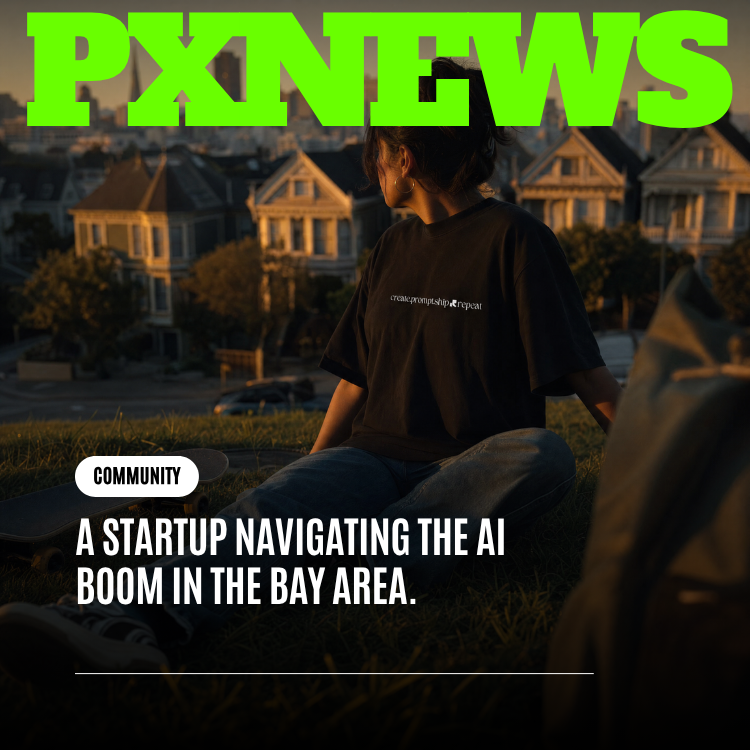
ETAPX is headquartered in the Bay Area on purpose, sitting in the middle of the most concentrated buildout of artificial intelligence the industry has ever produced, and that decision has cost us as much as it has given us. This isn't the piece about our growth strategy — that one lives elsewhere on this blog. This is about what it actually feels like, day to day, to build a company here right now: the access, the noise, the talent war that never lets up, and the discipline it takes to keep building deliberately when the whole neighborhood is running a fever.
Every few decades a single region becomes the place where an entire industry's future gets argued out in real time. For the last couple of years, that region has been ours. We didn't relocate here because it was suddenly fashionable — we were already here before the current wave started. But being a startup in the Bay Area during an AI boom is a fundamentally different experience than being a startup here during a quieter stretch, and pretending otherwise would be dishonest. What follows is an account of that difference, from ground level.
The Center of Gravity Moved Here
Walk into almost any coffee shop between SOMA and the Peninsula right now and you'll overhear a pitch, a recruiting conversation, or an argument about a benchmark that means nothing to ninety-nine percent of the world and everything to the two people having it. Billboards along the freeway that used to advertise enterprise software now advertise model providers and inference platforms. Meetups that would have drawn thirty people a few years ago now cap registration within an hour of opening and still have a line down the block. None of it is exaggeration. It's just what a technology shift and a capital cycle look like when they land on the same streets at the same time.
ETAPX isn't a foundation model company and has never claimed to be. We build Whistlr, a friend-first social platform, and we run GLSRM as its own separate initiative covering AI industry news specifically because we think that story deserves dedicated attention rather than a bolted-on feature. But being headquartered here means we don't get to observe this boom from a comfortable distance the way a team in a different city might. We're inside it, whether or not it's directly our business. Half the people we interview have a friend, a former roommate, or a previous manager working at one. The boom isn't background noise for us. It's the acoustic the whole company operates inside.
A Boom With Two Faces
The honest version of this story has to hold two things at once, because anything simpler would just be marketing. The first is that proximity to this much talent, capital, and technical ambition in one place is a genuine, hard-to-replicate advantage. The second is that the same conditions producing that advantage also produce a market that is loud, expensive, and occasionally absurd.
On the upside, we get access to people who have shipped things at a scale most companies never touch, investors who have seen enough pattern-matching to tell a real signal from a good story, and a community of builders who will give a demo a blunt, technically literate reaction within minutes of seeing it. Ideas get pressure-tested fast here because the people around you have genuinely seen more, tried more, and failed at more. That kind of fast, informed feedback loop is difficult to manufacture anywhere else, and it has made our own product sharper more than once.
On the downside, that same density produces an ocean of noise. Every week brings a new framework, a new acronym, a new "this changes everything" post that, on closer inspection, changes very little. Hype here isn't an occasional event — it's a weather system, and it takes real energy just to keep your bearings inside it. Costs are higher for everything: office space, salaries, even lunch near a building with a well-known lab's logo on it. The pace of the market puts constant pressure on every hiring decision, every roadmap call, and every update we give our community. You don't get the access without the chaos. Anyone telling you otherwise is selling something.
Hiring in the Most Competitive Talent Market on Earth
Nowhere does that double edge show up more clearly than in recruiting. The Bay Area gives us access to some of the best product, engineering, and design talent in the world. It also means we're trying to hire out of a pool that a dozen well-funded labs, plus every other startup within a ten-mile radius, are drawing from at once.
We don't win that fight by outspending it. A well-funded frontier lab can put together a compensation package we simply will not match, and pretending we could compete dollar-for-dollar with that tier of offer would be a lie we'd get caught in immediately. So we've had to get honest, fast, about what we actually have to offer instead, and build our hiring process around that reality rather than around a number we know we can't hit.
- Speed is a real advantage: A candidate choosing between us and a large lab is often choosing between shipping something they personally own within months, or waiting on approval chains with no visible end. We move faster, and we say so plainly, because it's true and it matters to the right people.
- We don't oversell the mission: Everyone in this market has heard a founder promise a "generational opportunity" by Tuesday lunch. We've found it works better to describe the actual problem we're solving and let people opt in or out honestly, rather than dressing up the pitch.
- Referrals outperform postings: In a market this loud, a cold job listing gets buried within an afternoon. Nearly every strong hire traces back to someone inside the company vouching for someone they've actually worked with.
- Retention starts before the offer, not after: If someone is joining mainly for compensation, a bigger number will eventually walk in the door and take them. We're upfront about that trade-off during the interview process itself, not after someone has already signed.
- Counteroffers are constant, not occasional: We've had candidates accept an offer and then get pulled by a lab days before their start date. It happens often enough that we've stopped being surprised by it and started building a process resilient to it by design.
None of that makes the talent market comfortable. It makes it survivable, and every so often it works in our favor, because the people who choose us anyway tend to be choosing us for reasons that still hold up six months later.
Why We Stayed in the Room
Given all of that, the obvious question is why stay here at all. Remote-first would be cheaper, calmer, and considerably easier to hire for outside this specific market. We looked at that option seriously, more than once, and kept arriving at the same answer: the density itself is the advantage, and it only works if you're actually standing inside it.
A large part of what makes the Bay Area valuable right now doesn't travel over a video call. It's the conversation that happens after a talk ends, when three strangers compare notes on a problem none of them has solved yet. It's running into a former colleague and hearing, days before it's public, that a shift is coming in how a certain kind of product gets built. It's getting a rare technical question answered by walking two blocks to the person who actually knows, instead of waiting on a group chat reply. None of that shows up cleanly on a slide, but all of it compounds, conversation by conversation, over the life of a company.
There's also a discipline benefit to physical proximity that genuinely surprised us. Sitting near the labs, the venture firms, and the people building the next wave of serious technology means our own ambitions get checked constantly against a real bar instead of an imagined one. It's much harder to convince yourself you're moving fast when you can see, in the same city, what genuinely fast actually looks like.
"People assume we're here mainly for the recruiting pipeline, and that's part of it, but it's not the real reason. You can hire remotely, to a point. What you can't replicate remotely is the correction you get from being fifteen minutes from people building at the actual frontier. It keeps us honest about our own pace in a way a Slack message never could."
— Nate Callahan, VP of Engineering at ETAPX
None of this means remote work is wrong for every company, or that a great product can't be built from anywhere — plenty of great ones are. It means that for the specific bet we're making, the cost and chaos of being here in person was a price worth paying, and we'd make the same call again knowing everything we know now, including the parts that were genuinely hard.
Signal Versus Noise
Living inside this much ambient hype creates its own occupational hazard: the temptation to chase whatever the loudest conversation in the room happens to be that week. We've felt that pull plenty of times, and giving in to it is the easiest way for a small team to waste a year it can't spare.
Every few weeks, something new arrives with the unmistakable energy of "you have to have this now or you're already behind." Most of it is legitimately interesting as an idea. Very little of it is actually relevant to the specific thing we're trying to build. We've had to develop a deliberately boring filter for telling the two apart: does this make the product we already promised people better, or does it just make our next update sound more current? If the honest answer is the second one, we let it go, no matter how impressive the demo looked. That filter has cost us a few moments of looking behind the curve in public. It has also kept us from spending months of engineering time chasing a trend that quietly disappeared six months later. We'd rather explain, occasionally, why we haven't shipped something everyone else is talking about than explain, constantly, why we shipped ten things nobody actually asked for.
What an Ordinary Week Actually Looks Like
Strip away the framing and the day-to-day is considerably less dramatic than the outside narrative would suggest. Most weeks look like this: a product review that runs long, a hiring debrief about someone who ultimately chose the bigger offer, a message in an internal channel about a competitor's launch that half the team has an opinion on, and a Friday that ends with something shipped that a few thousand people will actually use over the weekend.
The texture of the surrounding ecosystem shows up in smaller ways than a headline would ever capture. It's a founder friend texting to vent about a term sheet that fell through. It's overhearing, at the gym, two strangers debate a research paper that neither of them wrote. It's a Whistlr community member stopping by an event we hosted and mentioning, unprompted, that our pace felt different from the companies they usually hear about — less performative, more like people actually building something they'd personally want to use.
"I've been to a lot of these Bay Area meetups over the past year, and most of them feel like everyone's performing confidence at each other. The ETAPX table was one of the first where people just talked plainly about what they were actually stuck on that week. That's a small thing, but it's rare enough right now that I noticed it immediately and remembered it."
— Grace Feldman, ETAPX community member
That kind of reaction is, honestly, the metric we care about most in moments like this one. Not whether we were the loudest table at the meetup, but whether the people who spent ten minutes talking with us walked away with a more grounded impression than the one they arrived with.
Building Deliberately in a City That Rewards Speed for Its Own Sake
The hardest part of this whole environment isn't the cost, and it isn't even the competition for talent. It's resisting the pressure to mistake motion for progress. This city runs on velocity as a status symbol. Shipping something, anything, fast enough to post about it carries its own social reward here, almost regardless of whether the thing was actually worth shipping.
We try to hold a different standard, even when it's socially inconvenient to do so. A feature earns a place on the roadmap because it makes a Whistlr Circuit easier to run well, a creator's income on Gems more stable, or the core experience genuinely better for the people already using it — not because it lets us claim we moved as fast as the company next door. That standard occasionally means watching a competitor get credit for shipping something loud and half-finished while we're still finishing the less glamorous version of a similar idea. We've made peace with that trade, because we've also watched enough of those loud launches fade within a few months.
Being surrounded by genuinely serious builders actually makes this easier, not harder, once you get past the initial social pressure. The best people in this ecosystem, the ones actually respected by their peers rather than just loud on a timeline, tend to share a quiet obsession with getting the details right over getting the announcement out first. Those are the conversations we go looking for, whether that's at a Campus meetup, over dinner, or in the group chats that actually matter — not the ones chasing this week's news cycle, but the ones still asking, a year later, whether the thing they built actually held up under real use.
Frequently Asked Questions
Is ETAPX an AI company?
No. ETAPX builds Whistlr, a friend-first social platform, and runs GLSRM as a separate initiative focused specifically on AI industry news. Being headquartered in the Bay Area means we sit close to the AI boom and take it seriously as a force reshaping the industry around us, but it isn't the product we build.
Why does ETAPX stay headquartered in the Bay Area instead of going remote-first?
Because the specific advantages of this location — density of serious builders, proximity to investors who can pattern-match quickly, and the kind of unplanned conversation that never quite happens over video — only work if the team is actually here. We weighed the higher cost and harsher hiring market against that access and decided it was worth it.
How does a startup compete for talent against companies offering much larger packages?
Honestly, and not always successfully. We don't try to win on compensation against the biggest offers in this market, because we'd lose that fight. Instead we lead with speed, ownership, and a straightforward account of the problem we're solving, and we accept that some strong candidates will still choose the bigger number. That's a rational choice on their part, and we don't take it personally.
What's the biggest downside of being based here right now?
The cost and the noise, in roughly equal measure. Everything is more expensive, hiring is a constant negotiation against offers we can't match, and it takes real energy to filter genuine signal out of a market that rewards volume and hype over substance. None of that is unique to us. It's the shared condition of building anything here right now.
Will ETAPX always be based in the Bay Area?
We don't treat geography as sacred, and we're not going to pretend we can predict a decade out. What we can say is that the reasons we're here now are specific and real, not inertia dressed up as strategy, and it would take equally specific reasons to change course.
None of this is a complaint dressed up as a war story, and it isn't a victory lap either. It's a description of a specific place at a specific moment, and of what it costs and gives a small company trying to build something real inside it. The talent market will stay brutal for as long as this boom keeps running, the noise will keep arriving faster than anyone can filter it, and being here will keep being more expensive than being almost anywhere else. We're staying anyway, not because the chaos is comfortable, but because we've decided it's the honest price of building in the room where the future is actually getting argued over, one ordinary Tuesday at a time.