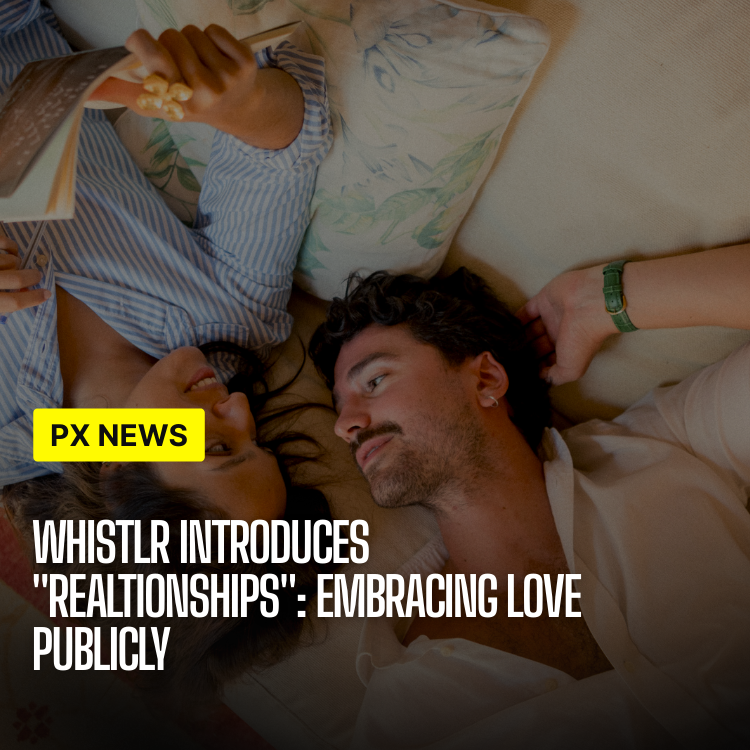
ETAPX today introduced Relationship features to Whistlr Network, enabling users to publicly share and celebrate their romantic relationships, partnerships, and significant connections. The feature allows users to connect their profiles with a partner, display relationship status, and share their relationship journey with their network in a way that feels authentic and meaningful—while keeping every detail firmly under each person's own control.
The introduction comes as social platforms increasingly recognize the importance of allowing users to express their relationship status and celebrate significant connections. Whistlr's implementation focuses on privacy, authenticity, and user control, ensuring that relationship information is shared only when and how users want it shared.
"Relationships are fundamental to how people understand themselves and their place in social networks," said Sarah Martinez, Product Lead for Social Features. "We wanted to create a feature that lets people celebrate their connections while maintaining complete control over their privacy and how that information is displayed."
Why Relationship Features Matter Now
Relationship status was one of the earliest features of the social web, and then, for a stretch, it quietly fell out of fashion. Many platforms either buried it or dropped it entirely, treating personal connection as something too messy or too sensitive to design for. The result was a strange gap: the most meaningful relationships in people's lives had almost no expression on the platforms where they spent their time.
Whistlr's approach is to bring relationship status back, but to do it thoughtfully—learning from everything that went wrong the first time. The old versions were blunt instruments: a single public setting with little nuance, no mutual confirmation, and awkward consequences when things changed. Relationship features on Whistlr are built around consent, granularity, and grace, treating a relationship as something to be celebrated on the participants' terms rather than broadcast by default.
Connecting Your Relationship
Users can connect their profile with a partner's profile, creating a visible link between the two accounts. When both users confirm the relationship connection, their profiles display each other as partners, and relationship status becomes visible to their networks. The connection process requires mutual confirmation, ensuring that relationships are only displayed when both parties agree.
Relationship status options include "In a Relationship," "Engaged," "Married," "In a Civil Union," "In a Domestic Partnership," and "It's Complicated." Users can also choose to display their anniversary date, allowing friends and family to celebrate relationship milestones. The system supports custom relationship statuses for users who want to express their connection in their own words.
Privacy and Visibility Controls
Privacy controls give users complete control over who sees their relationship information. Users can choose to make their relationship status visible to everyone, only their friends, specific friend lists, or keep it completely private. Relationship information can be hidden from profile views while remaining visible in other contexts, or displayed prominently for those who want to celebrate their connection publicly.
Individual privacy settings allow each partner to control their own relationship visibility independently. This means one partner can display the relationship publicly while the other keeps it private, accommodating different comfort levels with sharing personal information. Users can also control whether relationship status appears in search results or discovery features.
Relationship Timeline
When users connect their relationship, they can set a "started dating" date that marks when their relationship began. This date becomes part of their relationship timeline, and the platform automatically calculates and displays relationship milestones like "Together for 1 year" or "Celebrating 5 years together." These milestones can be shared as posts or kept private, depending on user preferences.
The relationship timeline integrates with users' content feeds, allowing couples to see shared memories and posts from throughout their relationship. This creates a natural way to look back on relationship milestones and shared experiences, while maintaining privacy controls over who can see this historical content.
Celebrating Milestones
Relationship milestones provide opportunities for celebration and recognition. When couples reach significant anniversaries, the platform can suggest creating posts or sharing memories. Friends can react to relationship updates and milestones, creating a sense of community celebration around important relationship moments.
Customizable anniversary reminders help users remember important dates, while relationship posts enable couples to share updates about their relationship journey. These features create natural ways to celebrate relationships without feeling forced or performative.
"We connected our profiles on our second anniversary, and the part I appreciated most was how low-pressure it felt. I set my own visibility, my partner set theirs, and nobody had to overshare to make it official. It just felt like ours."
— Jordan and Priya, Whistlr Members
The Design Philosophy: Consent at Every Step
Underneath the visible features is a single guiding principle: a relationship on Whistlr can never be declared unilaterally. Every connection requires both people to agree, and either person can adjust or remove it at any time without needing the other's permission to protect themselves. That symmetry is deliberate, because relationship status is uniquely prone to being weaponized when one person controls the narrative.
This is why independent visibility settings matter so much. A relationship is a shared fact, but how publicly each person wants to live it is an individual choice. By letting each partner control their own side, Whistlr avoids forcing two people into the same comfort level—and avoids the all-too-common scenario where one person's enthusiasm exposes another person who wanted privacy.
- Mutual confirmation: A relationship only appears once both people have agreed to the connection.
- Independent visibility: Each partner sets their own audience, so comfort levels never have to match.
- Reversible by either party: Anyone can update or remove a connection on their own, at any time.
- Quiet changes: Status updates can be made without broadcasting a notification to the network.
Relationship Changes
When relationships end, users can update their relationship status or remove the connection entirely. The platform provides options to handle relationship changes respectfully, including the ability to remove relationship status without notifying the network, or to update status to reflect new relationship circumstances.
Privacy controls ensure that relationship changes are handled according to each user's preferences. Some users may want to update their status immediately, while others may prefer to keep changes private until they're ready to share. The system accommodates both approaches, recognizing that relationship transitions are personal and should be handled with sensitivity.
Safety and Respect
Safety features protect users from unwanted relationship connections. Users can decline relationship requests, block users who send unwanted relationship connections, and report abusive behavior related to relationship features. The platform monitors for patterns of harassment or unwanted relationship requests, taking action to protect users.
Relationship connections require mutual consent, preventing users from unilaterally declaring relationships with others. This ensures that relationship status always reflects actual mutual connections rather than one-sided declarations. Users can also remove relationship connections at any time, maintaining control over how their relationship status is displayed.
"The hardest part of designing relationship features isn't the happy moment when two people connect. It's the breakup, the change of heart, the difficult transition. We spent most of our time making sure those moments are handled with dignity, not drama."
— Whistlr Product Team
Integration with Other Features
Relationship status integrates naturally with other Whistlr features. Couples can create shared posts, plan events together, and collaborate on content. Relationship status appears in profile views, search results (when privacy settings allow), and can be used to filter content feeds to see posts from both partners.
The feature works seamlessly with Whistlr's privacy and sharing controls, allowing couples to share content with each other privately while maintaining individual control over public-facing profiles. This creates a balance between celebrating relationships publicly and maintaining individual identity within the relationship.
Getting Started
To connect a relationship, users navigate to their profile settings and select "Edit Relationship Status." From there, they can search for their partner's profile and send a relationship connection request. Once both users confirm, the relationship becomes visible according to each user's privacy settings.
The feature is designed to be simple and intuitive, recognizing that relationship status is a personal expression that should feel natural rather than complicated. Whether users want to celebrate their relationship publicly or keep it private, the tools are available to express their connection in whatever way feels authentic to them.
Getting Started
To start using Relationship features:
- Navigate to your connections
- Select a connection
- Choose a relationship category
- Add relationship notes if desired
- Start organizing your connections
Frequently Asked Questions
Can someone list me as their partner without my approval?
No. Every relationship connection requires mutual confirmation. A relationship only becomes visible once both people have agreed, so no one can unilaterally declare a connection with you.
Can my partner and I have different privacy settings?
Yes. Each person controls their own visibility independently. One partner can display the relationship publicly while the other keeps it private, so you never have to match each other's comfort level.
What happens if we break up?
Either person can update or remove the relationship status at any time, and you can choose to do so quietly without sending a notification to your network. The feature is designed to handle transitions with sensitivity rather than spectacle.
Will my relationship status show up in search or discovery?
Only if you allow it. You can control whether your relationship status appears in search results and discovery features, or keep it confined to your profile and chosen audiences.
Can I express a relationship that doesn't fit the standard options?
Yes. Alongside options like "In a Relationship," "Engaged," and "Married," the system supports custom relationship statuses so you can describe your connection in your own words.
Future Enhancements
We're working on additional Relationship features:
- Relationship recommendations
- Advanced relationship analytics
- Relationship-based content suggestions
- Enhanced circle features
Start building deeper connections today with Whistlr's Relationship features.