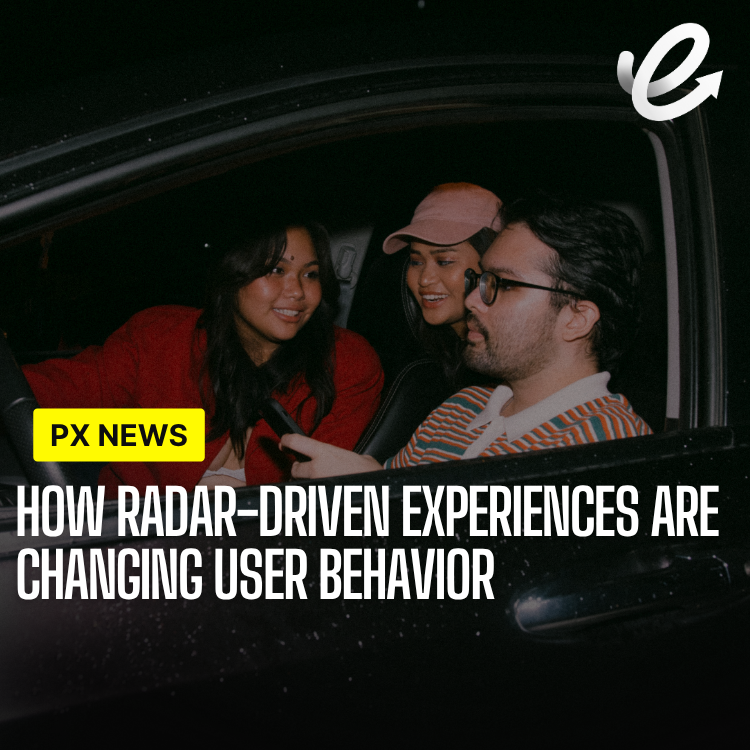
Location-based social discovery is fundamentally altering how users engage with digital platforms and physical spaces. Radar-driven features create new behavioral patterns that blend online community participation with real-world exploration and local engagement—quietly reshaping not just what people do online, but where they go and how they relate to the places around them.
Traditional social media separated online interaction from physical location, creating digital communities disconnected from users' actual environments. Radar-driven features bridge this gap, making location a central organizing principle for social discovery and community formation.
"Radar isn't just a feature—it's changing how people think about their relationship to place and community. Users are becoming more intentional about where they go and more engaged with their local environments."
— Dr. Maria Gonzalez, Senior Behavioral Researcher, ETAPX
What "Radar-Driven" Actually Means
At its core, a radar-driven experience organizes social content by proximity rather than by who you already follow. Instead of a feed assembled purely from your existing network, Radar surfaces what is happening near you right now—posts, conversations, and moments tied to the places in your immediate vicinity. The result feels less like browsing a global timeline and more like glancing around a room you have just walked into.
That shift in framing changes user psychology in a subtle but powerful way. When content is anchored to a real location, it carries a different kind of credibility and urgency. A recommendation about a café two blocks away is not abstract advice from a stranger on the internet; it is a signal from someone who was just there. Radar turns the feed into a layer over the physical world, and people respond to it accordingly.
Increased Local Exploration
Users with access to location-based social features demonstrate significantly higher rates of local exploration and discovery. The ability to see what others have shared about nearby places motivates users to visit new locations and engage more deeply with their immediate environment.
ETAPX data shows that Radar users visit 34% more unique locations within their local area and spend 28% more time engaging with local businesses compared to users without location-based features. This increased exploration benefits both users and local communities.
Community-Driven Decision Making
Access to location-based community insights changes how users make decisions about where to go and what to do. Instead of relying on commercial reviews or generic recommendations, users access peer insights from people with similar interests and values.
This peer-driven decision making creates more authentic experiences and stronger connections between users and the places they visit. Local businesses benefit from genuine community endorsements rather than paid promotional content.
"Location-based social data reveals authentic community preferences in ways that traditional review systems can't capture. Users trust insights from their actual communities over algorithmic recommendations."
— Kevin Park, Lead Product Data Scientist, ETAPX
Temporal Engagement Patterns
Radar-driven features create new temporal engagement patterns as users check location-based feeds before visiting places, share experiences while present, and contribute to ongoing location conversations after leaving. This extended engagement cycle deepens relationships with specific places.
Users develop ongoing relationships with locations rather than one-time visits, returning to see updates, contributing to conversations, and building community around shared places. This pattern strengthens both digital communities and local business relationships.
Social Discovery Beyond Networks
Location-based discovery enables users to connect with people and content beyond their existing social networks. Users discover local communities, events, and conversations they wouldn't encounter through traditional social connections.
This expanded discovery breaks down social silos and introduces diversity into users' social experiences. People connect across different social circles when they share physical spaces or location-based interests.
The New Behaviors Radar Unlocks
When location becomes the organizing principle, entirely new habits emerge that simply did not exist on follow-based platforms. These behaviors tend to reinforce real-world engagement rather than pull people further into their screens.
- Pre-visit scouting: Users check the Radar feed for a place before they go, treating recent local posts as a live, trustworthy preview.
- In-the-moment contribution: People share what they are experiencing while they are there, adding to a place's living record rather than posting after the fact.
- Place-following: Users start to "follow" locations the way they once followed people, returning to see what has changed.
- Serendipitous meetups: Shared physical context introduces people to nearby communities and events they would never have found through their existing network.
- Local advocacy: Regulars become informal ambassadors for the spots they love, shaping how a neighborhood is perceived.
Impact on Local Business Engagement
Radar-driven features change how users interact with local businesses, shifting from passive consumption to active community participation. Users become local ambassadors, sharing experiences and recommendations that influence community perceptions of local establishments.
Local businesses report stronger customer relationships and increased repeat visits from users who participate in location-based communities. The ongoing conversation around places creates sustained engagement rather than one-time transactions.
What It Means for Local Businesses and Communities
For a small business, radar-driven discovery rewrites the rules of visibility. Traditional advertising asks owners to pay for attention from people who may never set foot nearby. Radar instead surfaces a business to the people most likely to actually walk in—those already in the neighborhood—and does so through the genuine words of customers rather than purchased placements. A single authentic post from a regular can carry more weight than a polished ad campaign.
For communities, the effect compounds over time. As more residents contribute to the living record of their area, neighborhoods develop a shared digital memory: the new bakery worth trying, the quiet park that is perfect on weekday mornings, the shop that hosts local events. That collective knowledge strengthens place attachment and gives newcomers a faster path to feeling at home.
"I moved to a new city knowing nobody. Radar showed me what people around me were actually doing—where they ate, which events were worth it. Within a month I'd found my regular spots and even a few friends. It made the place feel like mine."
— Daniel K., Whistlr user
Privacy Adaptation and Control
Users adapt their privacy behaviors when engaging with location-based features, developing more sophisticated understanding of location sharing controls and temporal privacy management. They learn to share contextually appropriate information while protecting sensitive location data.
This privacy sophistication enables more meaningful participation in location-based communities while maintaining personal safety and privacy standards. Users become more intentional about location sharing rather than avoiding it entirely.
Cultural Shifts in Place Attachment
Regular engagement with location-based social features strengthens users' attachment to their local communities and physical environments. Users report feeling more connected to their neighborhoods and more invested in local community wellbeing.
This increased place attachment has positive implications for civic engagement, local business support, and community resilience. Digital tools become infrastructure for strengthening rather than replacing place-based community relationships.
Radar-driven experiences demonstrate how location-based social features can enhance rather than detract from real-world community engagement. By bridging digital and physical community participation, these tools create more connected, engaged, and locally-aware user behaviors.
Frequently Asked Questions
How is Radar different from a normal social feed?
A normal feed shows content from people you already follow. Radar organizes content by proximity, surfacing posts, conversations, and moments tied to the places near you right now—so discovery is driven by where you are rather than who you already know.
Does using Radar mean sharing my exact location all the time?
No. Radar is built around user control. People learn to share contextually appropriate information and manage temporal privacy, choosing when and how much to share rather than broadcasting precise location continuously.
How does Radar help local businesses?
It connects businesses with the people most likely to visit—those already nearby—through authentic community endorsements rather than paid promotion. Businesses report stronger customer relationships and more repeat visits from users active in location-based communities.
Can Radar help me meet new people?
Yes. Because discovery is based on shared physical context, Radar introduces users to nearby communities, events, and conversations beyond their existing network, breaking down social silos and adding diversity to their social experience.
Does location-based social media pull people away from the real world?
The evidence points the other way. Radar users explore more unique local places, spend more time engaging with local businesses, and report feeling more connected to their neighborhoods—suggesting these tools strengthen real-world engagement rather than replace it.