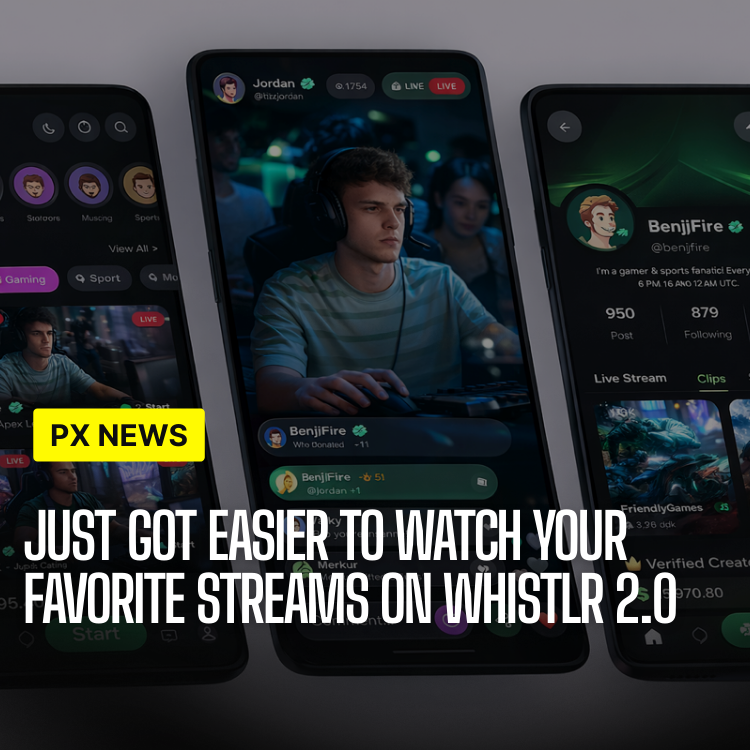
Whistlr Network today announced significant enhancements to its live streaming capabilities, introducing what the company describes as the most socially integrated streaming experience available. The updates, which include ultra-low latency infrastructure, multi-platform broadcasting, and deep social feed integration, position Whistlr as a unique alternative to traditional streaming platforms by embedding live content within existing social relationships rather than treating streams as isolated events.
The approach represents a fundamental rethinking of live streaming's role in social media. Rather than creating separate streaming experiences that exist apart from regular social feeds, Whistlr's system integrates streams seamlessly into users' existing social contexts, making live content feel like a natural extension of ongoing conversations and relationships.
"Traditional streaming platforms treat streams as isolated events," explained Sarah Chen, Lead Engineer for Streaming Infrastructure. "We've built something different—streams that feel like natural extensions of your social feed, with real-time interaction that actually feels real-time, not delayed by 10 or 15 seconds."
Real-Time Interaction
Whistlr's live streams feature ultra-low latency infrastructure that makes genuine real-time interaction possible. Viewers' reactions appear immediately rather than after the 10-second delays common on other platforms. Comments stream in real-time with minimal lag, creating conversations that feel natural and responsive. Interactive polls enable streamers to engage audiences instantly, with votes registering immediately. Live Q&A sessions become truly interactive, with streamers able to answer viewer questions as they come in rather than responding to questions that were asked minutes earlier.
Why Latency Is The Whole Game
It is easy to underestimate how much a few seconds of delay change the feel of a stream. On platforms where chat lags ten or fifteen seconds behind the video, a streamer answering a question is really answering the past. Viewers learn that their messages will land late, so they stop expecting a genuine exchange and the stream drifts toward broadcast rather than conversation. The energy that makes live content special quietly leaks away.
Closing that gap is a hard engineering problem, not a setting you toggle. Whistlr's infrastructure pushes the video and the interaction layer down to a near-instant round trip so that a reaction, a poll vote, or a question shows up while the moment is still happening. When a streamer can respond to a comment as it is typed, the audience leans in. The stream stops feeling like a performance with a delayed echo and starts feeling like a room full of people talking at once.
Multi-Platform Broadcasting
Whistlr enables simultaneous broadcasting to multiple platforms while maintaining the platform's unique social features. Streamers can broadcast to Kick and Whistlr simultaneously, reach Twitch audiences while keeping Whistlr features active, stream to YouTube Live concurrently, or use custom RTMP endpoints to reach any platform that supports the protocol.
This multi-platform capability doesn't mean sacrificing Whistlr's unique features. Streamers maintain real-time interaction, social context, and community engagement even when broadcasting elsewhere. The system intelligently routes interactions from all platforms back to the Whistlr stream, ensuring that the social experience remains central regardless of where viewers are watching.
Social Integration
Live streams on Whistlr are deeply integrated with the platform's social features, creating a seamless experience that traditional streaming platforms can't match. Streams appear automatically in followers' feeds, ensuring that live content reaches the right audience without requiring separate discovery mechanisms. Viewers see their relationship context with the streamer, understanding whether they're watching a friend, a creator they follow, or someone from their community.
Streams can be tied to specific communities, enabling community-focused live events that feel like natural extensions of group conversations. Stream highlights can be shared across other feeds, allowing the best moments from live streams to reach broader audiences while driving viewers back to future streams.
Who Live Streams On Whistlr Are For
Because streams live inside social relationships rather than apart from them, they suit a wider range of people than the gaming-and-entertainment mold most streaming platforms were built around.
- Creators building a community: Regular streams reach existing followers directly in their feeds, deepening the bond with an audience that already knows them.
- Small businesses: Product demos, launches, and behind-the-scenes broadcasts reach local and community audiences without a separate streaming presence to maintain.
- Educators and experts: Live Q&A and teaching sessions become genuinely interactive when questions are answered in the moment rather than minutes late.
- Multi-platform streamers: Established broadcasters can keep their Twitch, Kick, or YouTube audiences while adding Whistlr's social layer on top.
- Friend groups and communities: Casual streams tied to a specific community feel like an extension of an ongoing group conversation rather than a public spectacle.
Creator Tools
Professional tools for streamers of all sizes enable sophisticated production without requiring external software. OBS Studio integration provides full Whistlr feature support, allowing streamers to use their preferred broadcasting software while maintaining access to Whistlr's social features. A built-in scene composer enables streamers to design custom layouts and overlays without leaving the platform. Multi-camera support allows seamless switching between multiple camera angles, creating more dynamic streams. AI-powered chat moderation works alongside human moderators to maintain healthy communities, while a real-time analytics dashboard provides viewer analytics and engagement metrics as streams happen.
Viewer Experience
Watching streams on Whistlr offers unique advantages that traditional platforms can't match. Group watch features enable friends to watch streams together, creating shared viewing experiences that feel like watching television with friends. Picture-in-picture mode allows viewers to browse other content while keeping streams visible, eliminating the need to choose between watching and exploring. Clip creation tools let viewers capture and share the best moments directly from streams, while theater mode provides an immersive fullscreen viewing experience. Smart quality adjustment automatically optimizes stream quality based on connection speed, ensuring smooth viewing regardless of network conditions.
Monetization
Live streams on Whistlr support multiple monetization pathways. Viewers can send tips during streams, providing immediate appreciation for valuable content. Streamers can offer subscriber-only streams, creating exclusive experiences for paying supporters. Paid streams enable creators to charge for access to premium content, while brand partnerships can be integrated seamlessly into streams without disrupting the viewing experience.
Best Practices For Going Live On Whistlr
The platform handles the technical heavy lifting, but a few habits separate streams that build an audience from ones that fizzle.
- Lean into the real-time advantage: Read comments aloud and answer questions as they arrive; the low latency only matters if you actually use it.
- Announce streams to your feed: Because streams surface to followers automatically, posting ahead of time compounds your reach.
- Set up scenes before you go live: Use the scene composer or OBS integration to prepare overlays and camera switches in advance so the broadcast runs smoothly.
- Tie streams to a community: Anchoring a stream to a specific community gives it a built-in, engaged audience rather than a cold one.
- Turn moments into clips: Capture highlights and share them afterward to pull new viewers toward your next stream.
"The first time I streamed here, people in chat actually reacted to what I was saying as I said it. On other platforms I'd given up on real conversation. This felt like hanging out with my community, not performing for a delay."
— Devon Marsh, Whistlr Creator
How It Compares To Traditional Streaming
The defining difference is context. On a conventional streaming platform, a stream is an island: viewers arrive through a separate discovery system, the chat is a stranger's window, and when the broadcast ends the connection mostly ends with it. Discovery, conversation, and relationship all live in different places, and the latency baked into the pipeline keeps the interaction one step behind.
Whistlr folds streaming into the social graph instead. The audience is your existing followers and communities, the chat carries relationship context, the latency is low enough for genuine back-and-forth, and the highlights flow back into feeds to fuel the next stream. For creators who already broadcast elsewhere, multi-platform support means none of this requires abandoning an existing audience; the social layer is added rather than traded for.
What's Next
ETAPX is already developing the next generation of streaming features. An AI-powered camera director will automatically frame shots and switch angles, while real-time language translation will break down language barriers in global streams. Virtual camera effects will enable creative visual enhancements, interactive overlays will create new engagement opportunities, and enhanced co-streaming will facilitate collaborative broadcasts between multiple creators.
These innovations represent Whistlr's commitment to making live streaming feel like a natural extension of social interaction rather than a separate activity. Start streaming today and experience live content creation reimagined for the social age.
Frequently Asked Questions
How low is the latency on Whistlr streams?
Whistlr's ultra-low latency infrastructure is built so reactions, comments, and poll votes appear almost immediately, rather than after the ten to fifteen second delays common on other platforms. The goal is interaction that feels genuinely real-time.
Can I stream to Twitch or Kick at the same time?
Yes. Whistlr supports simultaneous broadcasting to Kick, Twitch, YouTube Live, and any service that accepts a custom RTMP endpoint, while keeping Whistlr's social features active and routing interactions back to your Whistlr stream.
Do I need external software like OBS to stream?
No. Whistlr includes a built-in scene composer, multi-camera support, and a broadcasting studio, so you can produce a polished stream natively. If you prefer OBS, full integration is available with complete Whistlr feature support.
How do viewers discover my streams?
Streams appear automatically in your followers' feeds and can be tied to specific communities, so your existing audience finds your live content without a separate discovery step. Highlights can also be shared across feeds to reach new viewers.
What are the ways to earn money from streaming?
Streamers can receive tips during streams, offer subscriber-only or paid streams for exclusive content, and integrate brand partnerships directly into broadcasts without disrupting the viewing experience.