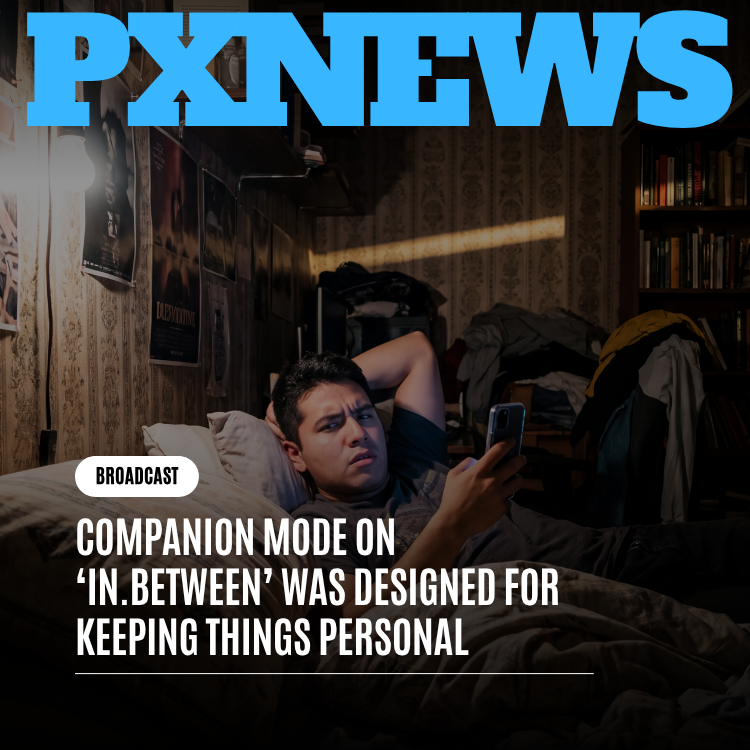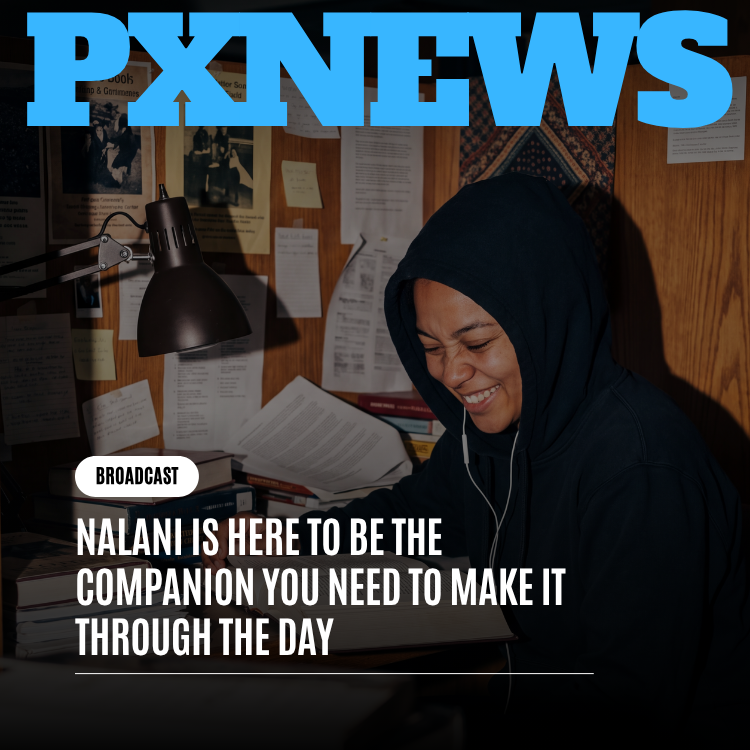
The psychological safety of sharing personal moments dramatically increases when users know exactly who can see their content. Closed-loop posting—sharing with specific, limited audiences—creates digital spaces that feel more like intimate conversations than public performances, fundamentally changing how users express themselves online. On Whistlr, that principle sits at the center of how sharing is designed: the audience is a decision the user makes on purpose, not a default they inherit from the platform.
Traditional social media operates on broadcast models where content is potentially visible to vast, unknown audiences. This visibility creates anxiety and self-censorship as users worry about judgment from strangers, future employers, or family members. Closed-loop systems eliminate these concerns by putting users in complete control of their audience.
"When you know exactly who can see your post—whether it's 3 close friends or 30 family members—you can share more authentically because you understand the context and relationships involved."
— Dr. Sarah Martinez, Behavioral Psychology Lead, ETAPX
What Closed-Loop Posting Actually Means
Closed-loop posting describes a sharing model where every piece of content travels to a defined, finite audience rather than an open feed. The "loop" is the boundary: a circle of people the author has chosen, who can see the post, respond to it, and—crucially—understand the context it was shared in. Nothing escapes that boundary unless the author deliberately widens it. This is the opposite of global broadcasting, where a single tap exposes a thought to followers, strangers, search engines, and screenshot culture all at once.
The distinction matters because audience and meaning are inseparable. The same sentence read by your three closest friends and read by ten thousand anonymous accounts is, functionally, two different messages. Closed-loop posting preserves the relationship between what you say and who you trusted to hear it. On Whistlr, that relationship is treated as a first-class part of the post itself, not an afterthought buried in settings.
The Psychology of Controlled Sharing
ETAPX's research demonstrates that users share 340% more personal content when using closed-loop features compared to public posting. The controlled environment reduces social anxiety and allows for more vulnerable, authentic expression. Users report feeling "protected" and "understood" within these smaller circles.
The safety benefits extend beyond emotional comfort. Closed-loop posting protects users from harassment, stalking, and unwanted attention that can occur when content reaches unintended audiences. This protection is especially important for marginalized communities and individuals sharing sensitive personal information.
There is a deeper cognitive effect at work, too. Public posting forces users into a kind of constant audience-modeling: before sharing, they unconsciously simulate how a critic, an ex, a recruiter, or a stranger might react. That simulation is exhausting, and it flattens expression toward the safest, most generic version of a thought. Closed-loop posting collapses the imagined audience into a real, known one. The mental overhead disappears, and what remains is the actual thing the person wanted to say.
How Whistlr Designs the Loop
Building effective closed-loop systems requires more than a privacy toggle—it requires an architecture that makes the safe choice the obvious one. Whistlr approaches this by surfacing audience as a visible, tactile decision at the moment of posting, so users never have to wonder where their content is going.
- Persistent circles: Users build reusable groups—close friends, family, a creative collaborator group—so they don't reconstruct an audience every time they post.
- At-a-glance visibility cues: A clear indicator shows exactly who will see a post before it goes out, eliminating accidental over-sharing.
- Per-post overrides: Audience can be adjusted for an individual post without changing a user's default privacy posture.
- Temporary expansion: For a milestone, event, or announcement, a loop can be widened for one post and snap back automatically.
- Smart audience suggestions: The system can recommend a circle based on the content type, reducing friction without removing control.
Technical Implementation of Privacy Circles
Building effective closed-loop systems requires sophisticated privacy architecture. ETAPX's implementation includes real-time audience awareness, preventing accidental over-sharing through clear visual indicators of who can see each post. Users can modify audience settings for individual posts without affecting global privacy preferences.
The system includes advanced features like temporary audience expansion for special events and automatic audience suggestion based on content type. These capabilities make privacy management intuitive rather than burdensome, encouraging users to take advantage of controlled sharing options.
"The technical challenge isn't just restricting visibility—it's making privacy controls so seamless that users naturally choose more intimate sharing over public broadcasting."
— Kevin Chang, Senior Privacy Engineer, ETAPX
Community Building Through Intimate Sharing
Paradoxically, limiting audiences often strengthens communities. When users share more authentically within smaller circles, they build deeper relationships and stronger social bonds. These intimate communities become more supportive and engaged than larger, more superficial networks.
Closed-loop communities also develop their own cultures and norms, creating unique spaces that reflect the personalities and interests of their members. This cultural development is impossible in broadcast systems where content must appeal to diverse, unknown audiences.
Impact on Content Quality and Authenticity
Content shared in closed loops tends to be more thoughtful, personal, and genuine. Users spend less time optimizing for algorithmic engagement and more time communicating meaningfully with their chosen audience. This shift improves overall content quality and user satisfaction.
The reduced pressure to "perform" for unknown audiences allows users to share moments, thoughts, and experiences they might otherwise keep private. This authentic sharing creates richer social experiences for both content creators and their audiences.
Closed-Loop Posting vs. Global Broadcasting
The contrast between the two models becomes clearest when you look at the incentives each one creates. Broadcasting rewards reach: the bigger the audience, the more validation, and the more pressure to keep performing for it. Closed-loop posting rewards relevance: the better the fit between content and circle, the more meaningful the response.
- Audience certainty: Broadcasting leaves the audience open-ended; closed-loop posting makes it known and finite.
- Tone: Broadcasting pushes toward a polished, defensible voice; closed-loop posting permits a natural, unguarded one.
- Permanence risk: A broadcast post can resurface anywhere, anytime; a looped post stays inside the boundary it was shared in.
- Engagement quality: Broadcasting attracts volume; closed-loop posting attracts people who actually know you.
- Emotional cost: Broadcasting carries ongoing exposure anxiety; closed-loop posting feels closer to a conversation than a stage.
Who Benefits Most From Closed-Loop Sharing
While everyone gains from clearer audience control, closed-loop posting is especially valuable for people whose openness carries real-world stakes. Parents sharing photos of children want certainty about who is watching. People navigating health journeys, grief, career transitions, or identity want to share with the few who will respond with care rather than the many who might respond with noise.
It also serves creators who want a backstage as well as a stage. A creator can broadcast finished work publicly while keeping a closed loop for the messy middle—drafts, doubts, behind-the-scenes moments—shared only with a trusted inner circle. That separation lets the public persona stay polished without forcing the person behind it to live entirely in performance mode.
"I stopped posting personal stuff anywhere for years because it always felt like talking into a stadium. With a closed loop, I'm just texting a small group, except it's richer. I post things now I'd never have put online before."
— Priya N., longtime Whistlr user
Best Practices for Sharing Inside a Loop
Closed-loop posting is a habit as much as a feature, and a few simple practices help users get the most from it. The goal is to make the boundary work for you rather than around you.
- Name your circles by relationship, not size: "Close friends" and "Family" age better than ad-hoc lists you forget the purpose of.
- Match the moment to the circle: Before posting, ask who this is actually for—then choose that loop deliberately.
- Review your audience cue: Glance at the visibility indicator before sharing; it takes a second and prevents most over-sharing.
- Use temporary expansion sparingly: Widen for a genuine milestone, then let it snap back so your default stays intimate.
- Prune occasionally: Relationships change; revisiting who's in each circle keeps the loop honest.
What This Means for the Future of Social
The broadcast era trained a generation to treat every thought as content and every contact as an audience. The cost of that training—anxiety, self-censorship, performative exhaustion—is now widely felt. Closed-loop posting is part of a broader correction: a move back toward sharing as a relational act, scaled by technology rather than distorted by it.
For ETAPX, the bet is that the next decade of social belongs to platforms that make intimacy effortless rather than reach addictive. As privacy expectations rise and audiences fragment into the people who actually matter to each user, the loop—not the megaphone—becomes the default unit of sharing.
Frequently Asked Questions
What is closed-loop posting on Whistlr?
Closed-loop posting is sharing content with a specific, limited audience you choose—such as close friends or family—rather than broadcasting it publicly. The post stays inside that defined circle, so you always know exactly who can see it and respond.
Is closed-loop posting more private than a public post?
Yes. Because the audience is finite and chosen, looped content doesn't reach strangers, search, or unintended contacts. This dramatically reduces the risk of harassment, unwanted attention, and content resurfacing in contexts you never intended.
Can I still post publicly if I want to?
Absolutely. Closed-loop posting is a choice, not a restriction. Whistlr supports public sharing alongside intimate circles, and many users do both—broadcasting finished work publicly while keeping personal moments inside a trusted loop.
Why do people share more in closed loops than in public?
Knowing the audience removes the mental overhead of imagining how strangers might react. With a real, trusted circle, users feel safe being vulnerable and specific, which leads to more authentic sharing and more meaningful responses.
Can I change who sees a post after I've chosen a circle?
You can adjust the audience for an individual post without altering your default privacy settings, and you can temporarily widen a loop for a special moment and let it return to your usual circle afterward.
The future of social sharing lies in giving users complete control over their audience while making privacy management effortless. Closed-loop posting represents a return to the intimate, personal nature of early social networking while incorporating the lessons learned from a decade of public social media.