The best live moments rarely happen while sitting still. They happen on a rooftop at golden hour, in the back of a rideshare, halfway through a night market, or three blocks into a walk that turned into something worth sharing. That's the reality more and more streamers are building around, and it's why flexibility on the go has become one of the most requested things creators ask for on Whistlr — not flexibility to start a stream faster, but flexibility to keep moving once they're already live. Walking, riding, wandering into a new neighborhood, stepping outside because the light just got good — none of that should mean stepping out of the broadcast. This is about staying mobile mid-stream, staying watchable while in motion, and giving streamers room to follow the moment wherever it goes next, camera still rolling, audience still along for the ride.
If you've read about Whistlr's other recent live streaming update, you already know that one was about the seconds before you go live — fewer taps, smarter defaults, a faster path from "I should stream this" to actually streaming it. This is a different conversation. This is about everything that happens after you're already live: the fifteen minutes spent walking from one end of a festival to the other, the subway platform you're standing on when your favorite street musician starts playing, the drive across town where the conversation with your passenger becomes the best part of the stream. Getting live fast solves one problem. Staying flexible while live solves a completely different one, and it's the one this piece is about.
Why Streamers Are Taking Whistlr Out the Door
There's a reason IRL streaming — broadcasting from the real world instead of a fixed camera setup — has become one of the fastest-growing ways people watch live content. It isn't polish. It's presence. A stream from a desk, however well-lit, is a performance happening in one place, watched by an audience somewhere else. A stream from a city street, a hiking trail, a crowded concourse, or the passenger seat of a car is something else entirely: an invitation to be somewhere with someone, in real time, with no idea what's about to happen next. Viewers aren't watching a production. They're along for a walk.
That distinction matters. Scripted content, however good, carries a whisper of "this was planned for you." Mobile streaming carries the opposite feeling — "this is happening whether you're watching or not, and you happen to be here for it." That authenticity is exactly why streamers keep gravitating toward broadcasting from wherever they actually are instead of wherever a camera happens to be bolted down.
Spontaneity Is the Whole Point
Ask any streamer who's spent real time doing IRL content what makes it work, and the answer is almost always some version of "I never know what's going to happen." A closed umbrella becomes a prop mid-sentence. A stranger says something unexpectedly funny. The weather turns, the street performer nails the trick, the sunset hits at exactly the right moment. None of that can be scheduled, and none of it can happen if the stream is tied to one spot. Flexibility on the go isn't a nice-to-have layered on top of streaming. For a huge and growing share of streamers, it's the entire format.
A Sense of Being There
Viewers describe mobile streams differently than they describe stationary ones. They don't say they're "watching." They say they're "walking with" someone, or "riding along," or "exploring" a city through someone else's phone. That language isn't an accident — it's a direct result of the camera actually moving through a real place instead of sitting fixed in a room. Flexibility for the streamer translates into a more immersive experience for everyone watching, and that's a big part of why on-the-go formats have earned such a devoted following on Whistlr.
Flexibility Isn't Just About Getting Live — It's About Staying Live
It's worth being precise about what "flexibility on the go" actually means, because it's easy to lump it in with anything that makes streaming easier. Making it fast to go live solves a real problem: the gap between deciding to stream and actually streaming. But once that gap closes and you're live, a different set of questions shows up. Can you keep walking without your stream turning into a blurry mess? Can you change locations three times in twenty minutes without losing your audience? Can you glance at chat while navigating a crowd, respond while climbing stairs, and keep it all feeling natural instead of like a technical juggling act?
That's the actual shape of the problem — not the moment you press go live, but every moment after it, for as long as you're moving. A streamer who's already broadcasting doesn't want to feel like going somewhere new means pausing the stream, ending it early, or accepting that the next ten minutes will look worse because they're in motion. Flexibility on the go means the stream keeps up with the streamer, not the other way around.
Stationary Streaming and Mobile Streaming Aren't the Same Job
A desk-and-webcam setup solves for consistency: same lighting, same background, same angle, stream after stream. A mobile stream solves for something much harder — staying watchable through constantly changing conditions, one block or one room at a time. The lighting that looked great outside ten minutes ago is gone the second you step under an awning; the background that was calm and open a moment ago is suddenly a crowd. None of that is a flaw in mobile streaming — it's the format working as intended. It just means supporting streamers who move requires thinking about a different set of everyday realities than supporting streamers who don't.
What It Takes to Stay Watchable While You're Moving
Anyone who has tried to film themselves walking and talking at once knows the first problem immediately: motion looks rough if nothing is accounting for it. A phone held loosely in one hand picks up every step, every turn, every little jolt, and none of that reads as authentic energy to a viewer — it just reads as hard to watch. The difference between a mobile stream that feels effortless and one that feels exhausting almost always comes down to how stable the picture stays while the streamer themselves is anything but.
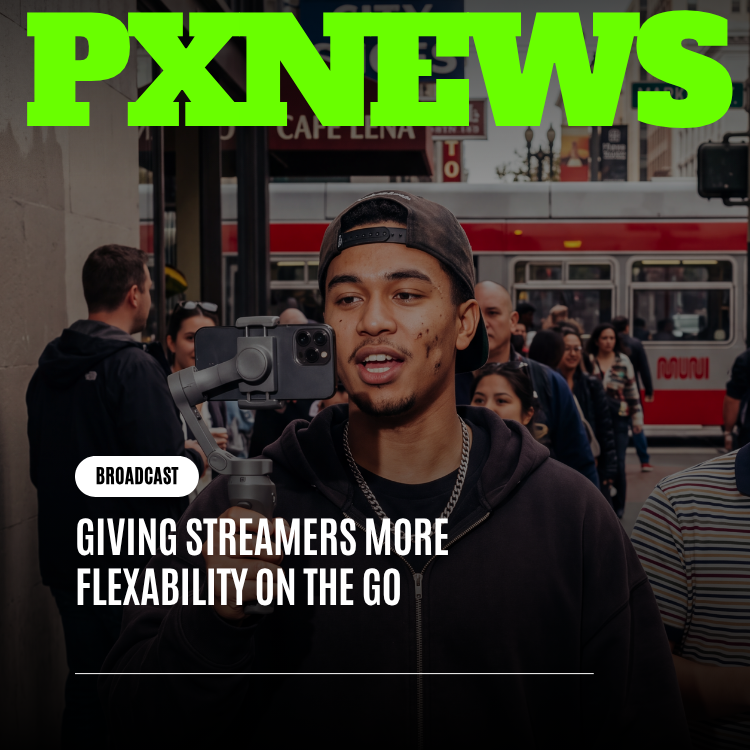
For streamers, that translates into a simple, practical need: a stream that stays smooth and clear while they're walking, climbing stairs, riding in a car, or weaving through a crowd, without needing a rig, a gimbal, or a second person dedicated to camera duty. The best mobile streams on Whistlr feel like the streamer is barely thinking about the camera at all — because they aren't. They're thinking about where they're going, and the picture is simply keeping pace with them.
Framing Yourself Without a Mirror
There's also a quieter challenge that only shows up once you're moving: knowing how you look without being able to stop and check. At a desk, you set your framing once and it holds. On the move, your distance from the phone changes, your angle drifts, your surroundings shift behind you — all while you're also walking, talking, and paying attention to wherever you're headed. Streamers who go mobile need to trust they're staying in frame without constantly glancing down, because every second spent checking the screen is a second not spent looking at the world they're supposed to be sharing.
Battery, Grip, and the Physical Reality of Streaming on Foot
It's easy to forget how physical mobile streaming actually is. A stationary stream doesn't care if your arm gets tired between segments. A mobile stream does. Streamers who go live for long stretches while walking or exploring are managing a phone in hand for extended periods, often one-handed, often while also holding a coffee or a bag. Flexibility on the go has to account for that reality — a stream comfortable to sustain for twenty minutes of walking, not just technically possible for two.
Keeping Your Audience Close While You're on the Go
Staying watchable while moving solves half the problem. The other half is staying connected — because a mobile stream that looks great but leaves the streamer unable to actually talk to their audience loses most of what makes live content live in the first place. Chat is where a stream becomes a conversation instead of a broadcast, and streamers out in the world need that conversation within reach even when both hands are, functionally, busy just getting them where they're going.
That means being able to catch a message out of the corner of your eye while walking, without stopping to hunt for it. It means reacting to your audience in real time even while navigating stairs, crossing a street, or squeezing through a crowd. Streamers who do IRL content best on Whistlr describe this as the difference between narrating a walk to an audience and actually walking with them — a difference that lives almost entirely in how easily they can stay plugged into chat without ever needing to stand still to do it.
Reacting in Real Time, Wherever "Real Time" Happens to Be
Part of what makes mobile streaming compelling is that the audience's reactions happen at the exact same pace as the streamer's surroundings. Someone in chat spots something in the background first. Someone asks "wait, where are you?" thirty seconds after a location changes. Someone requests a detour to a landmark just ahead. None of that works if there's real lag between the streamer moving through the world and being able to see and respond to what their audience is saying about it.
Notifications That Don't Ask You to Stop
A big part of staying flexible while live is not being forced to break stride to manage the stream itself. A new viewer joining, a milestone being hit, a follower showing up mid-walk — those moments need to surface naturally, glanceable in passing, rather than requiring a full stop to process. The goal is a stream a streamer can run while genuinely doing something else, instead of one that quietly demands they stand in place to operate it properly.
Handling the Unpredictable: Light, Signal, and Whatever's Next
Mobile streaming means signing up for constant change, and the streamers who do it well have made peace with the fact that conditions never hold steady for long. The lighting under a bridge is nothing like the lighting on the sidewalk just past it. A quiet side street can turn into a packed plaza around one corner. A strong connection at home can weaken the moment you're deep inside a building or moving through an area with a lot of competing signal. None of that is avoidable when the premise of the stream is "we're going wherever this goes" — so the experience of staying live has to be forgiving of it, gracefully, without turning every environmental shift into a crisis to manage on the fly.
What that looks like in practice is a stream that adjusts quietly in the background as the world around the streamer changes, so the person holding the phone can stay focused on where they're going instead of babysitting settings every time the light or surroundings shift. Streamers shouldn't have to become their own technical director just because they decided to explore instead of sit still.
Changing Locations Without Losing the Thread
One of the more specific challenges of mobile streaming is the location change itself — stepping from a sidewalk into a store, catching a train, moving from outside to inside and back again. Each transition is a moment where a stream could feel disjointed if it isn't handled smoothly. Streamers who build content around movement need those transitions to feel like part of the story, not interruptions to it — one continuous experience instead of stitched-together fragments.
Staying Live Through the In-Between Moments
Some of the best IRL content happens in the parts of a journey that would traditionally be considered "dead air" — waiting for a train, walking between two more exciting stops, sitting in traffic. Streamers comfortable with flexibility on the go have learned those in-between moments are often where the most genuine audience interaction happens, precisely because nothing is scripted. Supporting mobile streaming well means supporting those quieter, in-transit stretches just as much as the big, obviously exciting ones.
- Stability while moving: Streamers can walk, ride, or navigate crowds without the picture turning into something uncomfortable to watch.
- Chat that stays within reach: Messages, reactions, and new followers stay glanceable and easy to respond to, even with both hands occupied by the act of moving.
- Graceful handling of changing light and surroundings: Moving from outside to inside, from bright to dim, from quiet to crowded, doesn't require the streamer to stop and adjust anything manually.
- Smooth transitions between locations: Ducking into a building, catching transit, or turning a corner into a new scene feels like part of one continuous stream, not a series of restarts.
- Comfortable to sustain, not just possible: A stream built for a twenty-minute walk, not just a two-minute demo, with a physical experience that holds up the whole way through.
A Stream That Moves With You: What This Looks Like in Practice
Picture an ordinary Saturday. A streamer heads out with no fixed plan beyond exploring a part of their city they don't usually spend time in. They go live from their front door, and for the next forty minutes, the stream simply goes wherever they go — down a street lined with shops they've never noticed, into a bakery that smells too good to walk past, out again with something warm in one hand and the phone still rolling in the other. Chat does what chat does during a good IRL stream: pointing out things in the background, asking about the neighborhood, requesting a stop at the mural two blocks up. The streamer answers without breaking stride.
Twenty minutes in, it starts raining lightly, and the streamer ducks under an awning, then decides to catch a bus instead of walking the rest of the way. None of that requires ending the stream and starting a new one — it's the same broadcast, the same audience, the same conversation, just with a change of scenery. By the time the streamer arrives at wherever they were actually headed, the stream has passed through half a dozen distinct settings and never once asked the audience to leave and come back. That continuity — one stream, one audience, many places — is exactly what flexibility on the go is meant to protect.
Multiply that single Saturday across every streamer who'd rather explore than sit still, and a different picture of live content takes shape. Streaming stops being something that happens in one spot and starts being something that happens everywhere a streamer decides to take it — a run through a park, a night out with friends, a slow wander through somewhere new. The stream becomes as mobile as the person holding the phone, and that mobility is exactly what keeps viewers watching longer than they planned to.
Flexibility on the Go Meets Whistlr's Earning Power
None of this mobility comes at the expense of what a stream can actually do for the streamer running it. A stream shot from a moving car has the exact same earning potential as one shot from a studio setup — WTC Gems land the moment an audience wants to show support, whether the streamer is sitting at a desk or three miles into a walk. Live Shopping and Storefronts stay one tap away from the stream itself, which matters just as much for a streamer who's out in the world discovering things worth showing off in real time. Some of the most natural product moments on Whistlr happen precisely because a streamer stumbled onto something interesting while out and about, not because they planned a segment around it.
That's a meaningful shift in how earning fits into live content. A stationary stream tends to build toward planned moments — a scheduled drop, a set segment. A mobile stream earns in the moment, organically, because the streamer's flexibility to move and react means the audience's engagement is responding to something genuinely happening, not something staged. Multi-platform reach through Flow carries over here too — streamers simulcasting to Kick or Twitch alongside Whistlr don't lose any of that flexibility just because they're broadcasting to more than one place at once.
"I do most of my streaming while I'm actually out doing something — walking my dog, running errands, exploring a new part of town on a Sunday. The thing that changed everything for me is not having to think about the stream once I'm live. I just walk, I just talk to chat, and somehow it still looks good even when I'm climbing stairs or ducking into a crowded shop. My audience says it feels like they're out with me, and honestly, that's exactly what it feels like on my end too."
— Marcus Ibe, Whistlr IRL streamer
"Streamers told us the same thing in a dozen different ways: going live was never the hard part for them, staying live while actually moving through the world was. Those are genuinely different problems, and we wanted to solve the one that keeps a stream tied to one spot after it's already started. Flexibility on the go is about giving streamers room to follow the moment — down a street, onto a train, into whatever happens next — without the stream ever asking them to stand still to keep it running well."
— John Ridge, CTO, ETAPX
This is a fundamentally different problem than making it faster to start a stream. Speed to go live is about the first ten seconds. Flexibility on the go is about every minute after that — potentially dozens of minutes, across multiple locations, through changing light and shifting crowds, all while the streamer keeps their attention on the world in front of them instead of the phone in their hand. Both matter. They were just never trying to solve the same thing.
Frequently Asked Questions
What does "flexibility on the go" actually mean for Whistlr streamers?
It means the freedom to keep moving once you're already live — walking, riding, changing locations, stepping outside or into somewhere new — without your stream losing quality, losing your audience, or losing access to chat. It's about staying flexible and mobile throughout an entire broadcast, not just at the moment you start one.
How is this different from the recent update that made it faster to go live on Whistlr?
That update was about the seconds before a stream starts — fewer taps, smarter defaults, a faster path from deciding to stream to actually being live. This is about everything that happens afterward. It has nothing to do with how quickly you go live and everything to do with staying mobile, watchable, and connected to your audience for as long as you're moving during a broadcast that's already running.
Do I need special equipment to stream while walking or moving around?
No. Flexibility on the go is built around streamers holding a phone, one-handed, moving through the real world — no rig, no gimbal, no second person needed to manage the camera. The experience is designed to stay stable and watchable using just what you're already carrying.
Can I still earn Gems and use Live Shopping while I'm streaming on the move?
Yes. A mobile stream has the same full access to WTC Gems, Storefronts, and Live Shopping as a stationary one. Being flexible enough to walk, explore, or change locations mid-stream doesn't reduce what your stream is capable of earning — if anything, the spontaneity of IRL content tends to create some of the most natural moments for an audience to engage.
Does changing locations mid-stream interrupt the broadcast or lose my audience?
No. Moving from outside to inside, catching transit, turning a corner into a new setting — none of that should require ending your stream and starting a new one. Flexibility on the go is about keeping one continuous stream and one continuous audience through as many location changes as your day has in it.
Streaming was never meant to be something you do from one spot. For the growing number of streamers building their whole style around movement, flexibility on the go is what turns an ordinary walk, ride, or wander into a stream worth going live for — no matter how many times the scenery changes before it ends.