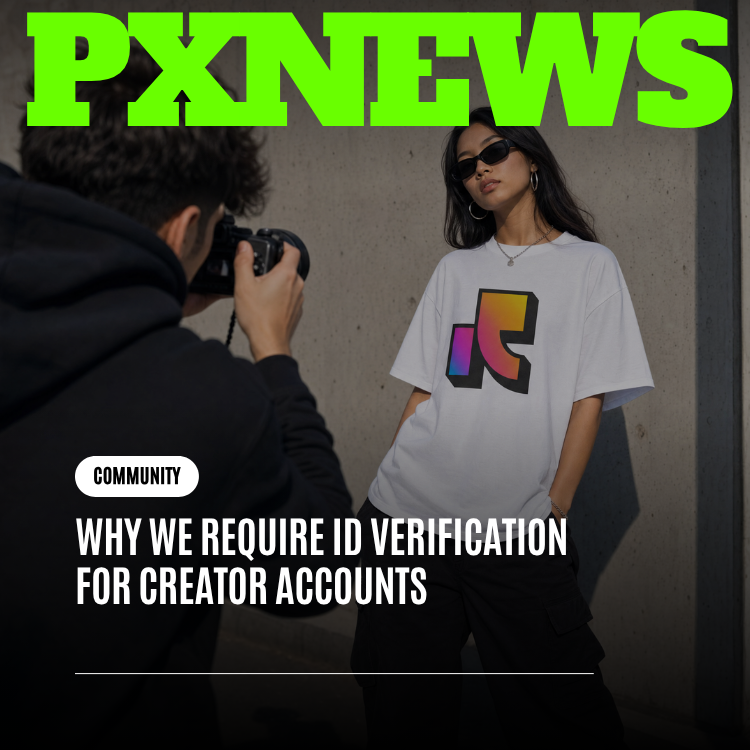
Identity verification is one of those requirements that generates a fair amount of friction the moment someone hits it, and almost no visibility into why it exists in the first place. Here's the honest reasoning behind why ETAPX requires ID verification for creator accounts on Whistlr — not as a bureaucratic hurdle, but as a precondition for the trust that everything creators actually monetize depends on.
It's a reasonable question to ask: why does opening a stream or listing a product require more than just an email and a username? The short answer is that the moment real money and real audience trust enter the picture — WTC Gems, Whistlr Go storefronts, brand partnerships, Whistlr Ads revenue — anonymity stops being a neutral default and starts being an active risk to everyone else in that exchange. Verification is the mechanism that keeps that risk from becoming everyone's problem.
What Verification Actually Protects Against
Identity checks aren't a generic security theater requirement — they address specific, concrete risks that show up disproportionately in creator economies built around real money and public trust.
- Impersonation: Without verification, nothing meaningfully stops someone from creating an account under a real creator's name or likeness to collect Gems, run a fraudulent storefront, or damage a genuine creator's reputation.
- Payout fraud: Real money flows to creator accounts through Gems, storefront sales, and ad revenue. Verifying the person behind an account is a baseline requirement for routing that money safely and complying with the financial regulations that govern payouts at all.
- Fake or duplicate accounts gaming the system: A verified identity behind an account makes it far harder to run multiple fraudulent accounts designed to manipulate leaderboards, inflate engagement, or exploit promotional features.
- Accountability for what gets published: Creators reach real audiences, sometimes large ones. Verification ensures there's a real, accountable person behind content and commerce activity that affects other people, not an anonymous, disposable identity with nothing at stake.
Every one of these risks gets meaningfully worse, not better, the bigger and more monetized a creator economy becomes. Verification requirements exist because the stakes attached to a creator account are categorically different from the stakes attached to a casual viewer account.
"We don't ask creators to verify their identity because we assume bad intent. We ask because the moment real money and a real audience are involved, an unverifiable account is a risk to everyone else in that exchange — the viewer sending Gems, the brand considering a partnership, the buyer trusting a storefront. Verification is how we keep that risk from landing on them."
— Jennifer Thompson, VP of Trust & Safety at ETAPX
Why This Applies to Creator Accounts Specifically
Whistlr doesn't require identity verification to simply use the platform, watch content, or participate as a viewer — the friction is deliberately scoped to creator accounts, and that scoping is intentional rather than an oversight. The line is drawn at the point where an account starts doing things that require real-world accountability: receiving payouts, running a storefront, entering brand partnerships, or earning through Whistlr Ads.
- Viewers stay low-friction: The overwhelming majority of people on the platform are watching, engaging, and participating socially, and none of that requires identity verification to work well.
- Creator accounts cross into financial and reputational territory: The moment an account can receive real payouts or represent a real business relationship, the bar for accountability legitimately changes.
- The requirement scales with what an account can actually do: Verification isn't applied uniformly as a blanket policy — it's applied specifically where real money, real audiences, and real reputational stakes intersect.
This scoping is what keeps verification from becoming the kind of blanket friction that would work against everything we've written about keeping the platform genuinely fun and accessible. Most people never encounter the requirement at all, because most people aren't doing the thing the requirement exists to protect.
How This Protects Creators, Not Just the Platform
It's easy to frame identity verification purely as a platform-protection measure, but the benefit runs strongly in the other direction too — toward the creators the requirement applies to. A verified creator economy is one where a legitimate creator's brand, likeness, and payout history can't be easily hijacked by an impersonator. It's one where brands evaluating a partnership can trust that they're actually negotiating with the person they think they're negotiating with. And it's one where a genuine creator's reputation isn't exposed to damage from a fraudulent account operating under a similar name with none of the accountability.
Verified status also becomes a real signal of legitimacy that creators can lean on. A viewer deciding whether to send Gems, or a buyer deciding whether to trust a storefront, is making a small trust decision every time — and a verified creator account gives that decision a real foundation, the same way our verification badge system communicates account type and standing at a glance across the platform.
"We think about verification as infrastructure for creator trust, not a hoop creators jump through to satisfy us. The badge a verified creator carries is doing real work — it's telling every viewer and every potential brand partner that there's a real, accountable person behind this account, which is exactly the kind of signal a growing creator economy needs to function."
— Marcus Johnson, Community Operations Director at ETAPX
What the Process Actually Involves
Verification is designed to be as unobtrusive as a genuine identity check can reasonably be — a real requirement, not a maximalist one. Creators provide standard identity documentation through a secure verification flow, confirming they are who their account claims to be. This information is handled according to strict privacy and security practices, used specifically for verification and payout compliance rather than any purpose beyond that. Once verified, the process is largely invisible day to day — it's a one-time gate, not a recurring checkpoint that interrupts a creator's ongoing use of the platform.
Balancing Security With Accessibility
We're conscious that any identity requirement is a real point of friction, and we don't treat that friction as costless just because the underlying reasoning is sound. The goal has been keeping the requirement as narrow and as clearly justified as possible — applied specifically where financial and reputational stakes actually exist, kept out of the way of casual platform use entirely, and handled through a process designed to respect creators' privacy rather than treat identity documentation as a data-collection opportunity.
That balance is also why the requirement is scoped to creator accounts rather than applied universally. A platform that demanded ID verification from every viewer just to watch a stream would be solving a problem that mostly doesn't exist at that level, while adding real friction to the overwhelming majority of everyday use. Scoping the requirement to where the actual risk lives is what keeps it proportionate.
"I'll be honest, verification felt like an annoying extra step when I first started monetizing on Whistlr. It made a lot more sense once a brand reached out for a partnership and specifically mentioned my verified status as part of why they trusted the deal. It's not just a hoop — it turned into something that actually worked in my favor."
— Jordan Aleku, verified Whistlr creator
Frequently Asked Questions
Why does Whistlr require ID verification for creator accounts but not for viewers?
The requirement is scoped specifically to accounts that can receive real payouts, run a storefront, or enter brand partnerships — the point where real money and reputational stakes intersect. Viewing and participating socially doesn't carry those same stakes, so it doesn't require the same verification.
What specific risks does verification protect against?
Impersonation of real creators, payout fraud, fake or duplicate accounts gaming leaderboards and promotions, and a lack of accountability for content and commerce activity that affects other people.
How is my identity information used and protected?
Identity documentation is handled according to strict privacy and security practices and used specifically for verification and payout compliance — not for any purpose beyond that.
Does verification benefit creators directly, or is it purely for the platform's protection?
Both. Verification protects legitimate creators from impersonation and reputational damage, gives brands confidence they're actually partnering with the person they think they are, and gives verified creators a real trust signal that viewers and brands can rely on.
Is verification a one-time process or an ongoing requirement?
It's designed as a one-time gate. Once a creator account is verified, the process doesn't interrupt day-to-day use of the platform going forward.
Why not just verify every account on the platform for maximum safety?
Applying identity verification universally would add real friction to the overwhelming majority of everyday, non-monetized use without addressing a risk that mostly doesn't exist at that level. Scoping the requirement to creator accounts keeps it proportionate to where real financial and reputational stakes actually exist.
Identity verification isn't friction for its own sake — it's the specific piece of infrastructure that makes it possible for creators to be paid real money, trusted by real brands, and protected from impersonation, all at the same time. That's a fair trade for a one-time check, and it's why the requirement stays exactly where the actual risk lives.