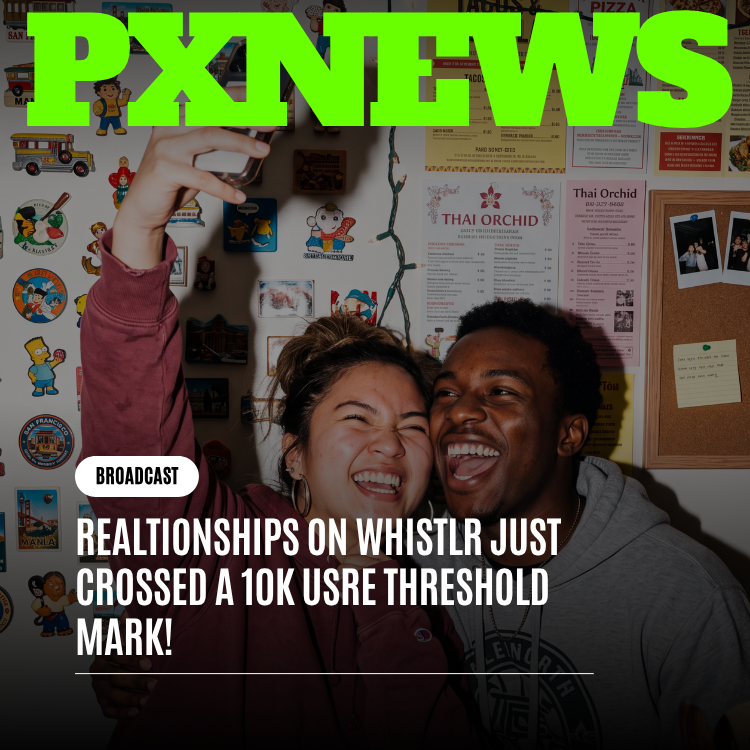
Relationships on Whistlr just crossed a 10,000 user threshold mark, and we want to take a minute to actually sit with what that means. Ten thousand people have now used the Relationship Status feature to publicly confirm a real connection with someone else — a partner, a fiancé, a spouse, a co-founder, a friend they wanted the world to know mattered to them. Every single one of those confirmations required two people to say yes. Nobody was tagged, nobody was surprised, and nobody woke up to a notification announcing a connection they never agreed to. This milestone is a celebration of community, not a data point buried in a dashboard, and it belongs to the 10,000 users who trusted Whistlr enough to make their relationships part of their public story.
"Ten thousand users choosing to make a relationship public on Whistlr is ten thousand individual moments of trust. That's not a growth chart to us — that's ten thousand people deciding our platform was safe enough to be honest on."
— AJ, Founder & CEO, ETAPX
A Milestone Ten Thousand Whistlr Users Helped Build
We don't take round numbers lightly, and we especially don't take this one lightly. Relationships on Whistlr just crossed the 10,000 user threshold — meaning 10,000 people have gone through the full, mutual Relationship Status flow and come out the other side with a confirmed, public connection sitting proudly on their profile. That number represents engagements, marriages, new relationships, long-term partnerships, co-founder stories, close friendships, and everything in between. It represents 10,000 separate decisions by 10,000 separate people to say, in effect, "yes, this is real, and yes, I want people to know."
If you've read our earlier deep dive into how the Relationship Status feature actually works, you already know the mechanics: nothing goes public until both people confirm it, requests can only be sent to people who already follow you, and audiences are yours to control down to the circle level. We're not going to re-walk that engineering story here — this piece is about what happened once real people started using it, and about the fact that Whistlr just watched 10,000 users lean into relationships as something worth celebrating out loud.
What strikes us most isn't the size of the number. Ten thousand is a meaningful figure for any single feature on a growing platform, but it's the shape of the number that we keep coming back to. This wasn't 10,000 users clicking a button because a notification nudged them to. Every one of those 10,000 confirmations needed a second person, a real one, to open a request and choose to accept it. There is no passive way to reach this milestone. Every unit of that count is a small act of mutual trust, repeated ten thousand times.
Why Crossing 10,000 Users on Whistlr Means More Than a Number
It would be easy to treat "10,000 users" as a vanity metric — the kind of number a company puts in a press release and moves on from. We'd rather treat it as evidence. When a feature requires two willing participants, a consent step, and a public decision, the adoption curve tells you something that raw signups never could. People do not confirm relationships they aren't confident about, on a platform they don't trust, in front of an audience they haven't chosen. Reaching 10,000 users on a feature built this way is a statement about how people feel using Whistlr, not just about how many people downloaded an app.
Think about how many other decisions had to line up for this milestone to happen the way it did. Someone had to feel comfortable enough with their partner, friend, or co-founder to send the request in the first place. That other person had to feel comfortable enough with the platform's privacy controls to say yes. Both of them had to trust that the audience setting they picked would actually be honored, and that nothing would leak past the boundary they set. Multiply that chain of trust by ten thousand, and you start to understand why we keep calling this a community milestone instead of a usage statistic. Ten thousand users didn't stumble into this number — they built it, one mutual "yes" at a time.
The Follow-First Foundation That Made This Growth Feel Safe
Part of why this milestone feels earned rather than manufactured comes down to a design choice we've talked about before: you can only send a relationship request to someone who already follows you. That single guardrail meant that as Relationship Status usage climbed toward 10,000 users, it climbed without a parallel spike in harassment reports, impersonation attempts, or unwanted requests. Growth and safety moved together instead of trading off against each other, which is rare for any feature that touches something this personal.
Mutual Confirmation as the Real Growth Engine
Every one of the 10,000 confirmed relationships on Whistlr exists because two accounts, not one, agreed to it. That's worth restating because it's easy to skim past. On platforms where a single person could just declare a relationship, the numbers would be inflated by wishful thinking, pranks, and stale claims nobody bothered to update. Whistlr's number carries no such asterisk. Ten thousand users didn't just tap a button — they received a request, read it, and chose to accept it. The mutual confirmation requirement is, in a very real sense, the reason this milestone means something.
The People Behind the Number: Real Relationships, Real Stories
Numbers are easy to celebrate in the abstract. What actually moves us is picturing the 10,000 individual moments behind this milestone — the specific people, the specific relationships, the specific reasons each of them decided this was worth doing publicly.
Couples Who Found a Safer Way to Go Public
A huge share of the confirmations that make up this 10,000-user milestone are couples — some brand new, some celebrating anniversaries, some announcing engagements and marriages for the first time anywhere online. For a lot of these users, Whistlr's relationship status wasn't just a label; it was the first time they felt like a platform gave them a genuinely safe way to be public about a relationship without inviting the chaos that used to come with it. No unwanted spotlight, no unexpected announcement generated on someone's behalf, no way for a partner to be "claimed" without saying yes first.
Friendships and Partnerships Get Their Moment Too
Not every one of the 10,000 users who've used this feature is announcing romance. A meaningful slice of that number is close friends and business partners who wanted a real, structured way to say "this person matters to me" or "we built this together." Co-founders confirming a partnership, longtime best friends marking a milestone, creative collaborators making their working relationship official — all of it counts toward the same threshold, and all of it reflects the same underlying idea: relationships worth celebrating aren't only romantic ones.
What the Milestone Looked Like in Practice
Milestones like this rarely arrive as a single dramatic spike. Ours built the way real community trust usually does — quietly, then all at once. In the early days after the Relationship Status feature launched, confirmations trickled in from the most confident early adopters: couples who had already been public about their relationship elsewhere and were simply glad to have a safer, more deliberate home for it on Whistlr. Then something shifted. As more of those early confirmations became visible to the people who followed them, the feature started spreading the way the best community features always do — not through a push notification campaign, but through one person seeing a friend's confirmed relationship, asking how it worked, and realizing they could do the same thing with the person who mattered to them. That word-of-mouth pattern is a big part of how relationships on Whistlr climbed steadily toward 10,000 users rather than spiking and plateauing. Trust, it turns out, spreads person to person just as naturally as any other kind of social behavior.
- 10,000 confirmed relationships: every single one required both people to say yes — no one-sided claims, no surprise tags.
- A mix of personal and professional bonds: couples, engagements, marriages, close friendships, and business partnerships all contributed to the milestone.
- Zero harassment-driven spikes: the follow-first requirement meant growth toward 10,000 users didn't come with a parallel rise in unwanted requests.
- Audience-controlled sharing: a large portion of confirmed relationships were shared with Circle or Followers audiences rather than broadcast publicly, showing users trusted the feature enough to use it even when they weren't ready to shout it from the rooftops.
- Organic, word-of-mouth adoption: much of the growth toward this threshold came from users seeing a friend's confirmed relationship and wanting the same safe, mutual way to share their own.
What Whistlr Users Are Saying About the Relationship Status Milestone
We reached out to some of the users whose relationships are part of this 10,000-user milestone to ask what the feature actually meant to them. Their answers, more than any chart, are why we're celebrating this the way we are.
"My partner and I had been together for almost two years before either of us felt comfortable making it public anywhere online. What finally did it was realizing Whistlr wouldn't let either of us do it without the other agreeing first. That took away the fear that one of us would post something the other wasn't ready for. We confirmed it together, on purpose, and it felt like ours instead of a broadcast."
— Whistlr user, relationship confirmed for over a year
"I've been burned before by an old app that let someone tag me as 'in a relationship' with them before we'd even talked about it. So when I got a request on Whistlr, my first instinct was to check if I could just ignore it. Turns out I could — and that's exactly why I eventually said yes. Nothing forced me. I said yes because I wanted to, on my own timeline."
— Whistlr user, Circle-visibility relationship
"My co-founder and I confirmed our partnership on Whistlr the same week we signed our incorporation paperwork. It sounds small, but having a place where both of us stood behind the claim — not just one bio saying 'co-founder' with no way to verify it — actually mattered when we started talking to early investors. It's a small feature that did real work for us."
— Whistlr user, confirmed business partnership
Consent-First Growth: Why This Milestone Reflects Trust, Not Virality
It's worth pausing on why we keep returning to the word "trust" instead of "growth" when we talk about this milestone. Plenty of features can rack up usage numbers through defaults, prompts, or friction-free one-tap actions. Relationship Status was never built to be that kind of feature, and its climb to 10,000 users reflects that on purpose. Every confirmation required a real decision from a real second person. There was no autofill path to this number, no growth hack, no dark pattern nudging anyone into a relationship they hadn't actually agreed to. The number climbed exactly as fast as trust in the feature climbed — no faster.
That distinction matters more than it might seem. A feature that requires mutual, informed consent from two separate people simply cannot be gamed into rapid, hollow growth the way a single-tap feature can. Every one of the 10,000 users behind this milestone had to trust that their side of the story would be represented honestly, that their partner or friend or co-founder would actually see the request and choose to accept it, and that the audience they picked would be respected. Ten thousand users making that bet on Whistlr, and having it pay off, is the real headline here.
Compare that to how relationship status used to spread on older social platforms, where a single person's tap could publish a claim about someone else's life without so much as a heads-up. That version of the feature could technically post huge adoption numbers too, but the number would have been hollow — inflated by one-sided claims, stale statuses nobody bothered updating, and awkward tags that quietly damaged trust in the platform every time they happened. Whistlr's 10,000-user threshold carries none of that baggage. Every entry in that count is a relationship two people actively chose to make part of their shared story, which is exactly why we're comfortable calling it a milestone worth celebrating rather than just a number worth reporting.
"We built Relationship Status assuming people would be cautious about it, because relationships are personal and people had been burned by careless platforms before. Watching adoption climb past 10,000 users anyway tells us the caution turned into confidence. That's the outcome we were actually optimizing for."
— John Ridge, CTO, ETAPX
What This Says About the Kind of Platform Whistlr Is Becoming
Every milestone tells you something about the product it belongs to, and this one tells us something we're genuinely proud of: Whistlr is becoming a place where people feel comfortable being genuinely, publicly themselves about who matters to them. That's not a small thing on a social platform in 2026, when so many people have learned to be guarded online, to keep their real relationships out of their public identity, to compartmentalize the people they love from the profile they present to the world.
Ten thousand users deciding otherwise — deciding that Whistlr was a place where they could let those two things overlap safely — is the clearest signal we could ask for. It tells us the consent-first architecture isn't just a nice engineering story we like to tell; it's a lived experience that changed how people behave. Users didn't just tolerate the extra step of requiring mutual confirmation. They leaned into it, because it gave them the confidence to actually use the feature instead of leaving relationship status blank the way so many people do on other platforms out of quiet self-protection.
We also think this milestone says something about what a modern community looks like when it's built around consent instead of exposure. The 10,000 users who make up this number chose their audiences carefully — plenty went fully public, plenty kept it to their Circle, plenty kept it private and just wanted the record for themselves. All of those choices are represented in the same 10,000-user threshold, and all of them are equally valid expressions of the same underlying idea: relationships are worth marking, on your own terms.
There's also something worth saying about what this milestone means for the people who haven't confirmed a relationship yet but are watching from the sidelines. Every visible, mutually confirmed relationship on Whistlr is a small piece of social proof that the feature works the way we say it does — that nobody gets tagged without agreeing, that audiences are actually respected, that a "no" or a silence is genuinely safe. We hear from users regularly that seeing a friend's relationship confirmed the honest way, without drama or exposure, was what finally convinced them to try it themselves. In that sense, this 10,000-user milestone is self-reinforcing: the more relationships that get confirmed with care, the more the next ten thousand users trust that they can do the same.
Looking Ahead: The Next Chapter for Relationships on Whistlr
Ten thousand users is a threshold, not a ceiling, and we're treating it that way. We expect the number of confirmed relationships on Whistlr to keep climbing, and every new confirmation will be held to the exact same standard that got us here: nothing goes public without both people agreeing to it, audiences stay precise and user-controlled, and endings stay quiet. We're not going to chase a bigger number by loosening any of that. If anything, this milestone is proof that the strict version of the feature was the right call — the discipline is what earned the trust that produced the growth.
We're also watching the texture of the milestone closely, not just the count. The mix of personal relationships and business partnerships inside this 10,000-user number tells us people want more ways to formally, mutually represent the connections that matter to them — and we intend to keep building toward that, one consent-first feature at a time. That could mean richer milestone tracking for long-running relationships, more nuanced audience tiers for the people who want something between "Circle" and "Public," or deeper support for the professional side of the feature as more creators and founders use Whistlr to represent their working relationships honestly. None of that is set in stone yet, but the direction is clear: build in the same spirit that got relationships on Whistlr to 10,000 users in the first place.
For now, though, we just want to say thank you to the 10,000 Whistlr users, and the 10,000 people on the other end of every one of those confirmations, who made this milestone real. Every relationship represented in that count — romantic, platonic, professional, public, or kept quietly private — is proof that people will show up for a feature that respects them enough to ask first. That's the community we set out to build, and crossing this 10,000 user threshold is the clearest sign yet that it's working.
Frequently Asked Questions
What does it mean that Relationships on Whistlr crossed a 10,000 user threshold?
It means 10,000 Whistlr users have gone through the full Relationship Status flow and reached a mutually confirmed relationship — a status that only becomes real once both people involved have agreed to it. The 10,000-user figure covers personal relationships like dating, engagements, and marriages, as well as professional business partnerships, all confirmed the same consent-first way. It's a community milestone, celebrating the people behind the number rather than the number by itself.
Does reaching 10,000 users mean Whistlr tracks or shares personal relationship data?
No. This milestone is simply a celebration of adoption and community trust in the feature — it isn't a data report, and we're not sharing analytics about individual users or how relationship activity is measured behind the scenes. What we're celebrating is the fact that 10,000 people felt safe enough to confirm a relationship publicly on Whistlr, full stop, and that each of those confirmations reflects real trust in how the feature was built.
Why does a feature requiring mutual consent take longer to reach a milestone like 10,000 users?
Because every single confirmation needs two willing participants, not one. Unlike features where a single tap counts as usage, a confirmed relationship on Whistlr requires a request to be sent, read, and accepted by a second real person. That built-in friction is exactly why crossing the 10,000-user threshold means so much — the number reflects genuine, mutual trust rather than one-sided activity, and it means every relationship in that count is one both people actually stand behind.
Can I still use Relationship Status if I want to keep my relationship private, even as this milestone grows?
Yes, absolutely. A large share of the relationships that make up this 10,000-user milestone were shared with a limited audience — Circle, Followers, or even kept entirely Private. The milestone counts every confirmed relationship regardless of who can see it, because the meaningful part is the mutual confirmation itself, not how publicly it's shared. Whether you want the whole world to know or just a handful of close friends, your relationship counts the same either way.
Will Whistlr celebrate the next relationships milestone after 10,000 users?
We plan to. Ten thousand users is a threshold we're proud of, but we expect the number of confirmed relationships on Whistlr to keep growing, and we intend to mark future milestones the same way — as community celebrations, not data disclosures. The standard that got us to 10,000 users, consent-first and mutual every time, is the same standard we'll hold for whatever comes next, whether that's the next thousand users or the next hundred thousand.
To every one of the 10,000 Whistlr users who trusted this feature enough to make a relationship real on it — and to the 10,000 people on the other end of every request who said yes — thank you for building this milestone with us. Here's to the next one.