Grind time never turns off at ETAPX, but that doesn't mean the people here never stop. Whistlr is open every hour of every day, its safety systems run around the clock, and the team behind it improves the platform almost daily. What keeps that pace sustainable is a simple order of priorities: growth and safety come first. Growth for the people who build here and for the communities that use our products. Safety for everyone on Whistlr and for the team that keeps it running. This article explains what ETAPX company culture actually looks like behind the grind, how we protect user safety and team well-being at the same time, how people grow here, and how we make decisions when ambition and care pull in different directions.
If you've followed PX News, you've read about the late nights before a big launch and about why we push back on always-on hustle culture. Those two stories can sound like they contradict each other. They don't. The pace at ETAPX is real, and so is our belief that nobody does their best work exhausted. This piece connects the two and explains why, at ETAPX, the grind is a system the whole company shares, not a weight any one person carries alone.
What "Grind Time Never Turns Off" Really Means at ETAPX
When people hear "grind culture," they often picture someone hunched over a laptop at 3 a.m., running on caffeine and pride. That picture isn't what we mean, and it isn't what we want. At ETAPX, "grind time never turns off" describes the products, not the people.
Whistlr doesn't close for the night. People post, message, stream and build communities at every hour, in every time zone. Safety systems review content as it's shared. Updates roll out, and systems watch for problems and recover from them automatically. In that sense, the work truly never stops. But a platform that never sleeps needs a team that does. The grind stays on because responsibility is shared and handed off, not because anyone is expected to be available all the time.
- The platform is always on: Whistlr, its moderation and its recovery systems run continuously, so the people using it are protected at any hour.
- People are not always on: Work is shared, handed off and planned so that no single person has to be reachable every hour of every day.
- Intensity is occasional and chosen: Big pushes happen before important launches, and they're the exception, not the default.
- Growth and safety set the order: When priorities compete, the growth of our people and the safety of our users and team come before speed.
"I love the energy of this team. People here want to build something that matters, and they work like it. But I've never wanted anyone to confuse exhaustion with commitment. The grind at ETAPX is the product staying alive and getting better every day. The people behind it are supposed to grow, rest and come back stronger. If our pace ever starts costing us our people, we've got the order wrong."
— AJ, Founder & CEO, ETAPX
The Platform Never Sleeps. People Should.
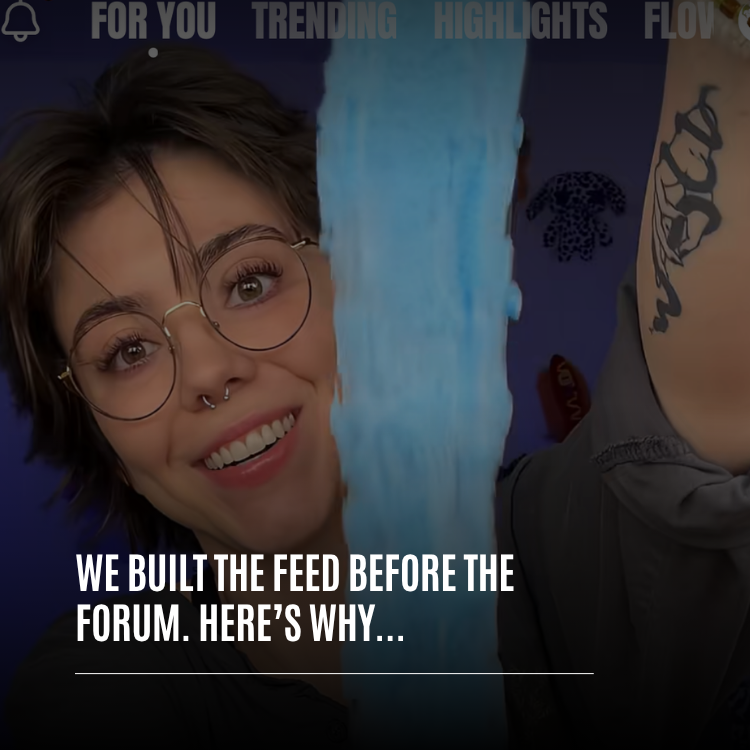
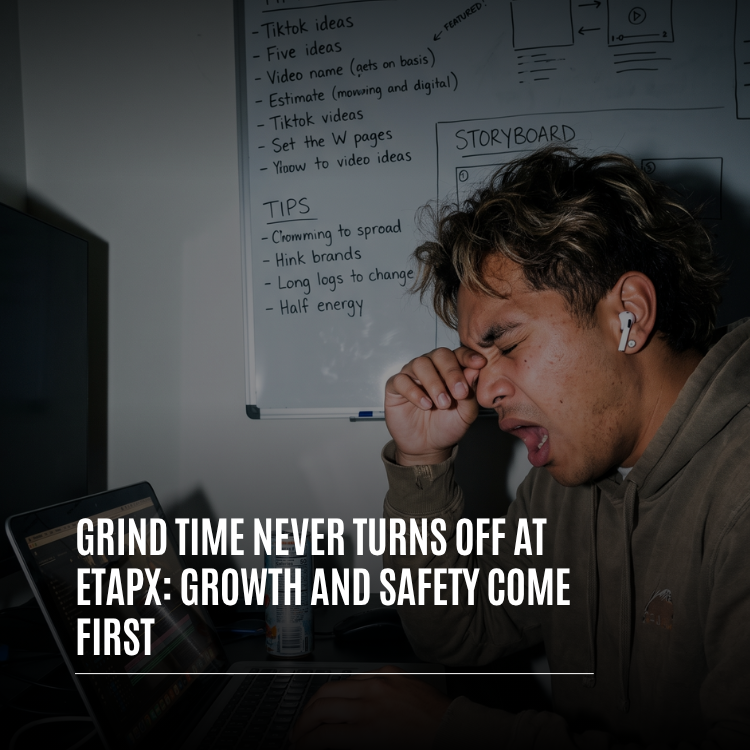
The cover of this article shows something every builder recognizes: the moment when the whiteboard is full, the ideas keep coming, and your body is telling you to stop. We put that image here on purpose. It's real, and pretending it doesn't happen would be dishonest. What matters is what a company does about it.
At ETAPX, the answer starts with building systems that carry the load so people don't have to. A lot of what keeps Whistlr safe and healthy overnight is automated by design:
- Automated moderation: Every post goes through moderation checks on both its text and its media, so harmful content can be caught at any hour without waiting for someone to wake up.
- Automatic rollback: If an over-the-air update ever causes the app to crash, Whistlr rolls back to the last working version on its own.
- Crash reporting: Errors are captured and logged automatically, so the team can start the next day with a clear picture instead of discovering problems in the middle of the night.
- Work that resumes itself: Processes like video rendering pick back up after an interruption instead of failing, so small hiccups don't become emergencies.
Systems like these exist for users first, but they also protect the team. Every automated safeguard is one less reason for someone to be glued to their phone at midnight. When the platform can protect itself through the night, the people behind it can actually rest.
Safety Comes First: For the People on Whistlr
When we say safety comes first, we start with the people who use our products. Growth that comes at the cost of user safety isn't growth we want.
Safety Built In, Not Bolted On
Safety on Whistlr isn't a feature we add after launch. It's part of how things are built from the beginning. Moderation works in layers. Text is checked against categories of prohibited content, including hate speech, threats and violence, harassment, illegal activity and self-harm. Images and videos are scanned automatically, and media shared in chats is moderated too. When content fails those checks, it's removed and the account receives a warning.
Behind the automated layers, people matter. Reports are reviewed by a human team, and when an account is locked, the person behind it can submit an appeal from the app or the web and have it reviewed. Fair enforcement means getting it right, not just getting it fast.
Safety as a Release Gate
Every new feature is weighed against a simple question: does this make Whistlr less safe? If the answer is yes, the feature doesn't ship until it's fixed, no matter how exciting it is. Moving fast is part of who we are, but we never move past safety to get there.
Growth That Respects People's Time
User safety also means not designing Whistlr to keep people scrolling past the point of enjoyment. We've written about why Trending is a list you can actually reach the bottom of and why its ranking favors deliberate signals like saves and shares over raw views. A company that believes its own team needs rest can't build a product designed to deny that rest to everyone else.
"Safety reviews aren't a step at the end of our process. They shape the work from the first sketch. When we design a new way to share, we ask how it could be misused before we ask how it could go viral. That order is deliberate. A feature that grows fast and hurts people isn't a success. It's a problem we'd have to clean up later."
— Renata Osei, VP of Product, ETAPX
Safety Comes First: For the People Building It
Safety at ETAPX also means the people on the team. A team that feels unsafe, whether that's burned out, afraid to admit mistakes or unable to say "I'm at my limit," makes worse decisions and eventually ships worse products.
Rest Is Part of the Work
After a big push, the conversation isn't only about what shipped. It's about making sure the people who shipped it recover. Managers encourage people to take the next day slower, sleep in and step away from messages. Nobody gets a trophy for staying latest. Regular breaks are treated as a practiced value here, not a line in an onboarding deck.
Urgent Is a Category, Not Every Category
Most things that feel urgent in the moment can wait until the next working day. Treating everything as an emergency is exactly how rest quietly disappears, so we try to be honest about what truly needs attention now. A real safety issue or a crash affecting users is urgent. A tweak to a layout usually isn't.
It's Safe to Say "I Got That Wrong"
When something breaks, the goal is to understand and fix it, not to find someone to blame. The team writes up what went wrong and what fixed it, and even keeps notes on approaches that didn't work, so the next person doesn't repeat the same failed attempt. That kind of honesty only happens when people feel safe admitting mistakes. It's one of the reasons fixes at ETAPX tend to stay fixed.
It's Safe to Say "I Need a Break"
Saying you're tired shouldn't be a career risk. We want people to raise a hand before exhaustion turns into burnout, and we want leaders to respond by redistributing work, not by asking for more. Judgment erodes before energy does, and by the time someone looks exhausted, their decisions have often been slipping for a while.
Growth Comes First: How People Grow at ETAPX
Growth is the other half of our priorities, and it starts with the people here. A company only grows as fast as the people inside it.
Real Ownership, Early
At ETAPX, people own real problems from the start. A newer team member might take on a performance issue that affects every Whistlr user or a feature that will be used by thousands of creators. Ownership comes with support, but it's genuine. There's no faster way to grow than shipping work real people depend on.
Learning Across Products
ETAPX builds several products, including Whistlr, Whistlr Studio, Creator Studio and more. People who work on one product constantly learn from the others. A fix in one app often turns out to solve a problem in another. Those unplanned conversations across teams are some of the best learning opportunities we have.
Working Alongside AI
We encourage working alongside AI as a way to amplify what people can do, not replace them. AI takes on repetitive tasks and first drafts, which frees people to spend more of their energy on judgment, creativity and craft. Learning to work well with these tools is a skill that compounds over a career.
Writing Down What You Learn
When someone solves a hard problem, they document it. That habit helps the whole team, but it also helps the person who writes it. Explaining a solution clearly is one of the best ways to understand it deeply, and a library of shared lessons means everyone grows faster together.
Growth for the Platform, Without Growth at Any Cost
Growth also means growing Whistlr and the communities on it. We want more people to find their friends, their Circles and their creative voice on the platform. But not every kind of growth is worth having.
- Healthy growth: More real relationships, stronger communities and creators who can build sustainable income.
- Unhealthy growth: Engagement squeezed out of people through endless feeds, manipulative notifications or features that trade safety for virality.
We'll take slower, healthier growth over fast growth that harms the people it's built on. The same principle applies inside the company: we'd rather grow the team carefully, keeping our culture intact, than hire so fast that the things that make ETAPX work get lost.
"What keeps me on Whistlr is that it doesn't feel like it's trying to trap me. My Circles are full of people I actually know, reporting something gets taken seriously, and the app gets a little better every week without turning into a mess. You can tell the people building it care about more than numbers."
— Priya, community organizer on Whistlr
How We Decide When Growth and Safety Pull in Different Directions
Most days, growth and safety point the same way. A safer platform grows more steadily, and a healthier team builds better products. But sometimes they compete, and we need a clear order for those moments. Here's how we think about it:
- User safety first. If a decision could put people on Whistlr at risk, safety wins, even when it slows a launch.
- Team well-being second. A deadline that can only be met by burning people out is the wrong deadline. We move the date before we sacrifice the team.
- Quality third. We'd rather ship something smaller that works well than something bigger that breaks.
- Speed after that. Speed matters a lot here, and we move fast. But it never outranks the three priorities above it.
Having this order written down makes hard decisions easier. Nobody has to wonder whether they're allowed to slow down for safety or protect their team's rest. The answer is already yes.
What a Healthy Grind Looks Like Day to Day
Culture isn't what a company says; it's what happens on an ordinary Tuesday. Here's what the grind looks like when it's working the way we want it to:
- Steady progress over heroics: The team ships improvements most days instead of saving everything for exhausting crunch weeks.
- Clear handoffs: Work moves between people with context, so nobody has to stay online just because they're the only one who knows how something works.
- Automated safety nets: Systems watch the platform overnight so people don't have to.
- Honest planning: Timelines account for testing, review and recovery, not just building.
- Recovery after pushes: When a launch does demand a late night, the following day is lighter by design.
- Celebrating learning: Fixing a hard bug and documenting it is recognized just as much as shipping a flashy feature.
What We Look For in People Who Join ETAPX
A culture is only as strong as the people who carry it, so the way we think about growth and safety shows up in who we bring onto the team. We're not looking for people who brag about never sleeping. We're looking for people who care deeply about their work and know how to sustain that care over years, not weeks.
- Drive with judgment: People who push hard toward ambitious goals and know when to pause, ask for help or push back on a plan that doesn't make sense.
- Care for users: People who think about the person on the other side of the screen, especially when a decision affects their safety, privacy or time.
- Curiosity: People who want to learn across products and disciplines, and who see a hard bug as a puzzle rather than a burden.
- Generosity with knowledge: People who document what they learn and share credit freely, so the whole team grows faster.
- Honesty: People who will say "I got that wrong" or "I need a break" out loud, because that honesty keeps everyone safer.
- Range: People with different backgrounds and perspectives, because a team that only looks one way will misread a community as wide as Whistlr's.
The people who thrive at ETAPX tend to share a mindset: they want to build something that lasts, and they understand that lasting things are built by people who last too. That's the real meaning of growth at ETAPX. It isn't a sprint toward the next launch. It's a long, steady climb that the whole team makes together.
Tips for Anyone Building With Big Ambition
You don't need to work at ETAPX to apply these ideas. Whether you're a creator running a channel, a founder building a startup or a student with a side project, the same principles can help you keep your drive without losing yourself to it.
- Let systems carry the load: Automate the repetitive parts of your work so your energy goes to the parts only you can do.
- Define what's truly urgent: Write down what actually needs an immediate response. Everything else can wait.
- Make rest a plan, not a reward: Schedule recovery after a big push before the push begins.
- Write down what you learn: Notes on what worked and what didn't save you from repeating mistakes.
- Protect the people around you: If you lead anyone, model the boundaries you want them to keep.
- Choose healthy growth: Grow in ways you'd be proud to explain, even if they're slower.
"Engineers love to talk about uptime for systems. I care just as much about uptime for people. The way you keep a platform running around the clock is to build it so it can protect itself, then hand off well and trust each other. A team that rotates and rests will outbuild a team that grinds itself down every single time."
— John Ridge, CTO, ETAPX
Frequently Asked Questions
What is the company culture like at ETAPX?
ETAPX's culture is ambitious and fast-moving, built around a clear order of priorities: growth and safety come first. The team ships improvements to products like Whistlr almost daily, while protecting user safety, encouraging regular breaks and giving people real ownership so they can grow in their careers.
Does "grind time never turns off" mean ETAPX employees work all the time?
No. "Grind time never turns off" describes the platform, not the people. Whistlr and its safety systems run around the clock, but work is shared, handed off and supported by automation so nobody has to be available every hour. Intense pushes happen occasionally before big launches, followed by deliberate recovery.
How does ETAPX keep Whistlr safe for users?
Whistlr uses layered safety systems. Every post's text and media go through moderation checks, media in chats is moderated, reports are reviewed by a human team, and locked accounts can appeal. New features are reviewed for safety before they ship, and anything that would make Whistlr less safe is held back.
How does ETAPX prevent burnout on its team?
ETAPX treats rest as part of the work. Managers encourage slower days after big pushes, the team distinguishes truly urgent issues from everything else, and automated systems watch the platform overnight. People are encouraged to speak up when they need a break, and leaders respond by redistributing work.
What does growth mean at ETAPX?
Growth at ETAPX means both personal and platform growth. Team members get real ownership early, learn across multiple products, work alongside AI and document what they learn. For Whistlr, growth means more real relationships and stronger communities, not engagement squeezed out of people at any cost.
What happens when growth and safety conflict at ETAPX?
Safety wins. ETAPX ranks user safety first, team well-being second, quality third and speed after that. If a launch would put users at risk or require burning out the team, the date moves rather than the priorities.
Why does ETAPX talk publicly about its culture?
Because the culture shapes the products. A team that values rest and safety builds a platform that respects its users' time and protects them. Sharing how we work helps users understand why Whistlr is built the way it is.
The grind at ETAPX never turns off, because the people who rely on Whistlr deserve a platform that's protected and improving every hour of every day. But the grind is something we share, and it always runs in the same order: growth and safety first. If that sounds like the kind of place you'd want to build, or the kind of platform you'd want to spend time on, follow along on PX News and see where we go next.