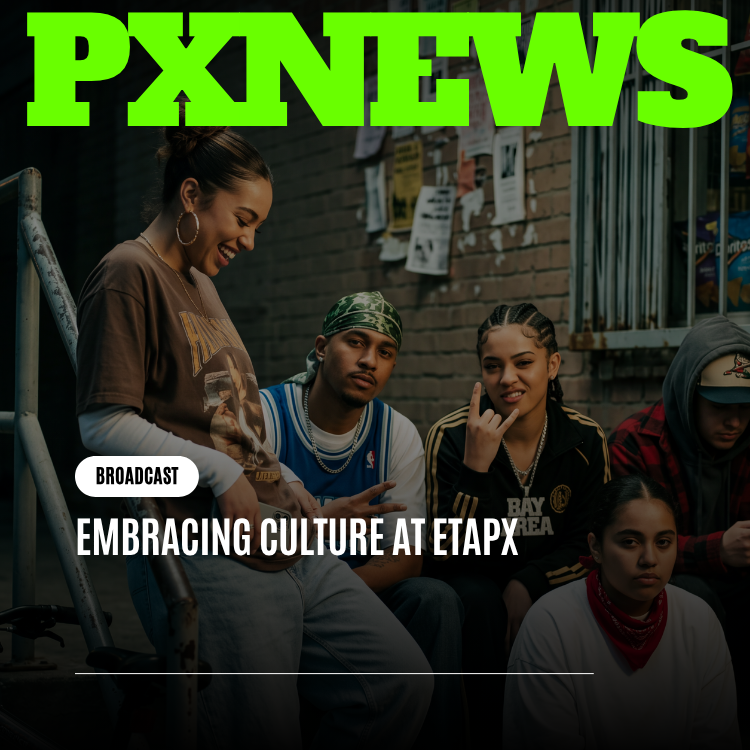
Culture isn't a vertical you add to a roadmap, and it isn't a mood board you commission once and hang on a wall. At ETAPX, embracing culture means building Whistlr from inside the actual scenes it serves — the music, the fashion, the humor, the specific vernacular that changes block by block and Circuit by Circuit — instead of designing a neutral pipe and hoping culture shows up to fill it. That distinction sounds small until you watch what it does to a product roadmap: it changes what gets built first, what gets left alone, and what never gets flattened into a "trend" slide in the first place. This is the story of what it actually looks like when a platform treats culture as something to be embraced rather than harvested, and why the creators who've built their corner of the internet on Whistlr say they can tell the difference immediately.
Embracing Culture Instead of Hosting It
There's a version of "culture" that shows up in a lot of platform marketing, and it usually means something closer to inventory. A trending sound gets a badge. A style gets a filter named after it. A slang term gets folded into a push notification three weeks after it stopped being funny anywhere it originated. That's not embracing culture — that's extracting it, wearing it for a season, and moving on to the next thing once the metrics dip. Whistlr users have seen that pattern enough times to spot it instantly, and the fastest way to lose a creative community's trust is to treat their culture like a costume you can put on for engagement and take off when it's inconvenient.
ETAPX approaches it from the other direction. The premise underneath Whistlr is that the platform doesn't get to define the culture living on it — the culture defines itself, community by community, and the platform's job is to build the room well enough that it doesn't get in the way. That means resisting the urge to smooth every scene into the same rounded, brand-safe shape. A Circuit built around underground hip-hop production shouldn't feel or behave like a Circuit built around vintage sneaker collecting, even though both are technically "communities" on the same app. The texture is the point. Sanding it off in the name of consistency is exactly the mistake a platform makes when it's hosting culture instead of actually embracing it.
The Difference Between a Feature and a Point of View
Almost any app can ship a feature that references culture — a filter, a sticker pack, a trending tab. Very few products have an actual point of view about the culture they're built for, and that gap is where authenticity either lives or dies. A point of view means making a call: this is worth building deeply, even if it only matters to a fraction of the user base, because that fraction is exactly who the platform exists for. It's a harder discipline than chasing whatever's broad enough to please everyone, and it's the one ETAPX has bet Whistlr on.
"You can always tell when a platform is borrowing culture instead of embracing it, because the second it stops being profitable, the feature quietly disappears. We wanted the opposite problem — features so tied to how a specific community actually expresses itself that ripping them out would be the thing that breaks trust, not keeping them.
That's the bar. Not 'does this look culturally relevant in a deck,' but 'would the people who live this culture every day recognize this as theirs.'"
— Simone Vega, Head of Creator Culture, ETAPX
The Sound of Whistlr: Music Culture and Waves
Music is one of the clearest places where embracing culture either works or falls apart in public, because music communities have some of the sharpest radar for being condescended to. Whistlr's music layer, Waves, wasn't built as a passive audio backdrop for other content — it's built around the reality that for a huge slice of Whistlr's community, the music isn't decoration on top of their identity, it is a load-bearing part of it. A producer's SubCircuit, a bedroom engineer's remix thread, a regional scene's running commentary on who's got the best unreleased tracks this week — that's not content adjacent to the culture, that's the culture, happening in real time.
What that means in practice is resisting the flattening instinct that a lot of platforms default to, where every genre and scene gets funneled into one generic "music" tab that treats a drill beat, a lo-fi study loop, and a gospel choir clip as interchangeable data points. Waves is built to let scenes stay legible as scenes — a regional sound can develop its own gravity inside its own corner of Whistlr without getting smoothed into a single undifferentiated stream that erases what made it distinct in the first place.
Why Regional and Niche Sounds Get Room to Breathe
Mainstream platforms tend to reward whatever already has scale, which quietly punishes anything still forming. A sound that's huge in one city and unknown three states over doesn't fit neatly into a global trending algorithm, so it either gets ignored or gets stripped of the context that made it interesting in the first place. Embracing music culture means building room for exactly that kind of scene — not because it's going to be the biggest number on a dashboard next quarter, but because that's where music culture actually happens before it becomes anything else. A platform that only rewards what's already big will never be where anything new gets discovered.
"I make beats out of a spare bedroom, nothing fancy. Every other app I posted on treated my sound like it needed to be translated into something more generic before anyone would care. On Whistlr, the people finding my SubCircuit already speak the language — I don't have to explain myself before I can just make the music."
— Malik Torres, producer and Whistlr creator
Fashion, Merch, and the Campus Store as Cultural Statement
Fashion on Whistlr isn't treated as an accessory category bolted onto the rest of the platform — it's one of the clearest, most visible ways culture actually gets expressed, day to day, by real people making real choices about how they want to show up. The Campus Store and individual creator Storefronts exist because a huge amount of what makes a scene a scene shows up first in what people are wearing, what they're trying to cop before it sells out, and what a specific drop says about which community you're claiming membership in.
That's a very different design brief than "sell merch." Streetwear and creator fashion culture run on things that don't translate well into a generic e-commerce template — scarcity that actually means something, drop timing that respects how a community actually organizes around a release, and a visual language specific enough that wearing the piece signals something real to anyone else who recognizes it. Treating that culture with respect means building commerce tools that can hold all of that nuance instead of forcing every creator's storefront into an identical, interchangeable shelf.
Storefronts Built for Creators, Not Just for Sales
A creator's Storefront on Whistlr is an extension of their identity, not a separate transactional layer stapled onto their profile. That distinction shapes real product decisions — how a drop gets announced, how limited runs are represented, how a creator's aesthetic carries through from their content to their merchandise without getting genericized by a template that wasn't built with their specific culture in mind. The Campus Store, similarly, isn't positioned as ETAPX's store that happens to sell creator products — it's built to feel like an extension of the platform's own cultural identity, curated with the same care a community would want from one of its own.
- Drop timing: release mechanics built around how communities actually organize around a launch, not a generic add-to-cart flow borrowed from unrelated retail.
- Creator-first Storefronts: a dedicated space for each creator's aesthetic, so merch reads as an extension of their identity instead of a separate, disconnected shop.
- Scarcity that means something: limited runs represented honestly, respecting a culture where scarcity is part of the meaning, not a marketing gimmick layered on top.
- Visual language with room to vary: no single house style forced across every creator's storefront — the aesthetic stays theirs, not a template's.
Circuits, SubCircuits, and the Vernacular of Real Communities
Every scene has its own language, and getting that language wrong is one of the fastest ways to signal that a platform is observing a culture from the outside rather than actually embracing it. Circuits and SubCircuits exist on Whistlr because a single undifferentiated feed can't hold the specificity that real community requires — the in-jokes, the shorthand, the humor that only lands if you already know the context, the unwritten norms that a community develops for itself over time and would recognize instantly if a platform tried to overwrite them with a generic rulebook.
Embracing that vernacular means building moderation, ranking, and community tools that flex to fit a specific SubCircuit's actual norms instead of forcing every community through the same one-size-fits-all lens. A SubCircuit built around a specific regional slang, a niche creative practice, or a subculture with its own visual and verbal codes needs room to be exactly that specific — not smoothed into something more broadly palatable because specificity is harder to moderate at scale. That's a genuinely harder engineering and policy problem than treating every community the same way, and it's the one Whistlr has chosen on purpose.
Humor That Doesn't Get Sanded Down
Youth and creative culture run on humor that's fast-moving, referential, and often deliberately absurd — the kind of joke that's dead on arrival the moment a brand tries to explain it. A platform that's actually embracing culture doesn't try to caption the joke or turn it into a marketing moment. It builds room for the joke to exist on its own terms, gets out of the way, and resists the urge to formalize something that only works because it's unofficial. That restraint is itself a cultural decision, even though it looks like the absence of one from the outside.
Minis, Live Streaming, and Culture in Real Time
Short-form video through Minis and live streaming are where a lot of Whistlr's cultural energy moves fastest, because both formats reward the kind of spontaneous, unfiltered expression that a more polished, produced format tends to smooth away. A Mini shot in someone's bedroom with genuinely rough production value can carry more cultural weight than something expensively produced, because the roughness is often part of what makes it feel real to the community watching it. Embracing that means not building ranking systems that quietly punish anything that doesn't look studio-polished, and not building creation tools that push every video toward the same handful of trending templates.
Live streaming carries its own version of the same principle. A live stream is culture happening with no edit pass — the audience is watching the actual process, the mistakes, the in-jokes forming in real time in the chat. Respecting that means building streaming tools and chat features that support that immediacy rather than trying to sanitize it into something safer and more predictable. The energy of a good live stream is precisely the thing a platform loses if it tries to over-engineer the unpredictability out of it.
Letting the Format Stay Rough Where Rough Is the Point
There's a constant temptation in product design to push every piece of content toward higher production value, cleaner formatting, more polish — because polish is legible and easy to measure. Culture doesn't always work that way. Some of the most important moments in music, fashion, and creative history happened in genuinely unpolished conditions, and a platform that quietly nudges everyone toward the same clean aesthetic ends up flattening exactly the texture that made those scenes distinctive in the first place. Embracing culture sometimes means having the discipline not to optimize something that was never supposed to be optimized.
Campus: Where the Culture Talks Back
ETAPX runs an official Discord, Campus, specifically because embracing culture has to include listening to it in a space where the conversation isn't filtered through a product roadmap first. Campus is where community members, creators, and the ETAPX team are in the same rooms, in real time, without a formal feedback form standing between a reaction and the people who can actually act on it. That access matters because culture moves fast, and a platform that only hears about a shift in community norms after it shows up in a quarterly survey is already behind.
What makes Campus valuable isn't that it's a support channel with a different name. It's that it's a place where the same directness that defines a lot of creative and youth culture — say what you mean, don't dress it up, call something out if it's not working — is allowed to exist unfiltered, aimed directly at the people building the platform. That's uncomfortable sometimes, and it's supposed to be. A culture that only ever gets a polished, moderated version of its own feedback loop isn't actually being listened to.
"I've been in a lot of official Discords for apps and brands, and most of them feel like talking to a wall with a logo on it. Campus doesn't feel like that. Someone from the actual team will jump into a thread about a feature that's annoying people, and you can tell they're not just there to do damage control — they actually want to know."
— Devon Achebe, Whistlr creator and Campus community member
Product Decisions That Come From Actually Embracing Culture
None of this stays abstract for long, because a real cultural point of view eventually has to show up as a product decision — a feature that gets built, a default that gets set, a rule that gets written a specific way instead of the generic way. The clearest sign that ETAPX is embracing culture rather than just referencing it is how often those decisions favor specificity over convenience, even when the generic, lowest-common-denominator version would have been easier to ship.
Built for How People Actually Express Themselves
A lowest-common-denominator platform designs for an imagined average user who doesn't actually exist, and ends up serving nobody particularly well as a result. Embracing culture means designing for the specific, textured, sometimes messy way real communities actually express themselves — which is slower, harder, and less scalable in the short term than building one generic version of everything. It's the reason Circuits and SubCircuits can hold wildly different norms instead of one universal rulebook, the reason Storefronts carry a creator's own aesthetic instead of a shared template, the reason Waves lets a regional sound stay legible as itself instead of getting folded into an undifferentiated stream, and the reason Minis and live formats aren't quietly nudged toward the same polished look.
That approach costs something. It's more engineering work to support that much variation. It's harder to moderate communities with genuinely different norms than to apply one blanket policy everywhere. It's slower to build commerce tools that respect a dozen different creators' distinct aesthetics than to ship one template and call it done. ETAPX has made that trade deliberately, on the belief that the alternative — a platform so generic it fits everyone equally poorly — isn't actually a shortcut. It's just a slower way of losing the creators and communities who came to Whistlr specifically because it didn't feel like everywhere else.
"Every time we're tempted to build the easy, one-size-fits-all version of something, that's usually the exact moment to slow down and ask who we'd be flattening to get there. The features that actually matter to this platform are almost never the convenient ones. They're the ones specific enough that a real community would recognize them as built for them, not just around them."
— AJ, Founder & CEO, ETAPX
Why Authenticity Is the Whole Business Case
It would be easy to frame all of this as a values statement, and it is one, but it's also a practical bet about what actually retains a creative community over the long run. Creators and cultural communities have been marketed at, mined for trends, and quietly abandoned by enough platforms to develop a sharp sense for the difference between a place that respects their culture and a place that's renting it for engagement. That instinct doesn't fade — if anything, it gets sharper the more platforms try to shortcut it.
So the case for embracing culture isn't only about being a good citizen of the scenes Whistlr serves, though that matters on its own terms. It's that authenticity is the actual mechanism by which creators choose one platform over a more sterile alternative and stay there. A generic platform can copy a feature. It's much harder to copy a genuine point of view that's been tested against real feedback from real communities in a real Discord, refined against real pushback, and built by people who treat getting the culture right as seriously as they treat getting the product right. That's the harder, slower thing to build — and it's the reason it's worth building at all.
Frequently Asked Questions
What does "embracing culture" actually mean for a platform like Whistlr?
It means building product decisions from inside the actual creative and cultural communities Whistlr serves — their music, fashion, humor, and vernacular — instead of designing one generic experience and layering cultural references on top. At ETAPX, embracing culture shows up as specific product choices: SubCircuits that hold their own norms, Storefronts that carry a creator's own aesthetic, and music tools that let regional sounds stay legible as themselves rather than getting smoothed into one undifferentiated feed.
How is this different from ETAPX's other culture-related company posts, like the ones about the Bay Area or workforce diversity?
Those pieces cover the team's relationship to the physical place ETAPX is headquartered and the philosophy behind who gets hired to build Whistlr. This piece is about something else entirely: the cultural voice and identity of the platform itself — the music, fashion, and creative communities that live on Whistlr, and how genuinely embracing that culture, rather than just hosting it, shapes actual product decisions.
How does Whistlr avoid feeling like a generic, one-size-fits-all platform?
By deliberately not optimizing every feature toward one broad, "safe" version. Circuits and SubCircuits are built to hold genuinely different community norms instead of one universal rulebook. Creator Storefronts carry each creator's own visual identity rather than a shared template. Music through Waves lets niche and regional sounds stay distinct instead of folding everything into one generic stream. Those are all deliberately harder engineering and design choices than the lowest-common-denominator alternative, made because specificity is what real culture actually requires.
What role does the Campus Discord play in ETAPX embracing culture?
Campus is where creators, community members, and the ETAPX team talk directly, in real time, without a formal feedback process sitting in between. Embracing a culture means actually listening to it, and Campus is the room where unfiltered reactions — including the uncomfortable ones — reach the people who can act on them, instead of getting smoothed out in a survey weeks later.
Why does ETAPX say authenticity matters commercially, not just as a value?
Because creators and cultural communities have strong, well-earned radar for platforms that borrow culture for engagement and abandon it once it's inconvenient. A generic platform can copy a feature, but it can't easily copy a genuine cultural point of view tested against real community feedback. Embracing culture authentically is what makes creators choose Whistlr over a more sterile alternative, and what keeps them there.
None of this is a campaign with an end date. Embracing culture at ETAPX is a standing decision to keep building Whistlr from inside the scenes it serves, one specific, sometimes harder choice at a time — because the communities on this platform can always tell the difference, and that difference is the entire point.